







Reliving the Roaring ’70s: A Look Back at the Decade’s Quickest Cars
For automotive enthusiasts, the allure of pure acceleration often trumps the raw, unattainable thrill of top speed. While a 200 mph sprint is a fantasy for most, the visceral shove of rapid acceleration can be experienced (responsibly) in everyday driving. In an era where even a modern VW Jetta can hit 60 mph in a respectable 5.6 seconds, and instant-torque electric vehicles redefine quickness, it’s easy to forget the pioneers of speed. This article takes a nostalgic look back at the quickest cars you could buy in the 1970s, a decade that, despite the impending oil crisis, delivered some truly unforgettable machines.
From the iconic Ferrari flat-12s to big-block American muscle and the birth of the 911 Turbo, the 1970s offered an eclectic mix of performance. Every car featured here, a testament to its era, surpasses the acceleration times of many modern everyday vehicles, proving that innovation and excitement were alive and well.
1. 1971 De Tomaso Pantera: The American-Italian Hybrid That Shook Up the Establishment
Kicking off our list is the striking 1971 De Tomaso Pantera, a mid-engined sports car that dared to challenge the European elite. Powered by a robust Ford 351-cubic-inch small-block engine producing 330 horsepower, this 3,100-pound machine could launch from 0 to 60 mph in a blistering 5.5 seconds.
While its design shared visual cues with contemporaries like the Maserati Merak and Ferrari 308, the Pantera’s philosophy was distinct. Its American V8 heart was a significant departure, as was its remarkably accessible price point. At a mere $10,995, it drastically undercut the $28,000 Ferrari 308 and the $21,700 Maserati. Although its US sales ended in 1974, later international iterations pushed power output beyond 400 horsepower, further solidifying its performance credentials.
2. 1976 Ferrari 512 BB: A Prancing Horse with a Potent Boxer Heart
No discussion of 1970s performance would be complete without a Ferrari, and the 1976 Ferrari 512 Berlinetta Boxer stands as a true icon. Succeeding the 365 GT/4, the 512 BB quickly assumed its rightful place as Ferrari’s flagship supercar. Its mighty 5.0-liter 12-cylinder boxer engine churned out an impressive 355 horsepower, propelling the car to a dizzying top speed of 188 mph and a claimed 0-to-60 mph time of just 5.4 seconds – truly remarkable figures for the mid-1970s.
However, historical accounts sometimes differ. A notable period road test by AutoCar reported a 0-60 mph time of 6.2 seconds and a top speed of 163 mph, suggesting that the Ferrari’s gearing might not have allowed for the officially claimed 188 mph. This discrepancy highlights a playful optimism sometimes present in manufacturer performance figures of the era, reminiscent of when Pontiac famously submitted "ringer" cars for media tests. Regardless, the 512 BB remains an undeniable automotive masterpiece.
3. 1971 Chevrolet Corvette LS6: American Muscle Before the Crisis
Before the 1973 Oil Crisis reshaped the automotive landscape, America had its own share of formidable speed machines. The 1971 Chevrolet Corvette LS6 stands as a prime example. A true rarity, only 188 units were produced, all within this single model year.
Period testing revealed astonishing performance: a quarter-mile time of just 13.8 seconds at 105 mph, notably 2 mph faster than the later and highly acclaimed 911 Turbo. More impressively, the LS6 could hit 60 mph in a mere 5.3 seconds, securing its place as one of the fastest cars of the decade, despite debuting at its very beginning.
The LS6 was a monster, boasting a 454-cubic-inch, 425-horsepower engine, second only to the then-discontinued L88 in Chevy’s power hierarchy. This brute force was channeled exclusively to the rear wheels through an iron block with alloy heads. Such performance came at a price, however. With a base price of $5,496 and an additional $1,221 for the LS6 package, its total cost of $6,717 was nearly double that of a brand-new Mach 1 Mustang, making it a highly exclusive proposition.
4. 1974 Porsche Carrera RS 3.0: Stuttgart’s Homologation Marvel
Porsche’s expertise in launching off the line is evident with the 1974 Carrera RS 3.0, claiming the second spot for the fastest-accelerating car of the 1970s. This homologation special, an evolution of the previous year’s lightweight Carrera RS, was produced in extremely limited numbers – just 109 units (55 road-legal and 54 race-spec RSRs) were built to qualify it for GT racing.
Its 3.0-liter engine delivered a potent 230 horsepower, a 20 hp increase over its predecessor, propelling the car from a standstill to 60 mph in a blistering 5.2 seconds. Chunkier rear tires and a limited-slip rear differential further aided its impressive launch capabilities. While none were sold new in the US, some were exported early on, and thanks to the 25-year import rule, they are now eligible for entry into the States. However, acquiring this immensely collectible early RS comes with a hefty price tag, often commanding seven-figure sums when they rarely appear for sale.
5. 1978 Porsche 911 Turbo: The "Widowmaker" That Dominated the Decade
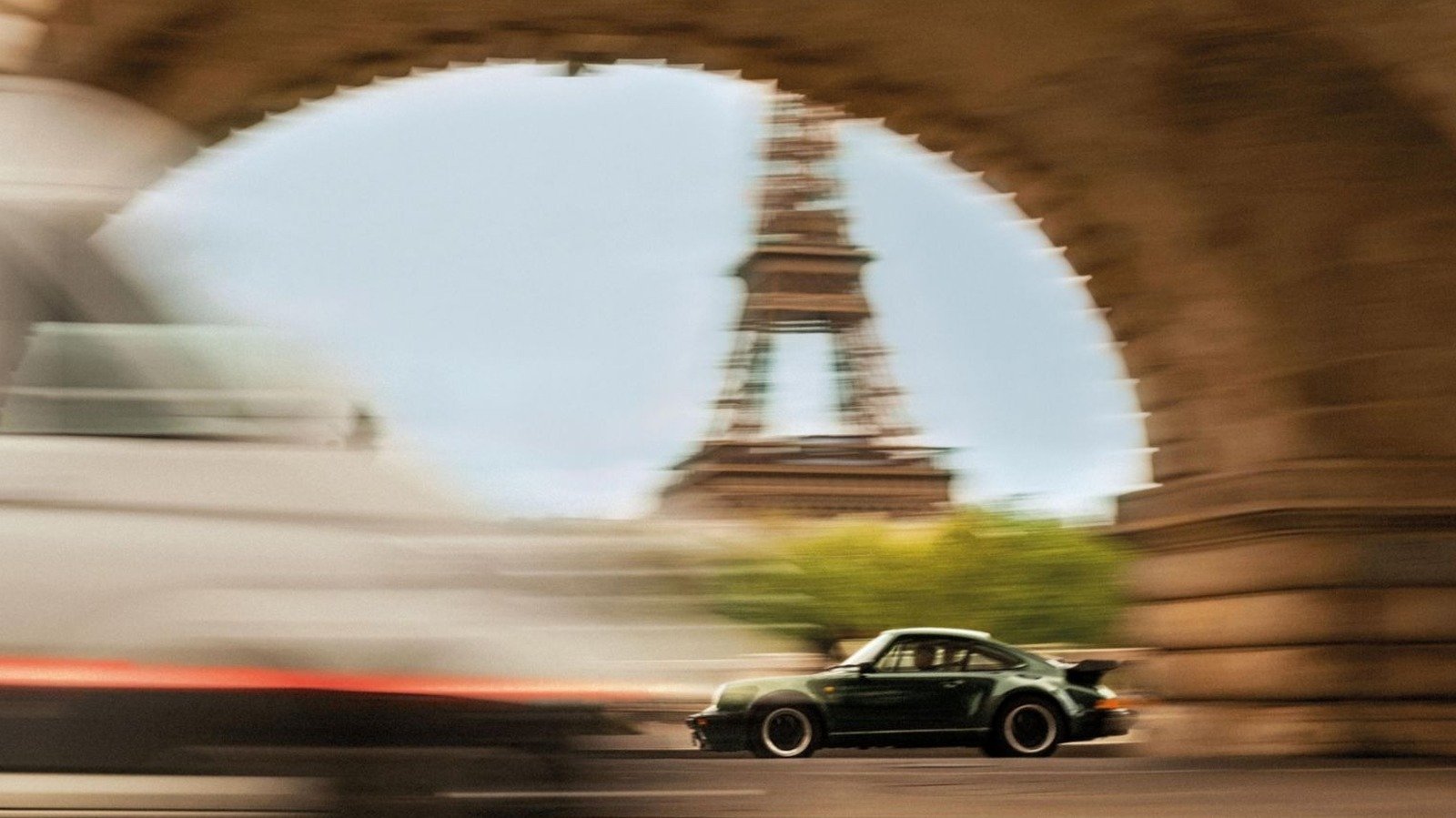
Crowning our list as the quickest cars you could buy in the 1970s is Porsche’s then-flagship 911 Turbo. According to period reviews, the 1978 model year was capable of a stunning 0 to 60 mph sprint in just 4.9 seconds. While this might seem modest by today’s standards (comparable to a base 718 Boxster), in the late 1970s, it was simply the fastest thing on four wheels.
The key to this performance leap lay in the 1978 model year enhancements. Porsche introduced a charge-air cooler and increased the engine’s displacement by 0.3 liters, boosting the 3.3-liter flat-six’s output to 261 horsepower.
Beyond its outright speed, the 911 Turbo’s character was defined by its unique power delivery. Early turbocharging technology meant a non-linear powerband. All that power would arrive suddenly around 4,000 rpm once the turbo spooled up, leading to a thrilling yet challenging driving experience. This chaotic surge of power made the Porsche quite a handful, especially for inexperienced drivers, earning the 911 Turbo its notorious nickname: the "widowmaker."
The 1970s, despite facing new challenges and evolving regulations, proved to be a vibrant decade for automotive performance. These machines, with their distinctive designs and groundbreaking engineering, continue to capture the imaginations of gearheads, reminding us of a time when raw power and exhilarating acceleration reigned supreme.