








India Bolsters Maritime Surveillance with Additional MQ-9B SeaGuardian Leases
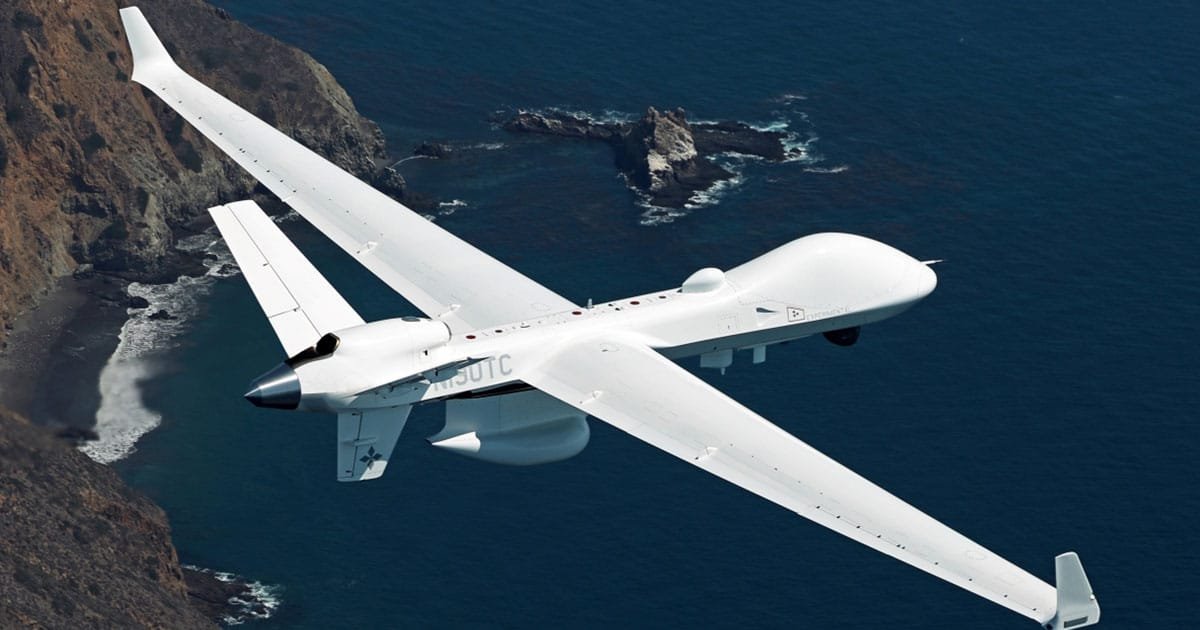
NEW DELHI, INDIA – August 22, 2024 – India has significantly enhanced its maritime surveillance capabilities with the signing of a new contract to lease two additional MQ-9B SeaGuardian High-Altitude Long-Endurance (HALE) Remotely Piloted Aircraft Systems (RPAS) from General Atomics Aeronautical Systems, Inc. (GA-ASI) for the Indian Navy. The 30-month agreement, valued at ₹1,943 crore (approximately $200 million), was finalized on August 17th.
This latest deal expands the Indian Navy’s leased MQ-9B fleet to a total of four, building upon an existing Contractor Owned Contractor Operated (COCO) model that has seen multiple extensions. According to The Indian Express, the new lease ensures continuous and advanced airborne surveillance until the Indian Navy begins receiving the 15 MQ-9B UAVs it has formally ordered in a separate, much larger procurement deal with the US government.
The initial two leased MQ-9B drones have been instrumental in providing crucial intelligence, surveillance, and reconnaissance (ISR) for the Indian Navy. While generally successful, the program did encounter a setback when one of the leased MQ-9Bs experienced a technical failure and was ditched at sea off the coast of Chennai on September 18, 2024. However, in line with contractual obligations, a replacement unit was delivered by February 2025, underscoring the commitment to maintaining operational readiness.
The lease arrangement serves as a vital bridge to the full acquisition of 31 MQ-9B Sky/Sea Guardians, a landmark deal signed with the US government on October 15, 2024. This comprehensive procurement, estimated at nearly $4 billion by the State Department, will see 15 UAVs allocated to the Navy, with the Army and Indian Air Force (IAF) receiving eight each. Deliveries for these new assets are slated to commence in 2029. Notably, these new MQ-9Bs are anticipated to integrate the domestically developed DRDO NASM-SR anti-ship missile, significantly boosting India’s indigenous defence capabilities. The procurement package also includes advanced armaments such as 170 AGM-114R Hellfire missiles and 310 GBU-39B/B Laser Small Diameter Bombs (LSDB), along with various sonobuoys (AN/SSQ-62F, AN/SSQ-53G, and AN/SSQ-36) for anti-submarine warfare (ASW) roles. The newly leased UAVs will feature a configuration similar to those ordered, facilitating seamless integration and operational continuity.
Further strengthening India’s self-reliance in defence, a contract was also signed on October 15, 2024, with General Atomics Global India Pvt Ltd for Performance Based Logistics. This agreement will establish Depot Level Maintenance, Repair, and Overhaul (MRO) facilities in India for all 31 RPAS, reducing dependence on foreign infrastructure and promoting local expertise.
This strategic lease of additional MQ-9Bs is the latest in a series of proactive measures taken by the Indian Navy to bolster its drone-based long-endurance maritime ISR capabilities. These advanced drones will complement the existing P-8I fleet, providing a persistent and comprehensive eye over India’s vast maritime interests. The Navy has been steadily evolving its UAV fleet, having decommissioned the Searcher MkII UAV in December 2024 after 22 years of service and currently operating the Heron Mk1 UAV.
Beyond HALE platforms, the Indian Navy has also inducted Medium-Altitude Long-Endurance (MALE) UAVs. Two Hermes 900 drones, locally manufactured by Adani Defence as the Drishti 10 Starliner, were ordered, with the first delivered in January 2024. While the second unit faced an incident during pre-acceptance trials in January 2025 and is awaiting replacement, another Hermes 900 unfortunately crashed in July 2026 during a training sortie off Porbandar airfield. Plans for the induction of the Heron Mk2 UAV are also underway, further diversifying the Navy’s aerial reconnaissance assets.
In 2024, the Navy also introduced eight ship-based rotary Schiebel Camcopter S-100 UAVs, a platform initially evaluated for induction as early as 2007, highlighting a long-term vision for integrated drone operations.
Looking ahead, a significant indigenous push is also in motion. Indian infrastructure and defence firm L&T and GA-ASI forged a strategic partnership in October 2025 to manufacture MALE RPAs within India. This joint venture is currently bidding for a major procurement project that seeks to acquire 87 MALE UAVs for the Army, IAF, and Navy combined. With the IAF leading this critical acquisition, the competition involves nine other firms and consortiums, underscoring India’s growing ambition to indigenize its defence manufacturing capabilities.