







The Pixel Watch 5 Arrives Amidst Fierce Competition: Is Google’s Latest Smartwatch Worth the Premium?
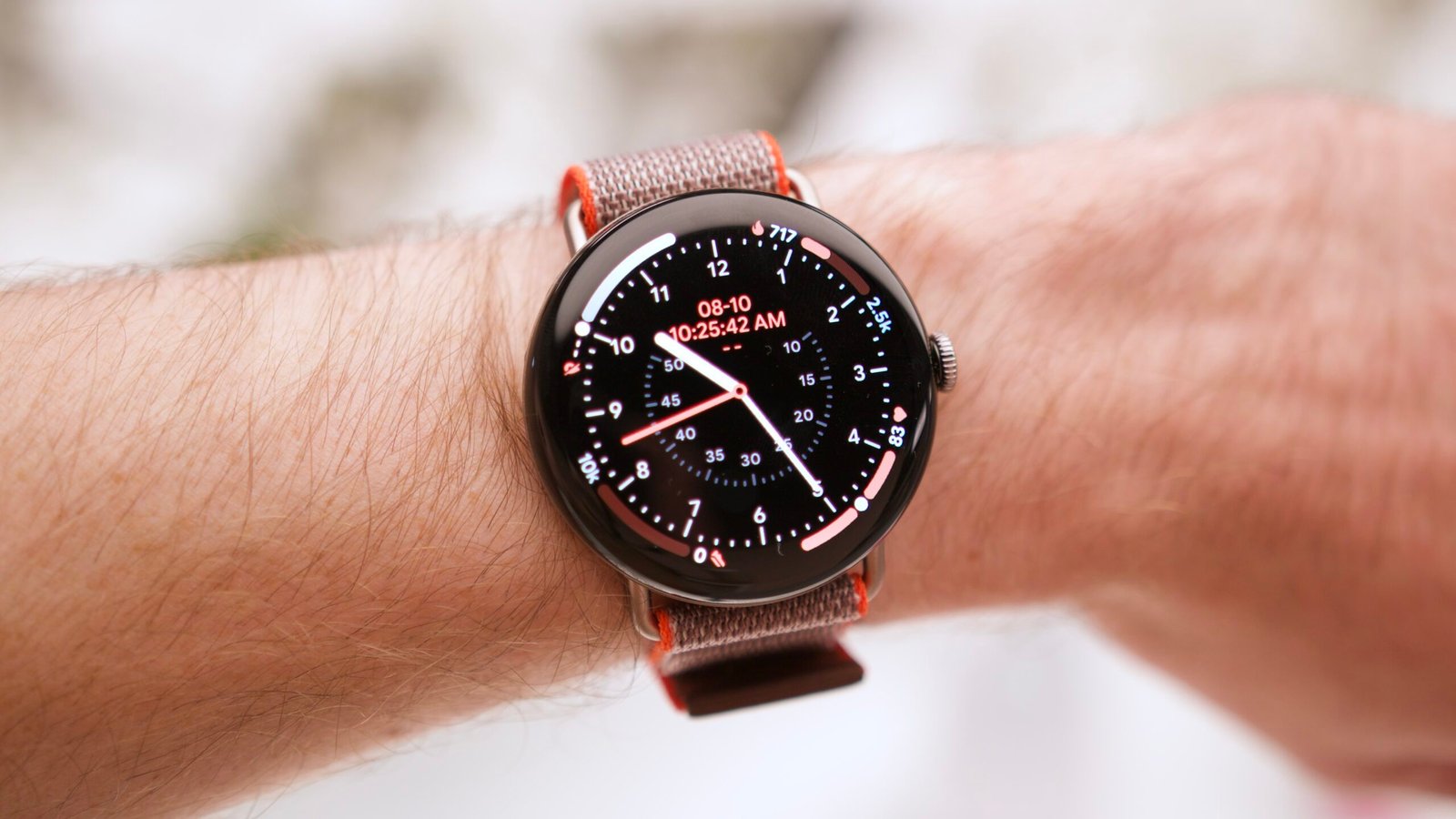
MOUNTAIN VIEW, CA – August 19, 2026 – Google has officially unveiled its latest wearable, the Google Pixel Watch 5, marking another entry into the fiercely competitive smartwatch market. While boasting fresh case and band colors, improved performance, larger batteries, expanded local storage, and new health and fitness tracking metrics, the Pixel Watch 5 faces scrutiny for its striking resemblance to its predecessor, the Pixel Watch 4, and a noticeable price increase—a trend observed across new tech launches in 2026.
Despite the incremental upgrades, the core hardware of the Pixel Watch 5 remains largely similar to the Watch 4, raising questions about the justification for its higher price tag. For consumers feeling the sting of the price hike and minimal design changes, a plethora of compelling alternatives offer similar, if not superior, features depending on individual priorities.
A recent poll of 318 smartwatch enthusiasts revealed a divided sentiment, with 25% opting for the Samsung Galaxy Watch 9, 23% for the Google Pixel Watch 4, 21% for the Amazfit Balance 3, 13% for the COROS PACE 4, and 9% for the Samsung Galaxy Watch 7. A further 8% expressed interest in other unlisted watches.
Here’s a deeper dive into the top alternatives challenging the Pixel Watch 5’s position:
Google Pixel Watch 4: The Value Champion
The 2025 Google Pixel Watch 4 emerges as the most direct competitor and an undeniable value proposition, especially as its price is expected to drop further. Key highlights include multi-day battery life, rapid charging, and sophisticated sleep tracking. Its dual-band GPS capabilities make it an excellent choice for runners. Priced at $350 for the 41mm, Wi-Fi-only variant, it’s currently the most affordable smartwatch to integrate Google’s Gemini Intelligence features. Crucially, many of the Pixel Watch 5’s new Health Guardian and fitness tracking features are anticipated to arrive on the Watch 4 via future software updates.
Both the Pixel Watch 4 and 5 share identical dimensions, weight, band mechanisms, display specifications, waterproofing, and health tracking sensors. Furthermore, the Watch 4 is guaranteed software support until at least October 2028, solidifying its position as a top-tier Wear OS smartwatch in terms of both value and performance.
Samsung Galaxy Watch 9: Future-Proof Performance
Launched in July 2026, the Samsung Galaxy Watch 9 presents a formidable challenge to the Pixel Watch 5. It comes in at a slightly lower price point while offering a more advanced SoC, a sapphire crystal display, and a significantly larger battery in its 40mm model. It’s also notable for being the first non-Pixel smartwatch to feature the "Raise-to-talk" function for Gemini and runs on the latest One UI 9 Watch software (based on Wear OS 7), unlocking a suite of AI-powered health features. The display sizes are also marginally larger than those of the Pixel Watch 5.
A significant advantage of the Galaxy Watch 9 is its integration of the cutting-edge Snapdragon Wear Elite platform. This chipset promises substantial performance gains—up to 5x CPU performance, 7x GPU performance, and 30% longer battery life compared to the previous generation. This makes the Galaxy Watch 9 a more future-proof investment, particularly for demanding local AI processing capabilities. The only minor drawback is its slower 10W charging puck compared to the Pixel Watch 5.
Samsung Galaxy Watch 7: The Budget-Friendly Workhorse
The Samsung Galaxy Watch 7, released in 2024, remains a strong contender for those seeking a budget-friendly Wear OS smartwatch in 2026. With ongoing software updates expected until 2028, it promises to receive new features from the Galaxy Watch 9, such as Daily Cardio Load. It also boasts premium features like sapphire crystal glass, a feature still absent from the Pixel Watch 5.
The 44mm, non-LTE version of the Galaxy Watch 7 often fluctuates between $220 and $280 online, making it an excellent value pick. It incorporates numerous useful Galaxy AI features, including Energy Score, and offers a sleek design, a familiar Wear OS experience, and accurate health tracking. While GPS tracking can be inconsistent near tall buildings and some health features require a Samsung phone, these minor inconveniences are often overlooked given its discounted price.
Amazfit Balance 3: Dedicated Fitness Tracking
For individuals prioritizing dedicated fitness and training capabilities, the Amazfit Balance 3 stands out as a leading contender. Still slightly more affordable than the Pixel Watch 5, the Balance 3 offers an impressive 21 days of battery life, 64GB of storage, a 1.5-inch AMOLED display with sapphire glass, and specialized competitive training tools for HYROX.
Building on its predecessor, the Balance 3 features a stainless steel body, a built-in flashlight, a brighter display, and double the storage. Its core innovation lies in the new HybridCharge Energy Intelligence system, which utilizes metrics like LifeLoad and BioCharge to predict energy levels and readiness scores. As the exclusive wearable partner for HYROX, the Balance 3 provides exclusive training plans, race simulations, and analytics. Beyond fitness, it capably handles smartwatch functions like calls, notifications, and turn-by-turn navigation during runs.
COROS PACE 4: The Lightweight Runner’s Companion
The COROS PACE 4, the latest in its series, offers a robust fitness training alternative. Available in multiple variants starting at $250 for the plastic build, $280 for the aluminum casing, and $290 for the Jakob Ingebrigtsen special edition, the PACE 4 features a 1.2-inch AMOLED display, a functional crown for navigation, up to 19 days of battery life with regular use, and a redesigned heart rate sensor for enhanced accuracy.
Weighing a mere 32 grams and boasting 5ATM water resistance, the PACE 4 is ideal for competitive runners. Its dual-band GPS ensures accurate tracking of training runs, and a built-in microphone allows for voice notes. A comprehensive suite of training tools helps users track fitness scores, predict race times, and develop personalized marathon plans. The PACE 4 delivers essential health and fitness tracking without adding unnecessary bulk to the wrist.
In conclusion, while the Google Pixel Watch 5 enters the market with subtle enhancements, the current landscape offers a diverse range of smartwatches providing comparable or superior features at varying price points. Consumers are encouraged to carefully evaluate their priorities before committing to Google’s latest offering.