







BWF Secretary General Addresses India Open Pollution Concerns, New Scoring Format, and Sport’s Evolution
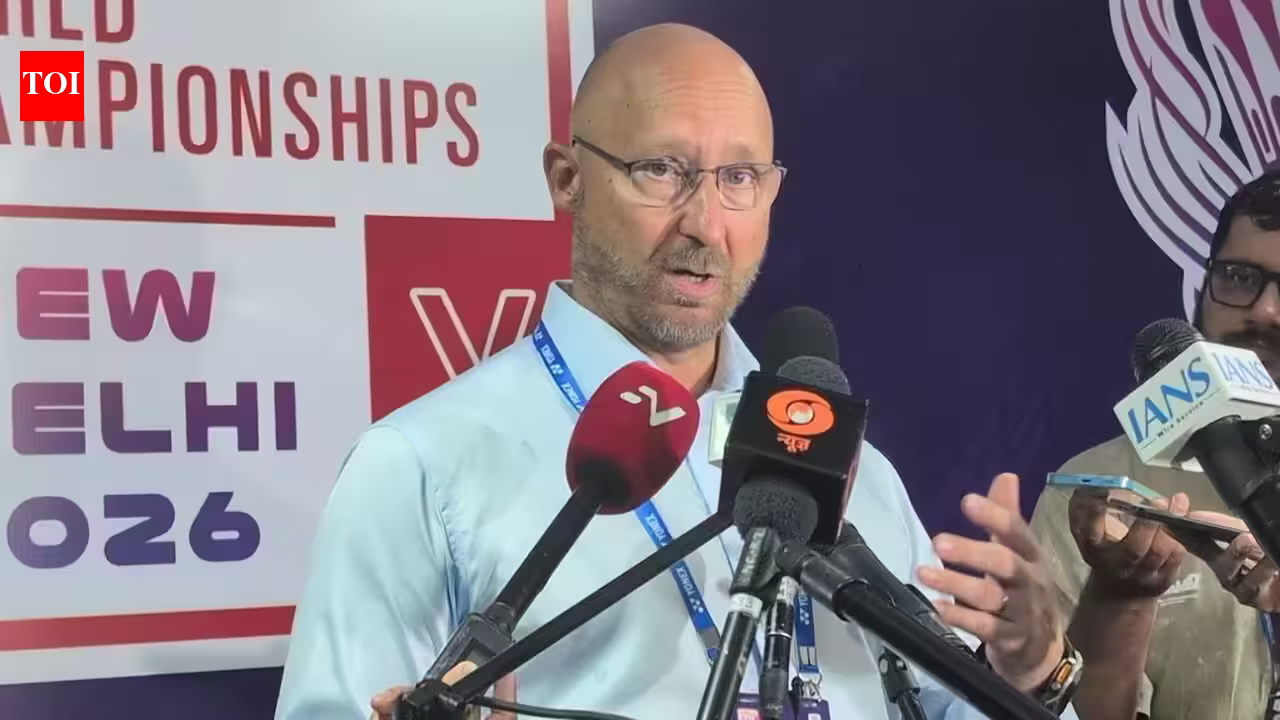
New Delhi, India – As the BWF World Championships captivated audiences in New Delhi, BWF Secretary General Thomas Lund addressed a range of pressing issues facing the sport, from persistent pollution concerns surrounding the India Open to the impending shift to a 15-point scoring format and technological advancements. Lund, while acknowledging the success of the current World Championships in quieting initial criticisms regarding venue readiness, highlighted the logistical challenges in rescheduling the India Open to avoid Delhi’s peak pollution periods.
The India Open, a Super 750 tournament, is slated for February next year, a time when Delhi’s air quality often deteriorates. This scheduling has drawn criticism, notably from Danish player Anders Antonsen. Lund, a former player himself, appealed to the players for their understanding, emphasizing the difficulties in shifting such a significant event within the tightly packed international calendar. He noted that while moving the tournament entirely out of the first quarter has proven unfeasible, data suggests pollution typically eases later into January and February, offering some potential improvement compared to earlier in the year. He also pointed out the BWF’s efforts to slightly delay the wider tour season into January to offer players a longer break and safeguard their health.
A New Era: The 15-Point Scoring System
A significant topic of discussion was the impending change to a 15-point scoring format, set to commence on January 4, 2027, replacing the long-standing 21-point system. This alteration, the culmination of extensive internal discussions, is primarily driven by player feedback regarding the increasing physical demands of the sport. As players become fitter and the competitive depth across world rankings grows, matches have become more grueling, leading to greater injury risks.
"We want to help players do what they do best, play every week, or as much as they can, without getting injured," Lund explained, framing the change not as a revolution but an "evolution." He clarified that the aim is to reduce the physical load on athletes, acknowledging that the previous shift from a 15-point system (where a serve was required to score) to 21 points had inadvertently lengthened matches considerably. While anticipating an adaptation period and some initial apprehension from players and coaches, Lund expressed confidence that statistical simulations indicate the same top players will prevail, potentially leading to more closely contested matches, which he sees as an advantage for badminton.
Embracing Technology and the Indian Market
Lund also shed light on the BWF’s commitment to technological advancements. He confirmed exciting new developments in the pipeline, particularly concerning electronic line-calling, which players have increasingly advocated for on all courts. While not ready to reveal specifics, he assured that these innovations would benefit players, umpires, and spectators alike. The conversation also touched upon the transition to synthetic shuttlecocks. Lund clarified that while current top-level events have ample supply of natural feather shuttlecocks, the BWF has been exploring synthetic alternatives for nearly a decade, especially for the broader participation market where price volatility due to supply chain issues (like bird flu outbreaks) has a greater impact. The goal is to make the sport more accessible and affordable, with high-quality synthetic options offering a sustainable alternative.
Underscoring the strategic importance of India, Lund highlighted the nation as a rapidly growing badminton market and a top-performing country. He cited India’s individual star players and the historic Thomas Cup win as evidence of its expanding prowess. "India, as both a top-performing nation and a top market, has shown real depth," Lund stated, acknowledging the long road ahead to rival the "cricket religion" in the country but expressing an ambitious outlook for badminton’s growth.
Regarding the hosting of the World Championships, Lund praised New Delhi’s efforts, noting how initial criticisms about venue readiness had been effectively addressed. He extended gratitude to the Badminton Association of India (BAI) and other stakeholders for their diligent work in delivering a successful event.
Prize Money and Sustainable Growth
When questioned about prize money at the World Championships, Lund indicated it’s not currently a focus. Instead, the BWF is concentrating on a long-term strategy involving revamping tournament concepts, adding rest days at major events to prioritize athlete health, and investing in new technology. A key commercial priority has been expanding broadcast coverage, ensuring more matches from various nations are televised, thereby offering greater exposure and commercial upside for a wider array of players. "We could just hand players a fixed sum, but we’d rather build something sustainable, supporting players’ own revenue generation while also building the on-court framework for them to succeed commercially," Lund concluded, emphasizing a holistic approach to the sport’s development and player well-being.