








As small businesses across the country grapple with shifting economic tides, Amy Burke Lepper, owner of the Chippewa Falls-based interior design firm One of a Kind, finds herself at a crossroads. After 21 years of navigating recessions and global health crises, she is now facing a new, potent challenge: a combination of high tariffs and inflationary pressures that are forcing her to reconsider the long-term viability of her storefront.
For business owners like Burke Lepper, the struggle is exacerbated by the modern digital landscape. While her cabinetry inventory is tied to physical supply chains in Canada, the way her customers interact with her services has shifted toward the digital sphere, where search engines and AI-driven platforms act as the primary gateways for potential clients.
The Digital Barrier and Consumer Caution
In an era where consumers are increasingly turning to Google Search and AI-integrated shopping tools to research home improvements, the economic hurdles are more visible than ever. Potential clients are not just looking at aesthetics; they are utilizing financial calculators, interest rate forecasting tools, and search-based market analysis to determine if a kitchen renovation is a sound investment.
Burke Lepper reports that her clientele is becoming increasingly cautious, often citing advice from financial advisors who are using real-time data to warn against large capital expenditures. “They have said, ‘I talked to my financial advisor and they said maybe you should hold off building because of interest rates, because of the tariffs, because of inflation,’” she noted. When high-interest rates and tariff-inflated material costs intersect with the accessible data provided by modern search technology, consumers are frequently opting to postpone projects, directly thinning the pipeline for local design firms.
Supply Chain Tech and the Tariff Burden
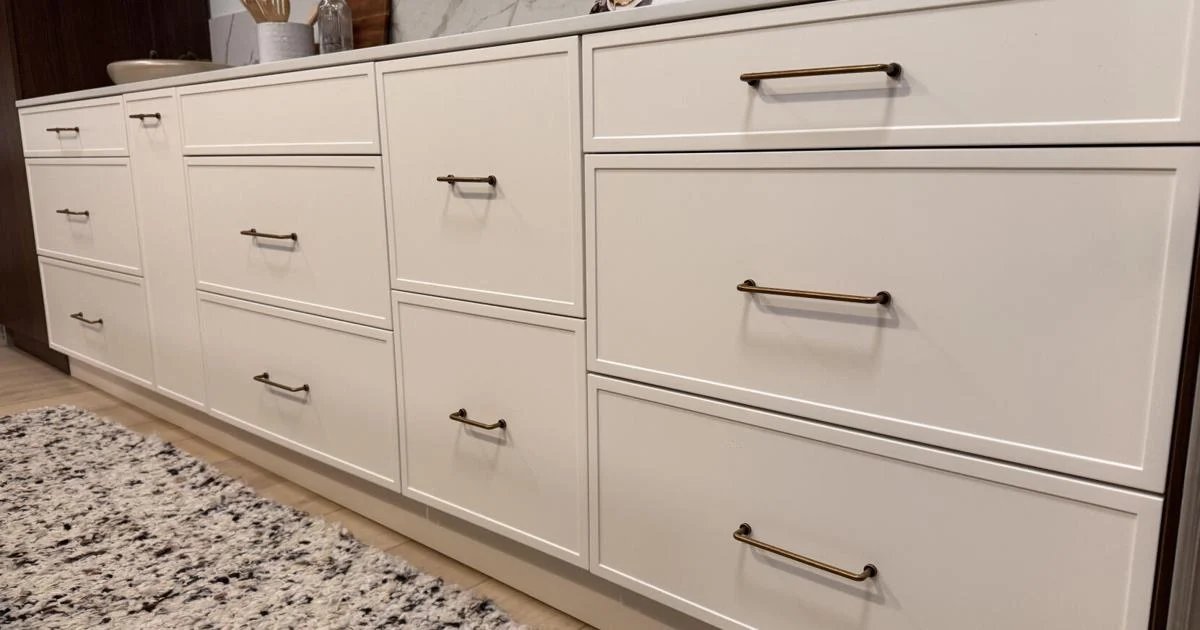
The core of Burke Lepper’s business issue lies in a 50% tariff imposed on Canadian imports—a major shift for a company that has relied on its long-standing Canadian cabinet supplier for over two decades. While many businesses have turned to sophisticated supply chain management software and AI-driven logistics platforms to mitigate such costs, the reality of the tariff remains a fixed, unavoidable overhead.
Beyond the tariffs, the rising cost of diesel fuel used to transport these goods has further strained her budget. While tech-forward logistics companies often use AI to optimize routes and reduce fuel consumption, independent small businesses often lack the capital to pivot to entirely new, domestic-based supply chains without significant downtime. Burke Lepper is currently absorbing approximately 25% of these increased costs herself to keep prices competitive for her customers, but she warns that this is a finite strategy.
The Future of Local Retail in an Automated Economy
The transition from the COVID-19 pandemic to this current economic climate has been taxing. Burke Lepper’s predicament highlights a broader trend: small retailers are struggling to maintain the “human” element of high-end interior design while competing against, and being affected by, an increasingly automated economic environment.
As she looks toward the future, the uncertainty is palpable. While she remains hopeful that trade relations may stabilize or that market conditions will improve, the threat of closure looms. For many small business owners, the current landscape—defined by global trade friction and high-information consumers—requires a level of resilience that is becoming harder to sustain. Burke Lepper’s story serves as a reminder that even as technology makes information more accessible, the fundamental challenges of trade, logistics, and regional economic stability remain the primary drivers of success or failure for the local storefront.
“I’ve made it through a recession, I’ve made it through a pandemic, and now I have to go through this,” she said. “Something needs to happen sooner than later.”
Disclaimer: This content is auto-generated for informational purposes only.
Source: Read Original News