









China Factor Complicates U.S.-Canada Trade Negotiations Amid Escalating Tensions
The U.S.-Canada trade relationship is facing a deepening rift, with China emerging as the central—and most contentious—force behind the latest round of diplomatic friction. As the Trump administration intensifies its campaign to secure North American supply chains, Ottawa’s simultaneous pursuit of warmer economic ties with Beijing has created a significant hurdle in already strained negotiations.
The Problem of Transshipment
At the core of the dispute is the issue of transshipment, a practice where goods are routed through an intermediary nation to bypass tariffs or mask their country of origin. Washington is increasingly concerned that Chinese-made steel, aluminum, and other industrial components are being processed in Canada or Mexico before entering the United States, allowing them to qualify as regional content and evade U.S. import restrictions.
This issue was theoretically addressed in a 2019 joint statement between the two nations, which established a mechanism to prevent the influx of non-North American metals. However, U.S. trade hawks are now pushing for far more stringent safeguards, arguing that current measures are insufficient to keep pace with the evolving strategies of international exporters.
Canada’s Dual Strategy
While the United States pushes for a “China-resistant” North American bloc, Canada has been actively seeking to diversify its economic portfolio. Ottawa maintains that it is already exercising due diligence, noting that it restricts steel imports from countries lacking free-trade agreements—including China—and enforces a 50% surcharge once specific import thresholds are breached.
Despite these safeguards, Canada’s recent policy shifts have signaled a move toward closer cooperation with Beijing:
- Agricultural Openings: In March, China agreed to resume imports of several Canadian goods, including canola, peas, lobster, and crab.
- EV Policy Adjustments: Canada recently removed its 100% surtax on Chinese electric vehicles, replacing it with a 49,000-vehicle annual quota at the 6.1% most-favored-nation tariff rate.
- Material Relief: Ottawa has also extended tariff relief for specific Chinese steel and aluminum products, citing current domestic supply shortages.
A Growing Fault Line
For the Trump administration, these overtures to Beijing are viewed as a contradiction to the broader goal of regional economic protectionism. Critics in Washington argue that by lowering barriers for Chinese goods, Canada is undermining the unity of the North American trading bloc at a time when the U.S. is aggressively trying to decouple its supply chains from the Chinese economy.
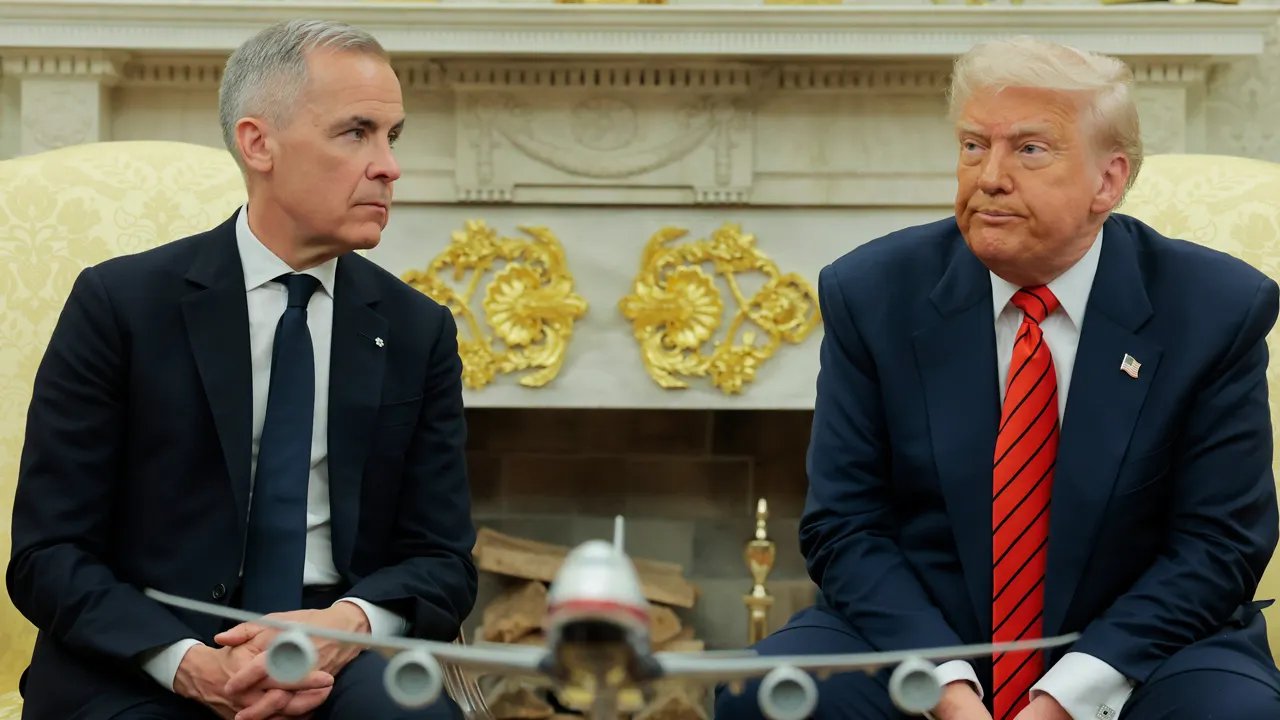
Canadian Prime Minister Mark Carney has signaled frustration, suggesting that the U.S. is overstepping by attempting to dictate or restrict Canada’s sovereign right to strike independent trade deals with other global partners.
As trade talks stall, the question remains: Can Ottawa balance its economic relationship with its second-largest trading partner, China, without triggering a full-scale tariff war with its largest ally? For now, the “China factor” serves as a high-stakes wedge, threatening to define the future of the North American trade landscape.