







The Radioactive Legacy: A New Documentary Reckons with America’s Unsolved Nuclear Shame
Nuclear power was once envisioned as the ultimate engine of prosperity—a way to transform the destructive force of the atom into a limitless source of clean energy. Yet, decades later, the industry remains haunted by the same existential dilemma: what to do with the toxic, long-lived waste that remains long after the reactors have ceased their hum.
A new, avant-garde documentary, To Use a Mountain, peels back the clinical veneer of government policy to reveal the human and environmental toll of the United States’ failure to find a permanent solution for its spent nuclear fuel.
A “Faith-Based” Energy
Director Casey Carter began the project by interviewing a Washington state farmer involved in litigation against the government regarding radioactive releases from the Hanford nuclear reservation. During the conversation, the farmer offered a scathing critique of the industry: “He joked that nuclear power is the only faith-based energy because everyone always asks, ‘Do you believe in it?’” Carter recalls. “He was like, ‘You don’t have to believe in solar. It’s just a pretty good idea.’”
The documentary, which functions almost as a somber coda to Christopher Nolan’s Oppenheimer, moves beyond traditional journalistic tropes. By eschewing “voice-of-God” narration and expert talking heads, the film presents an immersive, impressionistic portrait of communities that have spent generations living in the shadow of the Manhattan Project’s legacy.
The Search for a Dumping Ground
The film specifically examines the 1982 Nuclear Waste Policy Act, a legislative mandate that forced six rural communities into a de facto competition to host over 90,000 tons of high-level nuclear waste. The goal was to isolate the material for 10,000 years—a timeframe that assumes human civilization will remain stable enough to maintain such a site.
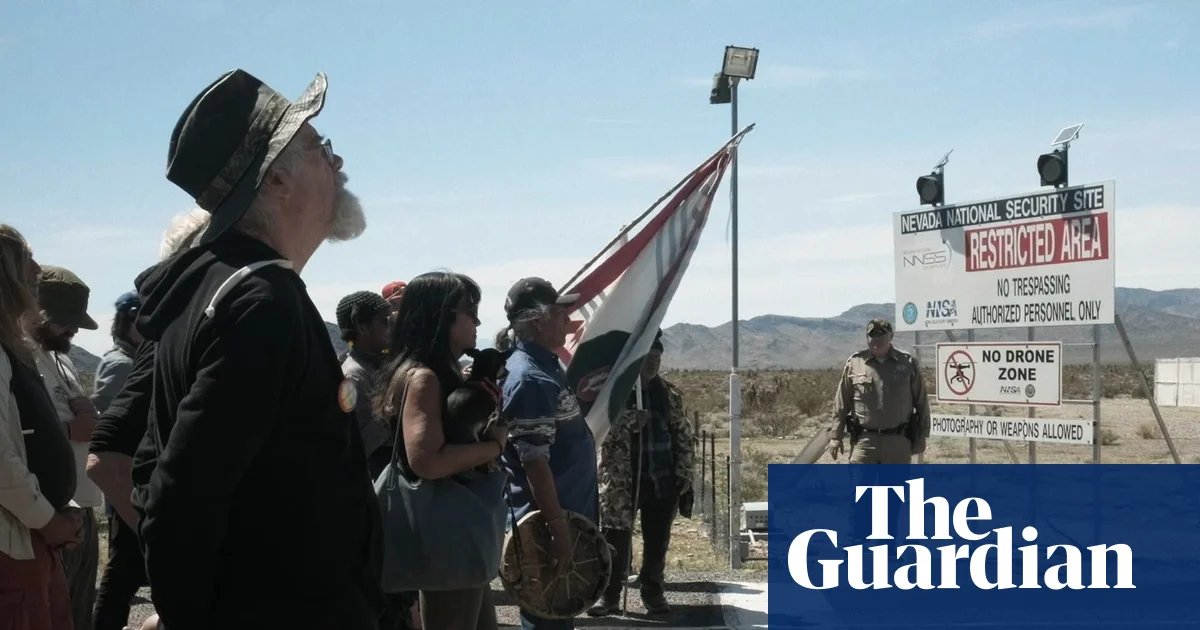
Ultimately, Yucca Mountain in Nevada became the primary target for this repository. However, after decades of legal battles, political obstruction from figures like Senate majority leader Harry Reid, and intense local activism, the project stalled. Today, the U.S. remains without a permanent repository, with the federal government paying utility companies billions of dollars to hold onto spent fuel at temporary sites.
Environmental Racism and Resistance
Carter’s lens is particularly sharp regarding the government’s habit of targeting marginalized, rural, and indigenous populations. The film highlights the struggle of Ian Zabarte, a Western Shoshone principal who has seen his family suffer from radiation-related illnesses linked to nuclear testing on tribal lands. For Zabarte, the government’s push for a repository at Yucca Mountain is not just a policy decision; it is a violation of treaty obligations and a form of environmental racism.
“In traveling to these places, you realize each one of them has dealt with issues of environmental violence or racism even prior to being nominated,” Carter says. “It’s gut-wrenching to think about people encountering this level of treatment from their government.”
A Growing Crisis
The relevance of To Use a Mountain has only sharpened since production began in 2018. As global instability increases and the tech industry looks toward microreactors to power energy-hungry data centers, the conversation around nuclear waste is returning to the spotlight. The Department of Energy recently named five states—Idaho, Louisiana, Oklahoma, Tennessee, and Utah—as finalists for new “nuclear lifecycle innovation campuses,” proving that the search for a place to put our radioactive “shame” is far from over.
By blending archival footage of the dawn of the atomic age with the haunting realities of leaking tanks and contaminated riverbeds, the film forces the viewer to confront a uncomfortable question: can humanity safely manage the toxic byproducts of its own ambition, or are we simply passing a radioactive debt to a future that may not be able to pay it?