








Cornish Chough Population Soars to Record Highs in Remarkable Conservation Success Story
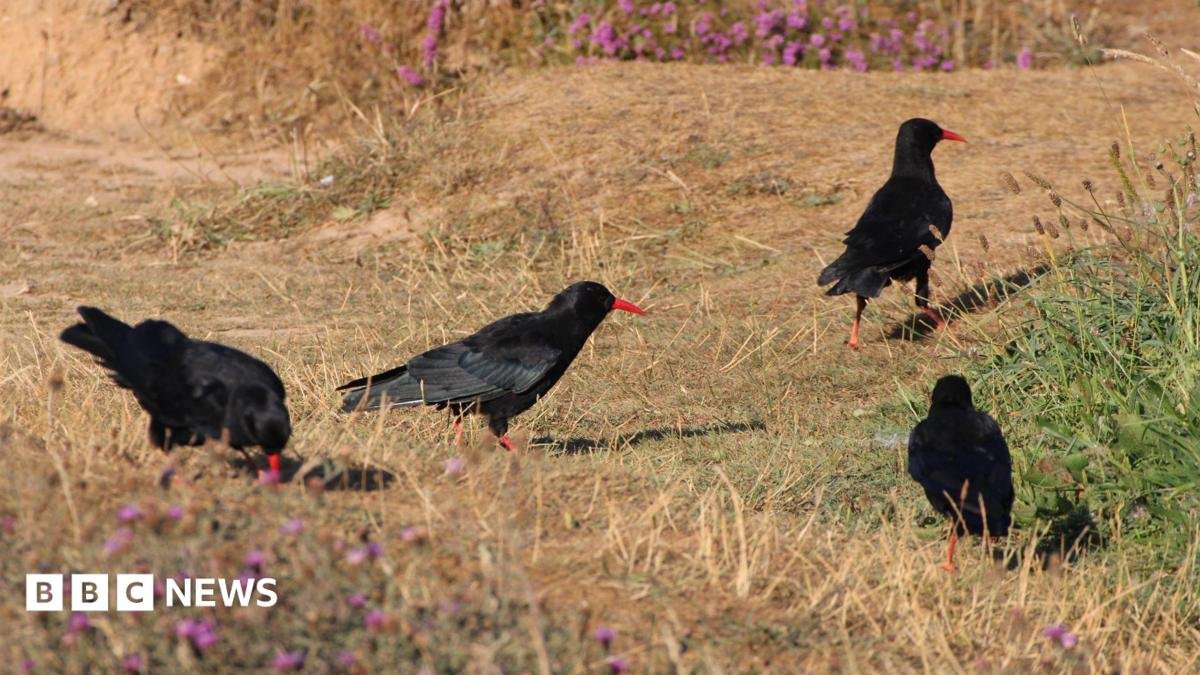
The Cornish coastline is echoing with the calls of a rising population of choughs, as conservationists celebrate a record-breaking summer for the iconic bird. According to the Royal Society for the Protection of Birds (RSPB) England, the species has reached a new population milestone, signaling that the breed is in “robust health.”
Conservation data reveals that 161 choughs were recorded across Cornwall this summer, marking a significant increase of 32 birds compared to the 129 counted in 2025. This population boom is attributed to 56 successful breeding pairs, which produced an impressive average of three fledglings per nest.
From Extinction to Resurgence
The current success stands in stark contrast to the grim reality of the late 20th century, when the species vanished from the Cornish landscape entirely. Choughs were declared extinct in the region during the 1970s. However, the trajectory of the species changed forever in 2001, when three birds—believed to have arrived from Ireland—landed at Lizard Point. This small group began the arduous process of re-establishing a self-sustaining population, an effort that has now blossomed into a major environmental victory.
The Lizard Peninsula has emerged as the heartbeat of this recovery. This year, the area acted as a prime breeding ground, with 26 chicks successfully emerging from eight nests—an increase of 11 chicks compared to the previous year.
A Decade of Dedication
For those on the front lines of conservation, the resurgence is both personal and profound. Peter Hall, a National Trust volunteer who has spent 11 years monitoring nest sites on the Lizard, admitted that the current success has far exceeded his initial expectations.
“I certainly never foresaw a time when I would be monitoring so many sites, and certainly not having 16 choughlets fledge,” Hall said. “The past two winters, we have been blessed with ‘chatterings’ in excess of 20 choughs around the Lizard—a far cry from the solitary single pair we had when I started as part of the nest protection team in 2016.”
As the chough continues to reclaim its ancestral home, volunteers and conservationists remain optimistic. The consistent growth in numbers suggests that the habitat management and protection efforts put in place over the last two decades have created a thriving ecosystem capable of supporting one of the region’s most beloved birds for generations to come.
“Long may the successful return of this iconic Cornish bird delight myself and others,” Hall added.