








From Local Insights to Global Impact: Scaling Digital Agri-Infrastructure with AI
In a significant stride toward enhancing global food security, advanced agricultural modeling developed in India is now serving as the backbone for new digital public infrastructure worldwide. This expansion marks a pivotal moment in how international organizations leverage technology to monitor, manage, and secure planetary-scale food systems.
At the heart of this transformation is the Food and Agriculture Organization (FAO) of the United Nations. The FAO’s CROPGRIDS data platform, designed to track agricultural sustainability across the globe, is evolving to provide more granular and real-time intelligence for its member countries.
Integrating AI for Smarter Statistics
Building on the success of these foundational models, the FAO has launched the geoAI4stats initiative. This ambitious project seeks to integrate the ALU (Agricultural Land Use) and AMED (Agricultural Monitoring and Evaluation Datasets) into the existing CROPGRIDS framework.
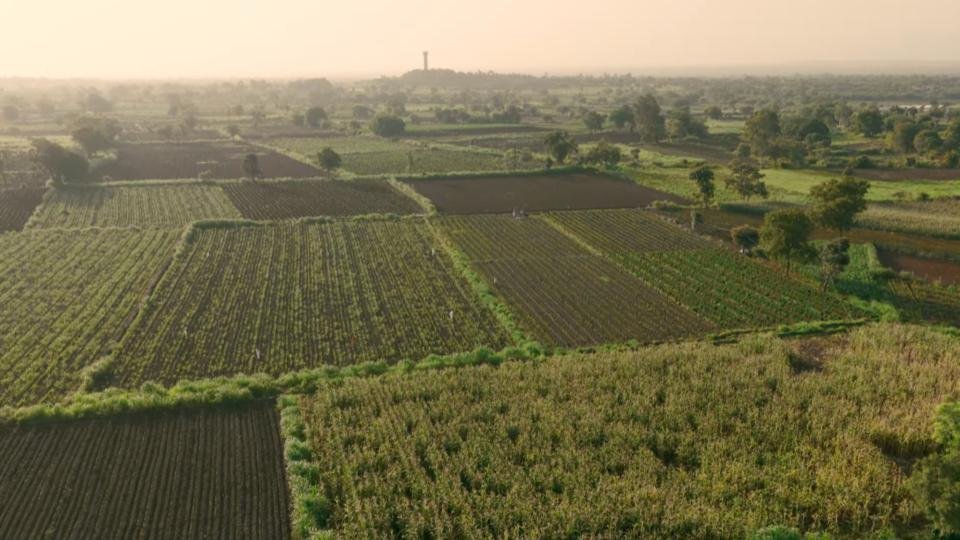
By combining these datasets, the initiative aims to fundamentally change how nations collect and process agricultural data. The new features will automate the detection of crops, generate high-resolution agricultural maps, and significantly accelerate the pace at which agricultural statistics are updated. This shift from manual to AI-driven reporting will allow countries to respond faster to shifting environmental and market conditions.
A $2.5 Million Boost for Climate Resilience
The initiative is bolstered by $2.5 million in funding from Google.org, provided as part of the AI Collaborative: Food Security. This partnership underscores the growing importance of private-sector collaboration in solving complex, global challenges.
The project is designed to empower nations to utilize foundational AI models alongside their own local datasets. This capability is expected to yield immediate benefits across several critical sectors, including:
- Climate Resilience: Identifying vulnerable regions before disasters strike.
- Crop Insurance: Providing more accurate data to support fair and rapid insurance payouts for farmers.
- Resource Allocation: Optimizing the distribution of fertilizer subsidies to ensure they reach the communities that need them most.
- Sustainability Monitoring: Creating a transparent, data-backed view of global agricultural health.
By scaling agri-resilience from successful local applications to a global standard, the FAO and its partners are providing nations with the tools necessary to build a more sustainable and secure agricultural future in an increasingly unpredictable climate.