






“The System Bent, Didn’t Break”: Shashi Tharoor Hails India’s Democratic Resilience Amid Gen Z Protests
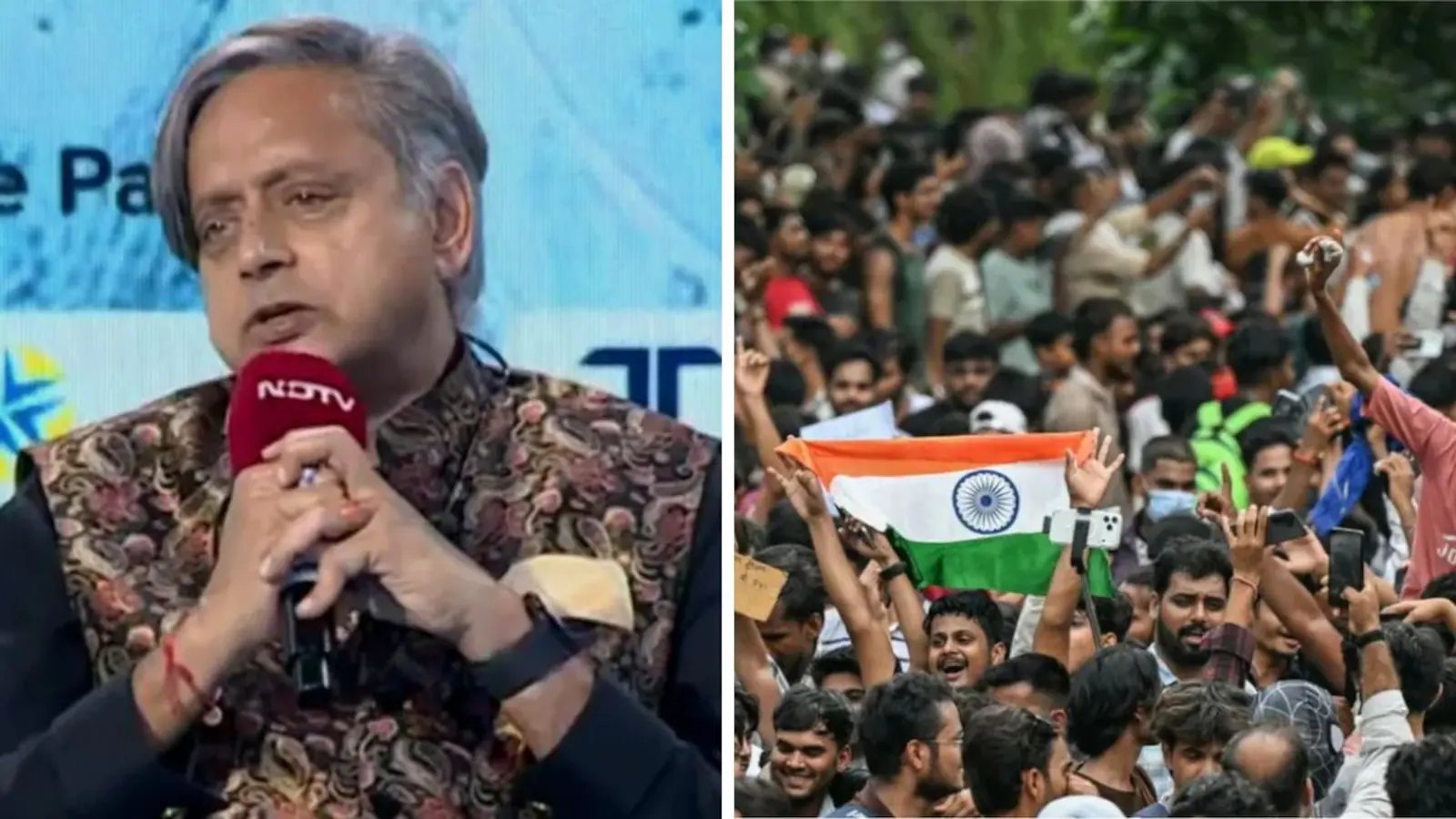
New Delhi: Amid a wave of youth-led political mobilization sweeping across South Asia, Congress MP and seasoned diplomat Shashi Tharoor has lauded the unique resilience of India’s democratic framework. Speaking at the NDTV World Anviksha Summit, Tharoor argued that while neighboring nations have grappled with systemic collapse, India’s “self-correcting” mechanisms have allowed the state to remain responsive to the aspirations of its younger generation.
A Regional Pattern of Discontent
Tharoor highlighted that the past decade has witnessed a consistent trend of Gen Z-led protests across six major South Asian nations. Tracing this timeline from the 2012 Myanmar protests, he noted similar uprisings in Pakistan, Sri Lanka, Bangladesh, and Nepal, culminating in recent demonstrations within India.
“They were all manifestations of Gen Z anger in one way or the other,” Tharoor observed. However, he emphasized that the true point of divergence lies in how these individual political systems weathered the storm.
Contrasting India with its neighbors, Tharoor pointed out, “[the] Indian system bent, didn’t break.”
Divergent Outcomes in South Asia
Tharoor provided a stark breakdown of how regional neighbors responded to public pressure:
- Bangladesh and Sri Lanka: Faced with immense public outcry, the political establishments collapsed, forcing the leadership to flee and paving the way for interim administrations.
- Nepal: While the country experienced regime change, it followed a constitutional path leading to fresh elections.
- Pakistan and Myanmar: In these nations, the instability resulted in military intervention, with the former installing a puppet government and the latter seeing a full military takeover.
The Power of “Self-Correction”
Tharoor argued that India’s ability to navigate such challenges is rooted in its robust democratic architecture, which is inherently designed to be “nimble.” According to the former diplomat, the Indian government’s recent moves—including the rare resignation of a minister in response to public sentiment—serve as a testament to this flexibility.
“No one expected the BJP government, which has been impervious to public demands for resignations, to respond,” Tharoor noted. “The recognition that democracy needs to be nimble enough to recognize a public reality and respond to it is a tribute to the Indian system.”
For Tharoor, the ability of the state to acknowledge and adapt to these “popular currents” provides a sense of encouragement. As an opposition leader, he views this receptivity as a vital indicator that the country’s democratic fabric remains durable enough to absorb pressure without fracturing.
“The Indian example gives me encouragement,” he concluded, highlighting that the nation’s capacity to bend under the weight of legitimate protest while maintaining its institutional integrity is what separates it from its neighbors.