









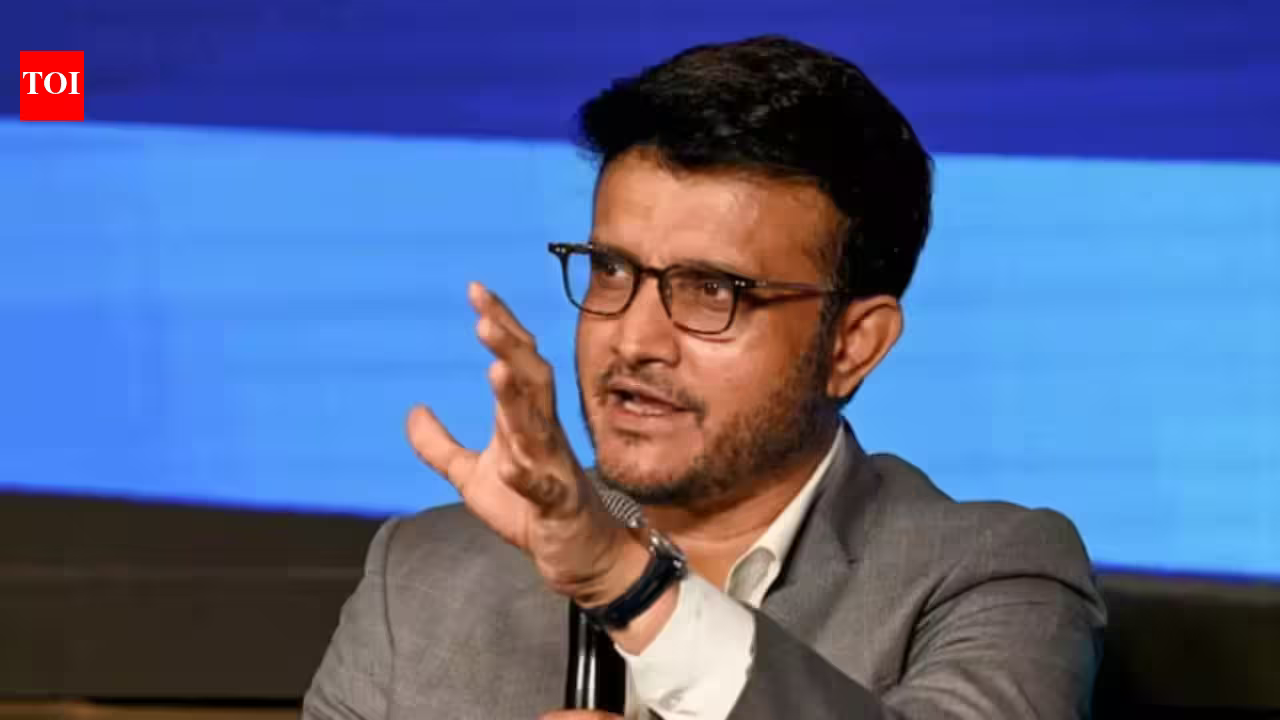
The “King” Mentality: How Sourav Ganguly Revolutionized India’s Aggressive Cricket Culture
NEW DELHI: For generations, the Indian cricket team was often characterized by a polite, reserved demeanor on the world stage. However, the early 2000s marked a tectonic shift in the national team’s DNA—a transformation spearheaded by none other than former captain Sourav Ganguly.
In a recent appearance on The Great Indian Cricket Show on Doordarshan, former Indian wicketkeeper-batter Deep Dasgupta shed light on how Ganguly’s unwavering self-belief fundamentally altered the squad’s psyche, moving the team from a defensive posture to a combative, fearless unit.
From Stoicism to Confrontation
Dasgupta, who featured in eight Tests and five ODIs for India, noted that the most significant change under Ganguly’s leadership was the team’s reaction to opposition sledging. Historically, Indian players were encouraged to ignore provocations or channel the frustration internally to perform better. Under Ganguly, the mandate changed entirely.
“Under Ganguly, if someone sledged, we started to give it back,” Dasgupta recalled. “Rather than saying, ‘I will channel it’—while we still used that to our advantage—we would give it back as well. His nickname is ‘Maharaj.’ He’s always had that idea that ‘I am the king,’ and it started reflecting on the team.”
A Tale of Two Tours
To illustrate this shift, Dasgupta compared his experiences touring Australia during different stages of his career. He pointed to the 2003-04 tour as the definitive moment where India’s newfound aggression was on full display.
“If you look at the progression between my first tour and my last tour in Australia in 2003, you could see that change,” he explained. “Earlier, the response to aggression was controlled and internal. But by the time we reached 2003, if someone said something, we wouldn’t just take it—we would fire back.”
This cultural shift was vital for a team that had long struggled to win on challenging overseas soil. By adopting Ganguly’s “I am the king” attitude, players like Virender Sehwag, Yuvraj Singh, and Zaheer Khan developed the spine required to look international powerhouses in the eye.
The Ganguly Legacy
The impact of this mindset was reflected in the statistics and the trophy cabinet. During his tenure as captain, Ganguly led India in 196 international matches, securing 97 victories. His record in the longest format remains particularly impressive, with 21 wins in 49 Tests.
Beyond the numbers, Ganguly’s captaincy was defined by historic achievements:
- The 2001 Border-Gavaskar Trophy: Snapping Australia’s legendary winning streak.
- The 2002 NatWest Trophy: An iconic comeback victory in England.
- The 2003 World Cup: Leading a young side to the final of the ICC tournament.
As Deep Dasgupta noted, the Sourav Ganguly era was about more than just batting averages or bowling spells; it was about instilling a sense of pride and dominance that would define Indian cricket for years to come. By refusing to be intimidated, Ganguly didn’t just change the team’s tactics—he changed the very identity of the Indian cricketer.