









A Face from History: Researchers Unveil the Life of a ‘Conquest Man’
A hauntingly lifelike digital reconstruction has pulled back the veil of time, revealing the face of a man who navigated the seismic shifts of the 11th century. Known as the “Conquest Man,” his identity and physical appearance have been brought into focus through an interdisciplinary investigation that sheds new light on the life of an individual who survived one of the most turbulent chapters in English history.
A Life of Resilience
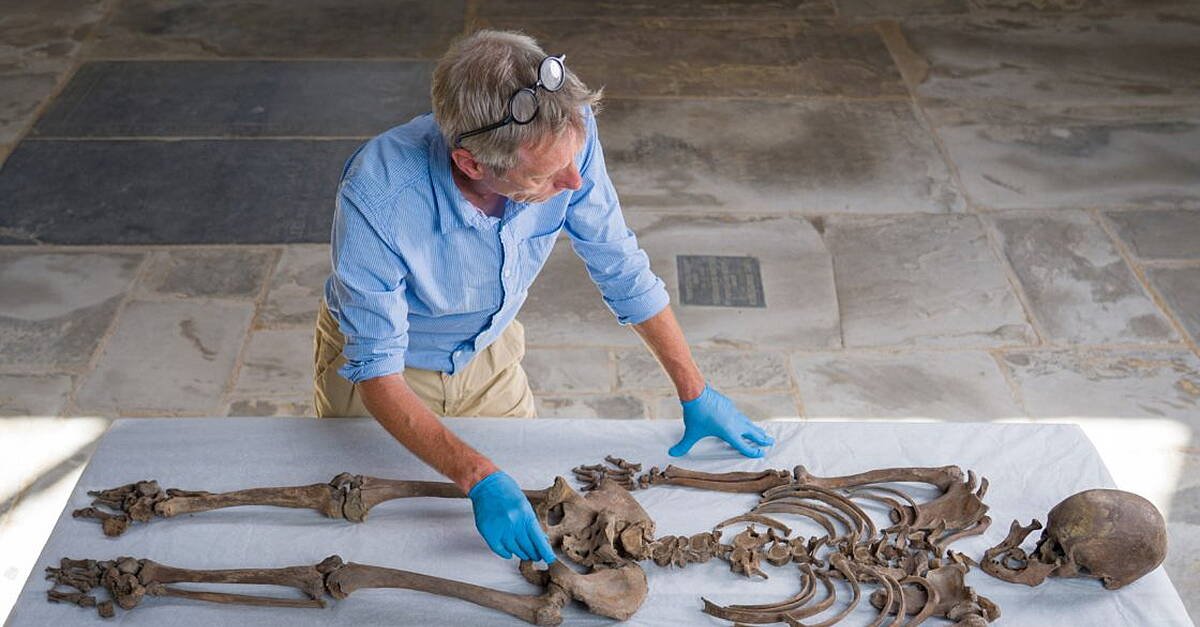
The analysis, conducted by a coalition of experts including English Heritage, the Crick Institute, and FaceLab, suggests a man of remarkable resilience. Standing slightly over five feet tall, the man was described as stocky and muscular. Now estimated to have been between 50 and 60 years old at the time of his death, he bore the physical scars of a long and active life, including evidence of multiple healed fractures.
DNA analysis provided a significant clue regarding his origins, indicating substantial ancestry from continental Europe. Born during the reign of the Viking King Cnut, he lived through the transformative chaos of 1066, eventually finding his place in the “new Norman world.”
A Prestigious Resting Place
The burial site of the Conquest Man offers clues to his status and the shifting social landscape of the time. He was laid to rest in St Peter’s Church in Barton-upon-Humber, which was then under the ownership of one of William the Conqueror’s knights.
His burial was marked by distinct cultural blending. He was interred in a coffin crafted from an oak tree felled around 1079. His body was positioned with his arms folded and his head resting on a grass pillow, stabilized by two lumps of local chalk. Notably, he was buried with three apple wood staffs—a discovery that highlights the persistence of Scandinavian traditions despite the encroaching Norman influence.
Bridging the Past and Present
The project, which serves as a precursor to upcoming Bayeux Tapestry exhibitions and Battle of Hastings re-enactments, aims to humanize the statistics of history.
Kevin Booth, head curator of collections at English Heritage, who spent two decades researching this specific individual, expressed the profound impact of the new findings. “To be able to now look at his face is to feel we can almost speak to him,” Booth remarked. “He’s a fascinating survivor of a cataclysmic period in history… It seems to me his legacy is of survival, resilience, and adaptation.”
Booth emphasized that the goal of the project is to move beyond the traditional “winners and losers” narrative of the Norman Conquest. By focusing on the humanity of the individuals who lived through that era, researchers hope to inspire a deeper, more nuanced understanding of the people who shaped the nation.
For those interested in seeing the results of this remarkable scientific journey, the digital reconstruction and findings will be showcased at St Peter’s Church, Barton-upon-Humber, on September 20th, from 12pm to 4pm.