









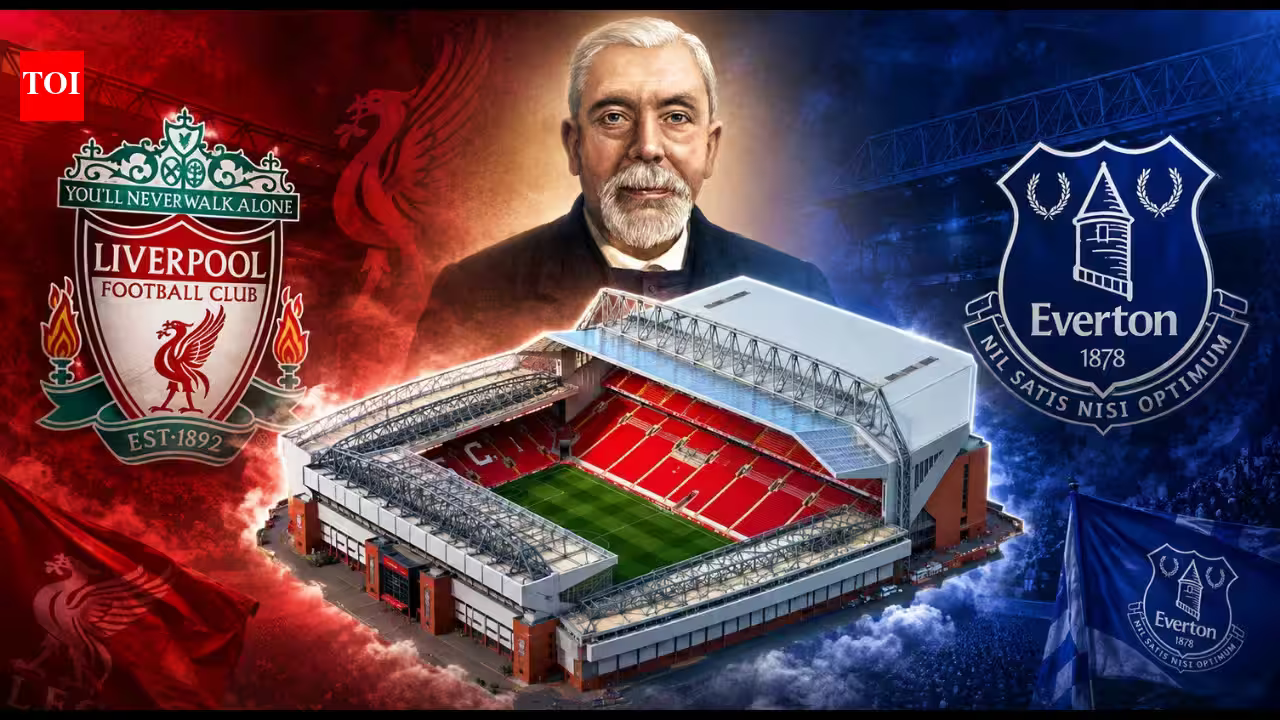
The Rent Dispute That Created a Giant: How a Bitter Split Built the Liverpool-Everton Rivalry
Merseyside’s oldest football rivalry is often framed as a clash of cultures, a city divided by decades of tribal loyalty, red-versus-blue anthems, and competitive spirit. Yet, when the 130-year history of the Merseyside Derby is stripped of its romanticism, the origin story is remarkably mundane: it was a petty, high-stakes landlord-tenant dispute that accidentally birthed one of the most successful football clubs in the world.
The Anfield Exodus
The history of this divide dates back to 1884, when Everton moved into Anfield. At the time, the site was a developing plot of land that would become the club’s fortress. John Houlding, the club’s president and a local brewer, eventually purchased the land outright in 1885. For several years, the arrangement was mutually beneficial; Everton flourished on the pitch, winning their first league championship at the venue in 1890-91 and drawing crowds of up to 20,000.
However, as Everton’s success grew, so did the tension between the club’s committee and Houlding. The conflict was rooted in a clash of interests: Houlding was simultaneously the club’s president and its landlord. As the value of the ground soared, Houlding demanded higher rent—which jumped from £100 to £250 between 1884 and 1892—and pushed for a property deal that the club’s committee found overbearing.
Unable to resolve their financial disagreements, the committee took a radical step. On March 15, 1892, they broke ties with Houlding and relocated the club to a new site, Mere Green Field, which would famously become Goodison Park.
The Birth of Liverpool FC
Houlding was left with a significant problem: he held the deed to a pristine stadium, but his primary tenant had vanished. Refusing to let Anfield sit idle, he and a group of associates took the extraordinary measure of forming a new football club specifically to occupy the ground.
That club was Liverpool. Initially named “Liverpool Football Club and Athletic Grounds Limited,” the organization was formally registered in June 1892. While it is a common misconception that the two clubs once shared the stadium, the reality is that Liverpool was created as a direct, reactive consequence of Everton’s departure.
A Legacy of Irony
The irony of this split is difficult to overstate. The club that emerged from the rubble of a rental dispute went on to become an English powerhouse. Since its inception, Liverpool has secured 20 top-flight league titles and six European Cups, cementing its status as one of the most decorated clubs in global football.
Everton, meanwhile, remains a historic institution with nine league titles of its own—the first of which was ironically won at the very stadium they abandoned.
A Failed Reunion
Even a century later, the ghosts of the 1892 split lingered. In the early 2000s, there were serious discussions about the two clubs sharing a new stadium, with proposals ranging from a 60,000-seat joint ground at Stanley Park to a bizarre “Siamese-style” stadium design in 2010. That proposal envisioned two separate structures joined by a central spine to share infrastructure costs—a plan that would have seen the city’s greatest rivals literally under one roof.
Neither project came to fruition. Liverpool eventually chose to modernize and expand their historic Anfield home, while Everton committed to their own path at the newly developed Bramley-Moore Dock. Today, the two clubs remain close neighbors, their rivalry defined not just by the trophies won, but by the bitter rent dispute that started it all.