





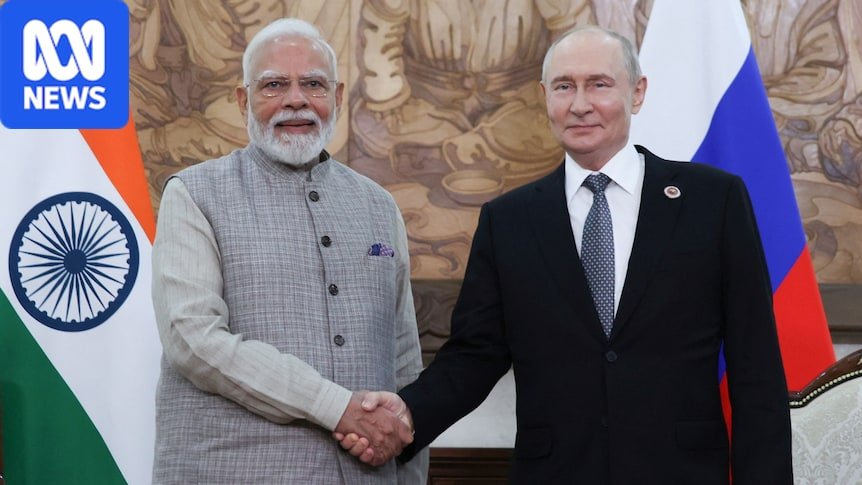
Indian Prime Minister Modi Urges End to Ukraine War During Talks with Putin
Indian Prime Minister Narendra Modi has issued a direct appeal to Russian President Vladimir Putin, stating that the ongoing war in Ukraine must end for the sake of humanity. Speaking on the sidelines of the Shanghai Cooperation Organization summit in Bishkek, the Indian leader emphasized that New Delhi remains committed to supporting all viable efforts to secure peace.
“Every day that the war continues, humanity is, in effect, set back a step, whilst every step towards peace gives all of humanity real hope for peace,” Mr. Modi told the Russian president. “We need to move from endless war to an end to the war, to a cessation of hostilities.”
The meeting, held against a backdrop of strengthening economic ties between the two nations, saw Mr. Modi address the Russian leader as “my friend.” Despite India’s role as one of the world’s largest purchasers of Russian oil—a vital lifeline for the Kremlin’s budget amid Western sanctions—Mr. Modi’s remarks signaled a push for a diplomatic resolution.
According to a Kremlin transcript, Mr. Putin thanked the Indian leader and claimed that Russia is “moving forward along this path.” However, the Kremlin maintained its long-standing stance that it will only negotiate on its own terms, a position Kyiv has consistently rejected as a demand for total capitulation.
U.S. Takes Hard Line at G20
The diplomatic pressure on Moscow intensified simultaneously on the other side of the globe. During a G20 finance meeting in Asheville, North Carolina, U.S. Treasury Secretary Scott Bessent held a tense bilateral exchange with Russian Finance Minister Anton Siluanov—the latter’s first in-person G20 appearance since the 2022 invasion.
Sources familiar with the encounter reported that when Mr. Siluanov attempted to discuss potential areas of financial cooperation, Mr. Bessent sharply interrupted him, declaring that “nothing is possible until the war is over.” The U.S. official signaled that the focus of American foreign policy remains centered on the current peace plan for Ukraine.
The meeting highlighted the complex contradictions in the current geopolitical landscape. While the U.S. continues to apply rigorous pressure, it has also had to navigate energy security concerns; following the disruption of energy supplies through the Strait of Hormuz due to conflict involving Iran, Secretary Bessent issued limited licenses to allow the sale of Russian oil to stabilize global markets.
As international actors continue to balance domestic economic interests with the moral imperative to resolve the conflict, the path to a lasting cessation of hostilities remains stalled, with Russia appearing unwilling to pivot from its military objectives.