








NSE Navigates Heavy MSCI Rebalancing Volume via New Closing Auction Session
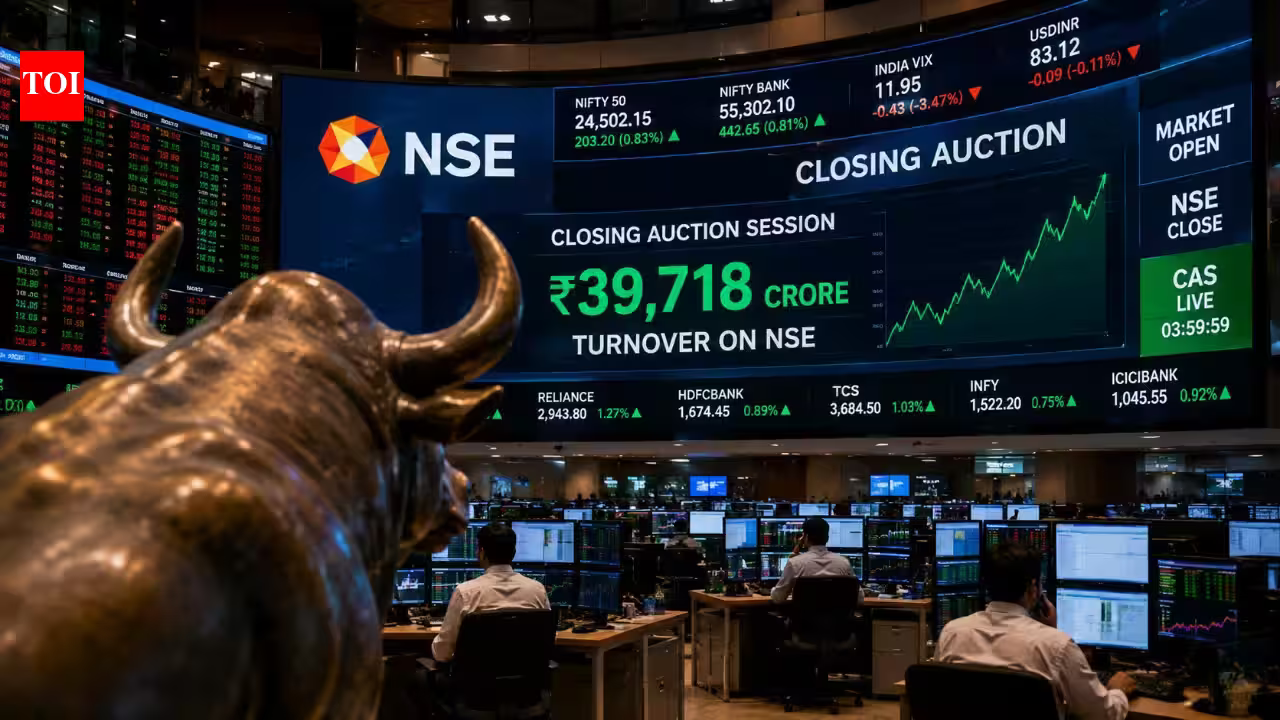
MUMBAI: The National Stock Exchange (NSE) successfully navigated a major test of its market infrastructure on Monday, as the newly implemented Closing Auction Session (CAS) processed significant trading volumes during a high-stakes MSCI emerging market index rebalancing day.
The session saw a massive surge in activity, with Rs 39,718 crore ($4.2 billion) worth of stocks traded on the NSE during the CAS alone. This volume accounted for approximately 22% of the exchange’s total cash market turnover for the day. Monday marked the first time the new system, which went live on August 3, faced the pressures of an MSCI rebalancing, a period typically characterized by frantic trading as passive investors, index funds, and ETFs adjust their portfolios to align with new index weightings.
Overcoming Market Apprehension
The smooth execution provided a sigh of relief for market participants who had grown wary following last Thursday’s volatile session. During that event, both the Sensex and Bankex on the BSE experienced sudden, sharp swings—crashing roughly 3% before recovering in minutes—sparking concerns about the market’s stability during the final minutes of trade.
In contrast, Monday’s proceedings remained orderly. According to the NSE, the CAS turnover was approximately 42 times higher than the turnover recorded in the previous trading session, demonstrating the platform’s capacity to handle spikes in liquidity.
Broad Participation and Efficiency
The NSE reported that more than 98,000 unique investors participated in Monday’s CAS, highlighting the growing adoption of the new mechanism. With nearly 100% market share during the closing window, the exchange proved its operational resilience under stress.
“Index rebalancing days see heavy trading at the close, as index funds, exchange-traded funds, and other passive investors realign their portfolios at the closing price,” the NSE noted in an official release.
As the markets continue to integrate the CAS into daily operations, the successful handling of this high-volume event serves as a critical proof-of-concept for the exchange’s updated trading infrastructure, signaling increased stability for institutional and retail investors alike during periods of global index adjustments.