









Powering Progress: Delhi-Meerut RRTS to Slash Energy Costs with Landmark 110 MW Solar Plant
In a significant stride toward sustainable urban mobility, the National Capital Region Transport Corporation (NCRTC) has announced a major green energy initiative for the Delhi-Meerut Regional Rapid Transit System (RRTS). The project, which involves the development of a 110 MW captive solar power plant, marks a pioneering move in India’s mass transit infrastructure.
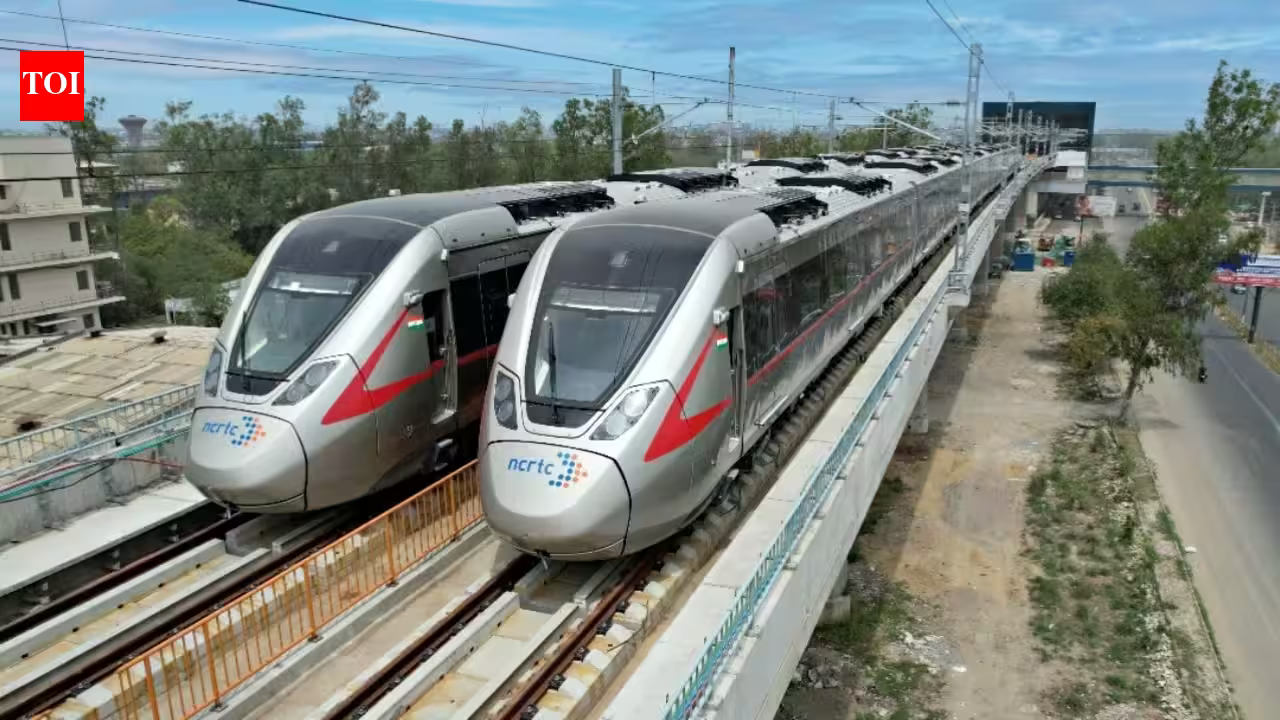
Launched in 2023, the Namo Bharat service has revolutionized travel between Delhi and Meerut. Operating at speeds of up to 160 kmph, these trains have reduced travel time to under an hour, providing a high-speed alternative for thousands of daily commuters.
Cutting Costs and Carbon Footprint
Electricity consumption remains one of the largest operating expenses for the RRTS, accounting for approximately 30-35% of total costs. To mitigate this, the NCRTC has inked a power purchase agreement with NIRL NCRTC Renewables Limited (NNRL) to build a captive solar plant in Jaulan, Uttar Pradesh.
The Rs 450 crore project will be funded through an 80:20 debt-equity structure and is expected to meet nearly 60% of the corridor’s total energy requirements. Officials anticipate that the move will reduce the annual electricity expenditure by 25%. Furthermore, the environmental impact is substantial: by shifting to solar, the project is projected to curb carbon dioxide emissions by approximately 1.8 lakh tonnes annually while reducing harmful pollutants like sulfur dioxide and nitrogen oxides.
“This captive solar project is a first for India’s RRTS and Metro systems,” an NCRTC official stated. “It not only promises financial sustainability but sets a new benchmark for incorporating renewable energy into urban transport.”
The plant is expected to be commissioned within the next 24 months, with power transmitted through the Uttar Pradesh state grid to receiving substations along the corridor.
A Growing High-Speed Network
The success of the Delhi-Meerut corridor has paved the way for an ambitious expansion of the RRTS network. Several key corridors are currently in the planning or proposal stages to better connect the National Capital Region:
- Delhi-Panipat-Karnal Corridor: A 136-km route designed to bring the Delhi-Karnal journey down to just 90 minutes.
- Delhi-Gurgaon-Bawal Corridor: This priority route aims to connect Delhi Airport to the network, potentially reducing the journey to Bawal from three hours to roughly 70 minutes.
- Ghaziabad-Jewar Corridor: A 72-km link specifically designed to bridge the gap between the existing RRTS network and the upcoming Noida International Airport.
- Gurgaon-Faridabad-Noida-Greater Noida: A comprehensive semi-high-speed link connecting major satellite cities, with the Detailed Project Report already prepared.
As these corridors move toward implementation, the Namo Bharat project continues to evolve, balancing the demands of rapid connectivity with the urgent need for environmental responsibility. With the integration of large-scale renewable energy, the RRTS is positioning itself as a model for future-ready, sustainable public transportation in India.