






As Tim Cook Transitions to Executive Chairman, His Climate Legacy Faces an AI-Driven Crossroads
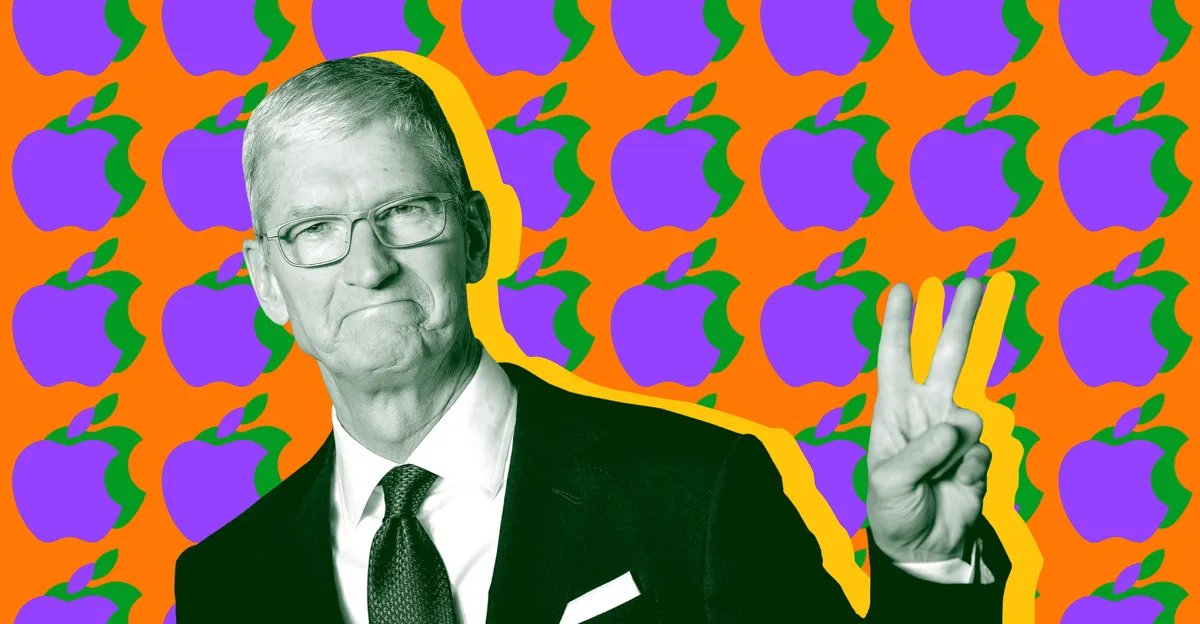
As Tim Cook steps down from his role as Apple CEO today to transition into the position of executive chairman, he leaves behind a corporate environmental record that stands in stark contrast to many of his peers in the technology sector. While the industry has often been criticized for its ecological footprint, Cook’s tenure will likely be remembered for setting rigorous standards for sustainability—though his successor, John Ternus, now inherits the daunting task of maintaining those commitments during an era defined by the massive energy demands of generative AI.
A Track Record of Decoupling Growth from Emissions
Under Cook’s leadership, Apple established itself as an industry leader in curbing pollution across its supply chains and product life cycles. In 2020, the company pledged to reduce its carbon emissions by 75 percent by 2030, using 2015 as a baseline. According to its latest environmental report, the company has already achieved a 60 percent reduction. Perhaps most impressively, Apple managed to stabilize its carbon footprint even as the business continued to expand, a feat that has eluded competitors like Google and Microsoft, both of which have seen emissions surge due to the massive power requirements of AI-integrated data centers.
“If Tim Cook wants his legacy to be of a company that held its climate commitments, he may have chosen the right time to leave,” says Rachel Kitchin, senior campaign manager at the environmental group Stand.earth. “Right now, against a dark backdrop, the picture is comparatively rosy. Depending on the choices the company makes moving forward, it may not stay that way.”
The Shadow of “Greenwashing” Accusations
Despite these structural successes, Apple’s environmental journey has not been without controversy. The company has faced repeated accusations of misleading consumers through its sustainability marketing. In 2023, Apple promoted certain Apple Watch models as “carbon neutral,” a claim that drew intense scrutiny. Critics, including the Institute of Public and Environmental Affairs, alleged that a lack of transparency regarding supplier emissions made these claims difficult to verify.
Following the European Union’s move to ban misleading environmental marketing that relies on carbon offsetting, Apple quietly rolled back its “carbon neutral” advertising. Additionally, the company has faced class-action litigation regarding its green claims, and reports have highlighted ongoing challenges with forced labor and conflict minerals within its global supply chain.
The Looming Test: The AI Era
The most significant challenge for the incoming leadership is whether the company’s climate commitments can survive the AI gold rush. With the urgent race to deploy generative AI features and infrastructure, the need for high-performance chips and massive data center capacity has never been higher.
Environmental advocates like Avex Li, supply chain project lead at Greenpeace East Asia, emphasize that AI will serve as the ultimate stress test for Apple’s environmental policy. “To preserve Tim Cook’s environmental legacy, the company will need to show that AI growth can be accommodated within its existing climate commitments through absolute emissions reductions, additional renewable energy investment, and longer-lasting products,” Li notes.
As Apple pivots toward a future dominated by AI, the company must decide if it will continue its path of aggressive renewable energy investment or if, like its Big Tech rivals, it will sacrifice its environmental goals to sustain its competitive edge. For now, Cook exits with his reputation as a “green” executive largely intact—but the future of that legacy rests firmly in the hands of the next generation of leadership.