








Nepal Demands Climate Compensation from Global Powers Following Catastrophic Himalayan “Tsunami”
KATHMANDU – The government of Nepal has launched an urgent diplomatic offensive, formally calling for financial reparations from the United States, China, and India in the wake of a devastating high-altitude glacial collapse that triggered a lethal “Himalayan tsunami.”
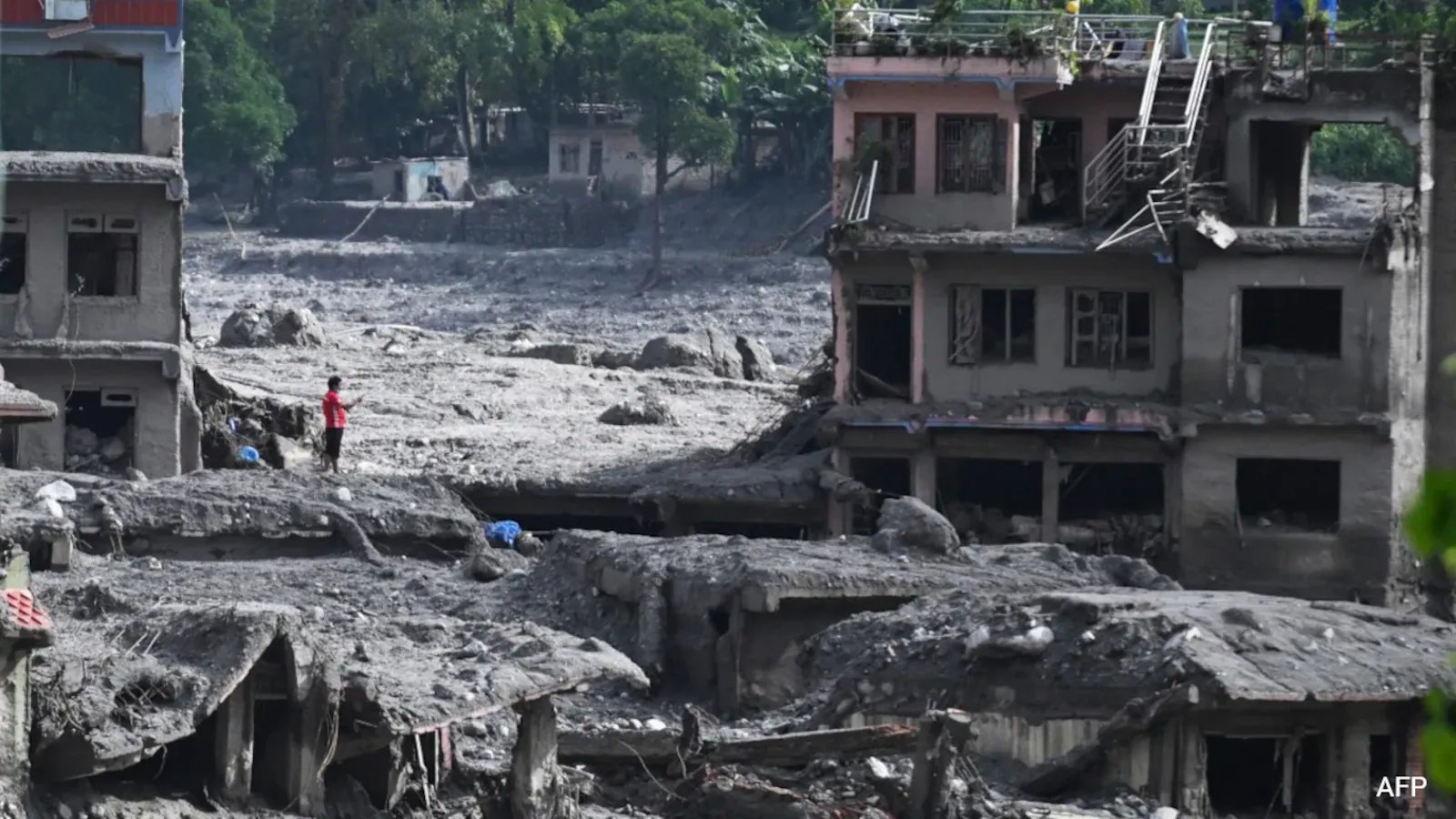
The disaster, which struck the Bhotkoshi River basin last week, has left a trail of destruction across three districts. As emergency rescue operations continue, the death toll has climbed to over 1,100, with approximately 4,500 individuals still reported missing. The catastrophic event, characterized by walls of freezing water, boulders, and debris, has effectively erased entire villages from the map.
A Shift from Aid to “Moral Liability”
Nepal’s Foreign Minister, Shisir Khanal, articulated a paradigm shift in the country’s foreign policy during a recent interview with Kantipur TV. Asserting that the nation’s survival is at stake, Khanal emphasized that post-disaster assistance should no longer be viewed as voluntary charity but as a matter of “moral and legal liability.”
“We are paying the ultimate price for a global crisis we did not create,” Khanal stated. “The rapid melting of glaciers and these catastrophic mountain tsunamis are direct consequences of global climate change.”
Nepal has officially lodged a claim for climate-related compensation, targeting the world’s primary greenhouse gas emitters. Identifying China, the United States, and India as the top three contributors to global carbon emissions, the minister argued that these industrial powers bear a historical responsibility to provide financial support to vulnerable nations currently bearing the brunt of environmental volatility.
Advocacy for Civilizational Survival
Minister Khanal warned that the disaster is not merely a local issue, but a bellwether for the entire South Asian region. He noted that the survival of over two billion people—who rely on the hydrological stability of major river systems like the Ganges and the Trishuli—is inextricably linked to the health of the Himalayas.
“We are advocating not just for Nepal, but for the survival of South Asian civilization,” Khanal said. “If our Himalayan glaciers disappear, the water security of billions will be permanently compromised.”
Official Claims and International Frameworks
Following the disaster on August 26, Nepal’s Ministry of Finance has submitted a formal appeal to the board of the Fund for Responding to Loss and Damage—a mechanism established during COP27 and operationalized at COP28.
In a letter signed by Finance Minister Swarnim Wagle and Forests and Agriculture Minister Geeta Chaudhary, the government stated that the scale of the damage—ranging from the loss of life to the total destruction of critical infrastructure—has far surpassed the country’s domestic capacity to respond.
Differing Perspectives on Climate Equity
The demand for reparations highlights a growing rift in international climate negotiations. India, while acknowledging the need for aid, has consistently advocated for “climate equity.” New Delhi argues that responsibility should be calculated based on historical emissions, per-capita carbon footprints, and development needs, often pointing out that industrialized Western nations have utilized the majority of the global carbon budget.
As Nepal reels from the aftermath of the tragedy, the call for compensation serves as a sobering reminder of the growing divide between the nations driving global emissions and those left to endure the deadliest consequences of a warming planet.