








Why the Future of Home Robotics Isn’t a Single ‘Robot Butler’
For decades, the image of a humanoid robot bustling around the home, performing every conceivable chore, has been a staple of science fiction. While real-world technology has finally begun to catch up to the silver screen, the vision of a general-purpose, two-legged butler remains more of a high-tech fantasy than a practical solution for the average household.
This year has been defined by a surge in robotic innovation. From CES to the ongoing IFA tech show in Berlin, the industry is flooded with human-shaped machines. Companies like 1X are already testing their $20,000 “Neo” robot in home environments—albeit with significant remote assistance—while a wave of Chinese manufacturers is preparing to debut new models on the catwalks of Berlin.
The Reality of Living with Robots
Having spent years testing an array of autonomous devices—from vacuums and lawnmowers to specialized litter-scooping bots and even robotic chefs—it has become increasingly clear that the industry’s obsession with humanoids may be misplaced.
The primary issue is the home environment itself. Unlike a controlled factory floor, residential spaces are chaotic and unpredictable, filled with obstacles and staircases that a 170-pound, two-legged machine struggles to navigate without posing a risk to residents or pets. Furthermore, technology history suggests that the “jack of all trades” approach rarely succeeds. During recent industry testing, when challenged to perform a simple, nuanced task like opening a bottle of laundry detergent, even the most sophisticated humanoid prototypes failed.
A New Vision: The ‘Robot Brain’
Rather than betting on a single, expensive machine to do everything, the industry should pivot toward a “robot brain”—an AI-powered, centralized home controller.
Instead of one humanoid bot, imagine a smart home ecosystem where a central intelligence orchestrates a fleet of specialized devices. This “brain” could proactively manage chores based on household needs: dispatching a vacuum when a mess is detected, running the laundry during off-peak energy hours, or mowing the lawn when growth requires it.
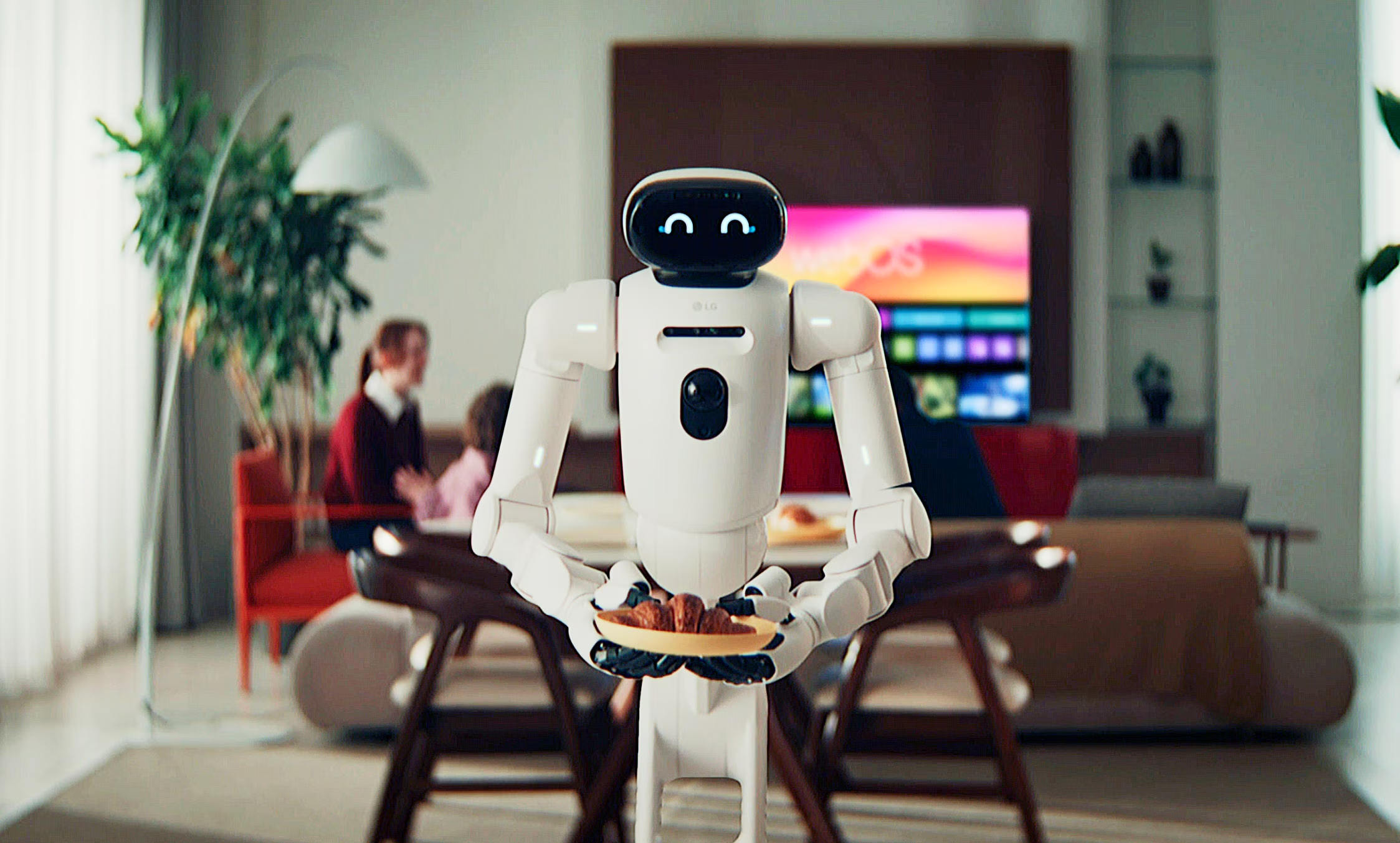
This shift is already starting to take shape. Companies like Tuya are moving away from the “butler” trope with the introduction of Doova, an AI companion designed for seniors. This compact, wheeled robot lacks the physical complexity of a humanoid but serves as a mobile hub for smart appliances, providing conversational support and emergency assistance. Similarly, LG is evolving its CLOiD platform, a wheeled robot that uses sophisticated mechanical arms to handle physical tasks while simultaneously acting as the “brains” of the smart home.
The Privacy Trade-off
While the path toward specialized robots is more practical, it brings its own set of hurdles. For these machines to function, they must utilize onboard cameras to map and interact with our most private spaces, raising significant data security and privacy concerns that manufacturers have yet to fully address.
Despite these challenges, the trajectory is clear: the future of home automation is not about one machine that can do everything. It is about a coordinated team of robotic devices managed by a central intelligence—a system that, if it comes with a pair of capable hands to open the detergent, will be more than enough to change how we live.