








Viral Footage of Log-Filled River Misrepresented as Recent Nepal Glacial Disaster
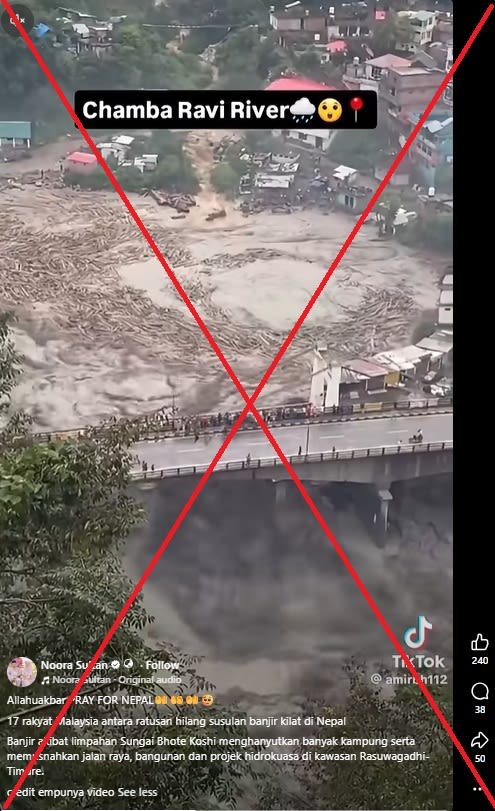
As recovery efforts continue in the wake of a catastrophic high-altitude glacial collapse on the Nepal-Tibet border, social media users have begun circulating misleading imagery. A viral video depicting a raging, debris-filled river has been widely shared as evidence of the recent disaster, but fact-checkers have confirmed the footage is old and originates from a different country.
The video, which shows a river choked with tree trunks and logs rushing beneath a bridge, surfaced on social media platforms including Facebook and TikTok shortly after the August 26, 2026, disaster. Many of these posts were shared with urgent captions, one of which claimed in Malay: “17 Malaysians among hundreds missing after flash floods in Nepal. Floods caused by the overflow of the Bhote Koshi River swept away many villages.”
The tragic reality of the actual event is severe: the glacial flood has resulted in more than 1,200 deaths and left nearly 4,800 people missing, including scores of international pilgrims traveling to Tibet’s sacred Mount Kailash. However, the viral clip being used to represent this tragedy is entirely unrelated.
Origins of the Footage
A reverse image search of the video’s keyframes reveals that the clip was first published on the social media platform X (formerly Twitter) on August 29, 2025—exactly one year before the Nepal-Tibet flood.
The original context of the video shows the Ravi River in the town of Chamba, located in the Indian state of Himachal Pradesh. During late August 2025, the region experienced severe cloudbursts and flash flooding that caused significant damage to local infrastructure, including houses and bridges. The debris captured in the video is a result of that specific weather event in India, not the recent disaster in the Himalayas.
Verification Through Geography
Further verification of the clip’s origin was provided by comparing the video’s background to imagery of the Shitla Bridge in Chamba, which is available on Google Maps. The structural details of the bridge and the surrounding topography in the viral video match the verified geographic markers of the Indian site, debunking claims that the footage captures the devastation in Nepal.
The spread of such misinformation has become a recurring challenge during major natural disasters. As news of the Nepal-Tibet flood continues to evolve, authorities and fact-checking organizations urge the public to verify the authenticity of dramatic visuals before sharing them, noting that false imagery can complicate relief efforts and spread unnecessary alarm.