







8th Pay Commission: Central Government Employees Push for Significant Annual Increment Hike
The momentum surrounding the 8th Pay Commission is building as the panel prepares for its next round of high-stakes consultations. Following a productive two-day engagement in Jaipur, the commission is scheduled to visit Chennai on September 7 and 8. During this visit, representatives from various employee and pensioner organizations are expected to present their demands, with the annual increment rate emerging as a primary point of contention.
The Debate Over Annual Increments
For years, central government employees have been subject to a standard 3% annual increment. However, major labor federations and unions argue that this rate is no longer sufficient to offset the rising cost of living, particularly for those stationed in expensive Tier-I cities.
In recent memoranda, several prominent bodies have voiced their dissent:
- The National Council of the Joint Consultative Machinery (NC-JCM): Has officially proposed a hike to 6%.
- AIDEF & FNPO: Both the All India Defence Employees’ Federation and the Federation of National Postal Organisations have aligned with the 6% demand.
- AINPSEF: The All India New Pension Scheme Employees’ Federation has submitted the most aggressive recommendation, pushing for a 7% annual increment.
- IRTSA: The Indian Railways’ Supervisors’ Association has suggested a 5% increase.
Financial Impact: A Long-Term Perspective
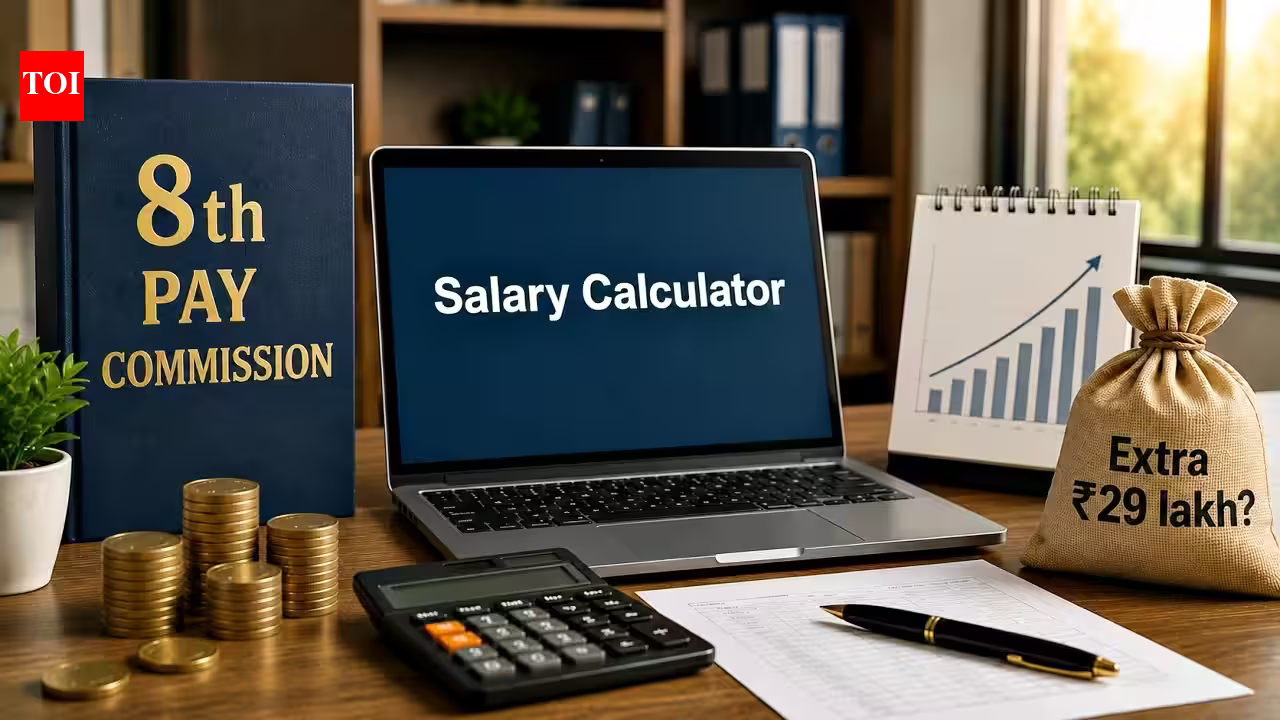
The debate is not merely academic; it has profound implications for the lifelong earnings of government personnel. Experts have utilized an 8th Pay Commission salary hike calculator to demonstrate the stark difference between current policies and the proposed demands.
For instance, consider a Level 8 employee with a current basic pay of Rs 47,600. If the commission applies a 2.15 fitment factor, the revised basic pay would start at Rs 1,02,340.
- At a 3% increment: Over 10 years, the total accumulated pay is estimated at approximately Rs 1.40 crore.
- At a 5% increment: That total rises to Rs 1.54 crore, netting the employee an additional Rs 13.68 lakh.
- At a 7% increment: The total surges to nearly Rs 1.70 crore, resulting in an additional Rs 28.89 lakh compared to the 3% baseline.
Moving Forward
While basic pay remains the cornerstone of these calculations, employees emphasize that it is only one part of the equation, alongside dearness allowance (DA), house rent allowance (HRA), and transport allowance (TPTA).
Despite these auxiliary benefits, the consensus among employee unions is that a higher annual increment is essential to ensure that salary progression keeps pace with inflation and maintains the financial stability of the workforce. As the 8th Pay Commission continues its nationwide tour, the government remains under pressure to balance fiscal prudence with the demands of its massive workforce. The final structure of the pay revision will only be confirmed once the official report is submitted and notified by the government.