







Celestial Navigation: The Future of Deep Space Positioning in the Era of Autonomous Systems
As humanity sets its sights on crewed missions to Mars, the reliance on Earth-based Deep Space Network (DSN) telemetry faces a critical limitation: signal latency. When communication delays reach upwards of 20 minutes each way, astronauts must possess the capability to perform autonomous navigation. Recent advancements in <a href="https://dailysamchar.in/category/technology/">Technology</a> are shifting the focus back to a modernized version of ancient celestial navigation, augmented by advanced <a href="https://dailysamchar.in/category/technology/">AI</a> and sophisticated onboard <a href="https://dailysamchar.in/category/technology/">Software</a> suites. This integration of classical astronomy with modern computational power is essential for ensuring survival in the void of interplanetary space.
The Return to Celestial Mechanics: Asteroids as Navigational Beacons
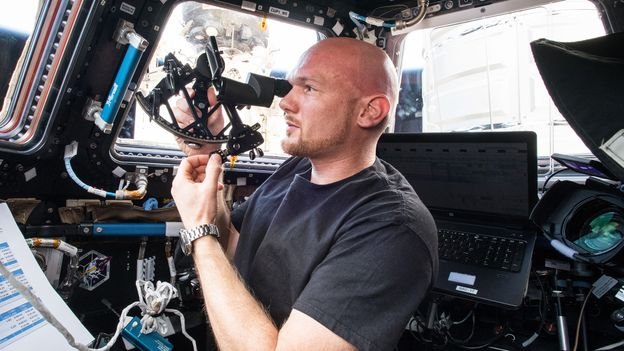
In the absence of a localized GPS system for the solar system, navigators must look toward fixed cosmic reference points. Future mission protocols propose using asteroids as high-precision navigational markers. By identifying an asteroid’s position relative to “head stars”—such as those found in the Gemini constellation—astronauts can triangulate their exact location within the vacuum of space.
“Celestial navigation” is, in essence, the art of finding one’s position by observing the angles between stars and other celestial bodies. By correlating these visual observations against predetermined mathematical models, the flight crew can determine their craft’s trajectory. This manual-yet-mathematical process acts as a vital fail-safe, ensuring that if digital communication with Earth is severed, the mission can remain on its calculated flight path through simple, high-fidelity geometry.
Algorithmic Augmentation: The Role of Autonomous Software
The complexity of modern spacecraft makes manual calculation an arduous and error-prone task. This is where advanced <a href="https://dailysamchar.in/category/technology/">Software</a> architectures become indispensable. Rather than relying on paper charts, onboard computers will utilize machine learning algorithms to verify star patterns and asteroid vectors in real-time. These systems function by comparing the visual input from high-resolution telescope sensors against an expansive database of star maps.
This process, known as “star tracking,” allows the <a href="https://dailysamchar.in/category/technology/">AI</a> to correct for slight deviations in flight path before they escalate into significant fuel-burning trajectory errors. By automating the “maths” involved in orbital mechanics, the system frees the crew to focus on complex mission objectives, effectively turning the spaceship into a self-correcting autonomous entity.
Benefits and Strategic Resilience
The integration of celestial-based navigation provides two primary benefits: autonomy and redundancy. Current navigation depends entirely on the DSN, which—while robust—remains a single point of failure. If Earth-based stations go offline or are hampered by solar interference, a crew operating without celestial navigation tools would effectively be flying blind.
By utilizing asteroid-based positioning, spacecraft gain a permanent, reliable, and immutable frame of reference. This level of autonomy is not just a safety feature; it is a prerequisite for long-duration deep space exploration. The ability to verify one’s position independently allows missions to venture further, deeper, and for longer durations than previously possible, mitigating the risks associated with the immense distances of the Martian journey.
Industry Impact and the Future of Interplanetary Transit
The shift toward autonomous celestial navigation represents a paradigm shift in the aerospace industry. As private and public entities invest heavily in <a href="https://dailysamchar.in/category/technology/">Technology</a> that enables autonomous transit, we are seeing a move away from ground-controlled flights to self-sufficient, “intelligent” vessels. This transition is influencing the design of next-generation life support and navigation interfaces, which must now balance human-in-the-loop decision-making with high-speed automated data processing.
Ultimately, the goal is to create a seamless interplay between human intuition and machine precision. As we prepare for the multi-year missions that will define the next century of space travel, the ability to “look up” and orient ourselves among the stars will remain our most reliable compass. By marrying the ancient wisdom of celestial positioning with the cutting-edge capabilities of modern computing, we are ensuring that when humanity finally makes the leap to Mars, we are equipped to navigate the challenges of the cosmos with confidence.
Source: Read Original News