







TURMOIL has once again gripped Pakistan cricket, as a swirling cloud of uncertainty descends upon the national team in the midst of their high-profile Test series against England. The sport, often characterized by its inherent unpredictability, has taken a sinister turn off the field, with allegations surfacing that suggest the recent mass exodus of players and coaching staff from the squad involves far more than just lackluster athletic performance.
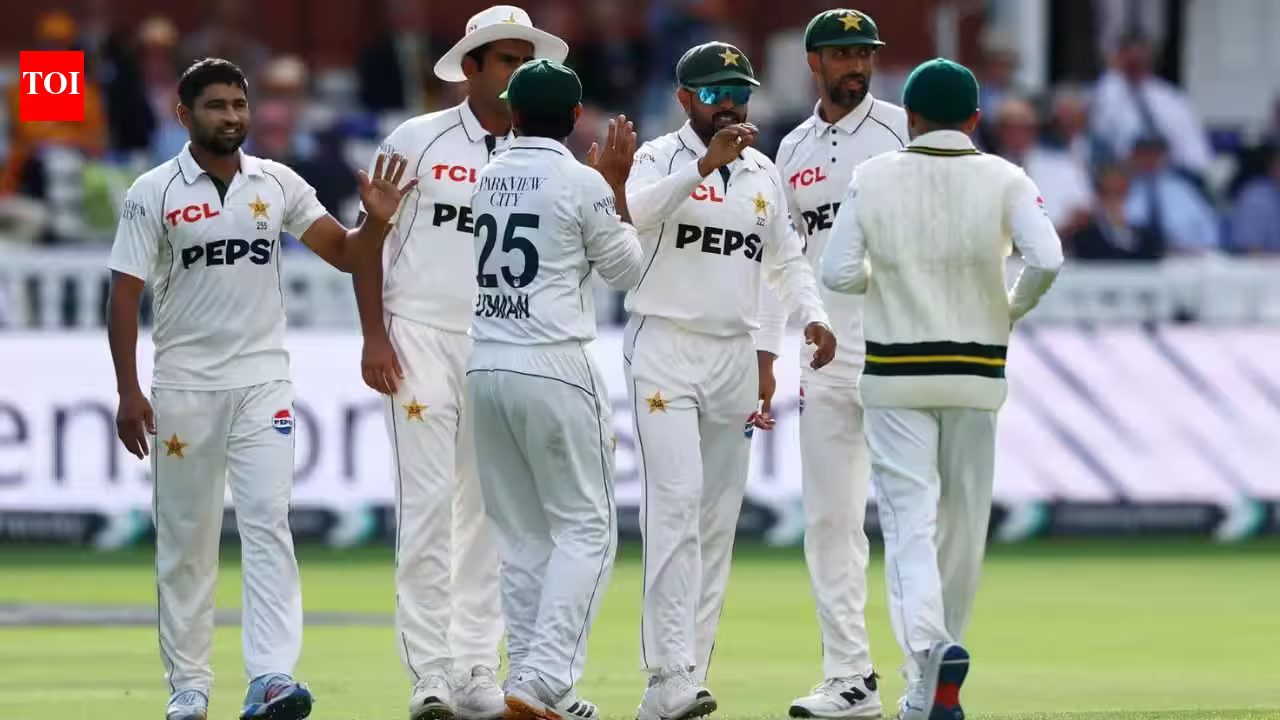
Following a demoralizing 194-run defeat at Lord’s—a venue historically etched into the darkest annals of cricket’s integrity—the Pakistan Cricket Board (PCB) executed a radical restructuring of its personnel. The sweeping changes saw prominent names such as Mohammad Rizwan, Salman Ali Agha, Imam-ul-Haq, Ali Usman, Khurram Shahzad, Aamir Jamal, and Muhammad Awais Zafar dropped from the roster. Even more startling was the removal of head coach Sarfaraz Ahmed and bowling coach Umar Gul from their respective duties.
A Squad in Flux
The void left by these departures has been filled with a mix of urgency and desperation. Seven new players have been drafted into the touring party, five of whom have yet to taste the intensity of international cricket. While batters Saim Ayub and Abdullah Fazal bring some experience to the table, the inclusion of uncapped prospects—including pace-bowling all-rounders Razaullah Khan and Mohammad Imran, left-arm spinner Arafat Minhas, wicketkeeper Saad Baig, and left-arm pacer Mohammad Imran Junior—signals a move toward a complete culture reset.
Behind the scenes, however, sources suggest that these maneuvers were driven by factors “more than cricket.” The timing of the clear-out, occurring mid-series, has raised eyebrows across the cricketing world, prompting speculation that internal disciplinary issues have eclipsed sporting concerns.
Silence and Suspicion
As the pressure mounts, the lack of transparency from official bodies has only served to fuel the fire. Despite inquiries sent to both the England and Wales Cricket Board (ECB) and the PCB over a 72-hour period, no official clarification has been forthcoming.
Amir Mir, the PCB’s Director of Media and Digital Communications, eventually broke the silence with a carefully worded statement, acknowledging that an internal disciplinary inquiry is underway. “The Pakistan Cricket Board has initiated an internal disciplinary inquiry following media reports concerning discipline and conduct, which are currently being reviewed internally,” Mir noted. “The process is being conducted under PCB regulations, ensuring that all concerned individuals are given due consideration.”
Perhaps the most damning detail emerging from the situation is the report from Pakistani outlet 365 News, which claims that the personal mobile devices of several players have been confiscated by the PCB. These devices are reportedly slated to remain in board custody until the conclusion of the final Test, an extraordinary measure that inevitably invites comparisons to the match-fixing scandals that have haunted Pakistan’s cricketing history.
The Lord’s Shadow
The choice of venue for this current crisis—Lord’s—carries a heavy historical burden. It was at this very ground in 2010 that the world watched in horror as the Pakistan team was embroiled in a massive spot-fixing scandal. Then-captain Salman Butt, along with bowlers Mohammad Asif and Mohammad Amir, were eventually sentenced to prison and handed lengthy bans for accepting bribes to bowl deliberate no-balls. Given this history, any whiff of an integrity-related inquiry involving the Pakistan team is treated with the utmost gravity by the global cricketing community.
Criticism and Accountability
While the PCB remains tight-lipped regarding the specific nature of the probe, the internal leadership has taken a hardline stance against the players’ commitment. Aaqib Javed, the PCB’s Director of High Performance, launched a stinging rebuke of opening batter Imam-ul-Haq, who was sidelined at Lord’s due to a low-grade calf tear.
Javed openly questioned the legitimacy of the injury, suggesting that the team had suffered from a lack of fighting spirit. “The Imam injury is a big question mark, and a deep disappointment,” Javed told Geo News. “Players in the past used to get injuries, but they used to put on casts and still tried to play. We’ll take action against this. He’ll have to face an inquiry; I can’t say he faked it, but a muscle pull like that cannot stop you from batting altogether.”
PCB Chairman Mohsin Naqvi has echoed these sentiments, defending the board’s “knee-jerk” reaction as a necessary step to maintain standards. “Every match of a series is important for us and we are not left with any option if a player is not performing but to look for his replacement,” Naqvi stated. “The purpose behind these changes is not to axe players from contention, but just to replace them.”
As the series moves toward its conclusion, the focus has shifted from the pitch to the halls of the PCB’s offices. Whether these actions are a genuine attempt to rectify a performance decline or a desperate bid to contain a brewing scandal remains to be seen. For now, the Pakistan cricket team finds itself playing under a cloud of suspicion, with the eyes of the sporting world fixed firmly on their every move, both on and off the field.
Disclaimer: This content is auto-generated and paraphrased.
Source: Read Original News