








Navigating a Complex Neighbourhood: Gen Anil Chauhan Maps India’s Evolving Security Landscape
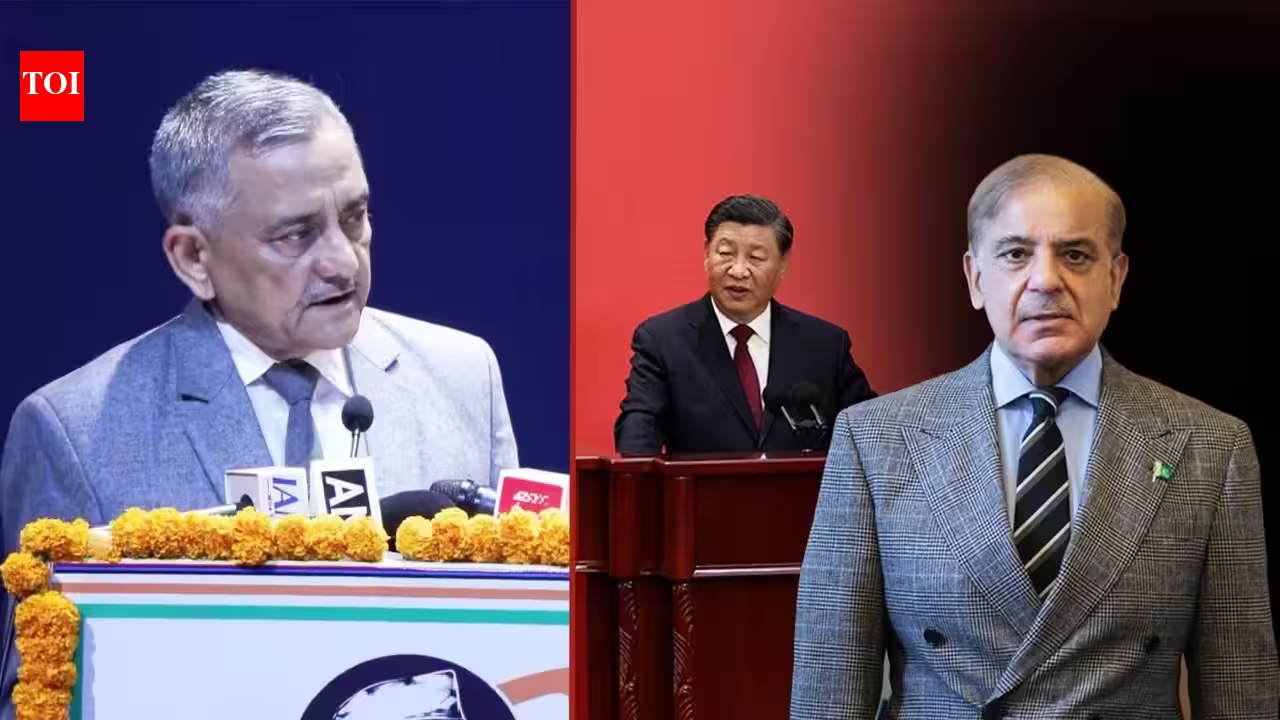
In an era of shifting geopolitical alignments and intensifying regional friction, India’s strategic outlook requires a nuanced understanding of its two primary nuclear-armed neighbours. Former Chief of Defence Staff General Anil Chauhan (Retd) has offered a candid assessment of the dual-front challenge, highlighting that while Pakistan remains a persistent source of regional volatility, China presents a comprehensive, long-term systemic test for New Delhi.
The Persistent Shadow of Pakistan
Addressing the complexities of the western border, General Chauhan cautioned against the dangers of complacency in Islamabad. He pointed to Pakistan’s recent efforts to forge new defence partnerships, warning that such external support could lead the nation’s leadership into a state of dangerous overconfidence. This miscalculation, he argued, could potentially trigger fresh adventurism or border provocations that threaten the fragile peace of the region.
General Chauhan emphasized that despite internal political and economic turmoil, the core of Pakistan’s statecraft remains tethered to terrorism and proxy warfare. According to the General, a purely military response is insufficient to address this threat. Instead, he advocated for a holistic strategy that dismantles the entire ecosystem sustaining militancy—targeting not just the foot soldiers, but the underlying ideology, recruitment networks, funding channels, and systemic state support.
The discussion also touched upon the “stability-instability paradox,” a concept central to South Asian nuclear dynamics. General Chauhan noted that Pakistan’s pursuit of tactical nuclear capabilities is designed to create a “threshold” that allows it to engage in sub-conventional warfare under a nuclear umbrella. Defeating this strategy requires India to maintain high-level deterrence while ensuring its conventional superiority remains unquestioned.
China: A Comprehensive Long-Term Challenge
Shifting focus to the northern frontier, General Chauhan drew a sharp distinction between the nature of the threats posed by Pakistan and China. While Pakistan acts as a source of immediate, irritant-based instability, he described China as a fundamentally different, multifaceted challenge. The General argued that viewing India-China relations solely through the lens of the unresolved Line of Actual Control (LAC) is a reductive approach that fails to account for Beijing’s long-term geopolitical ambitions.
China’s influence spans economic, technological, and maritime domains, making it a “comprehensive” competitor. General Chauhan suggested that India’s strategic autonomy must be exercised with greater sophistication to manage this relationship. Beijing’s goal of regional hegemony, he noted, dictates that India must be prepared for a long-haul engagement that goes beyond tactical border management to include influence-building across the Indo-Pacific.
Strategic Autonomy and Future Readiness
At the heart of the General’s analysis is the necessity for India to refine its strategic posture. He underscored that India is no longer a bystander in global security affairs but a key architect of regional stability. This elevated role demands a departure from reactive policies toward a more proactive, integrated defence framework.
By bolstering indigenous defence capabilities, diversifying security partnerships, and maintaining a credible deterrent across all domains—land, air, sea, space, and cyber—India can effectively navigate the pressures from both neighbours. General Chauhan’s message is clear: while the challenges are daunting and the geography unforgiving, India’s strategic choices must be guided by a clear-eyed assessment of its rivals’ evolving doctrines, ensuring that New Delhi retains the initiative in an increasingly unpredictable Asian theatre.
Disclaimer: This content is auto-generated and paraphrased.
Source: Read Original News