







Bangladesh and Nepal have reaffirmed their commitment to strengthening bilateral ties with a primary focus on regional climate resilience and environmental sustainability. In a high-level meeting held on Sunday at the Secretariat in Dhaka, the Nepalese Ambassador to Bangladesh, Ghanshyam Bhandari, met with the Minister of Environment, Forest and Climate Change, Abdul Awal Mintoo, to discuss a roadmap for joint environmental action and mutual cooperation.
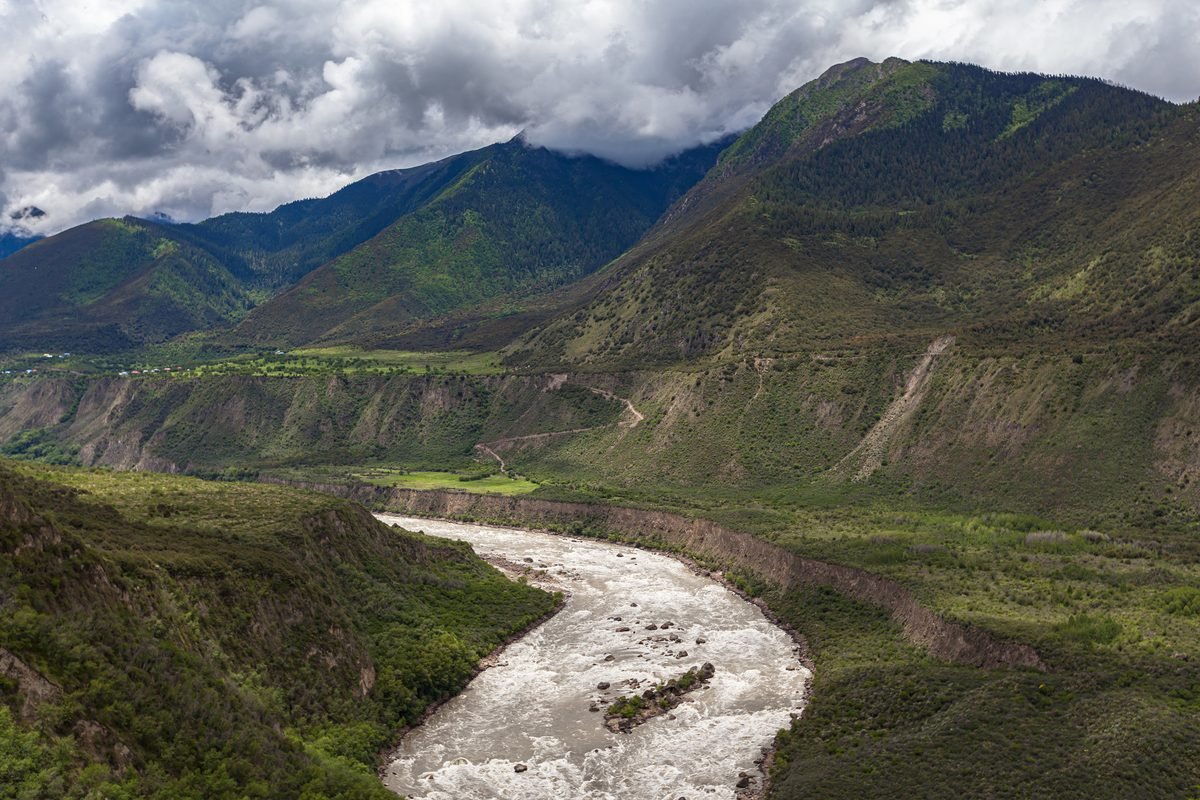
The discourse centered on the critical intersection of environmental protection, biodiversity conservation, and sustainable forest management. Both nations acknowledged that while they occupy different topographical zones—with Nepal defined by its mountainous Himalayan terrain and Bangladesh by its low-lying riverine deltas—their ecosystems are inextricably linked.
Minister Mintoo highlighted the regional impact of climate change, noting that the melting of Himalayan glaciers, erratic rainfall patterns, and frequent, severe flooding transcend national borders, directly threatening the livelihoods of millions across South Asia. “Although Bangladesh and Nepal face different types of climate change risks, their environments and ecosystems are closely interconnected,” the Minister stated, underscoring the necessity of a unified regional approach.
As the global community prepares for the upcoming COP-31 climate conference, Minister Mintoo emphasized the urgency of knowledge sharing and collaborative policy frameworks. He advocated for joint initiatives that leverage the specific strengths of each country to address common environmental vulnerabilities.
Ambassador Bhandari echoed these sentiments, expressing Nepal’s strong interest in expanding cooperation regarding capacity building and the transfer of eco-friendly technology. He emphasized that for both nations to achieve sustainable, green development, there must be a sustained exchange of expertise and mutual support. This, he suggested, should extend beyond climate policy to include cooperation in the energy sector.
The meeting also served as a platform to discuss broader avenues for bilateral development, specifically in the fields of renewable energy, tourism, trade, and connectivity. Both parties agreed that enhancing regional connectivity and investing in clean energy sources are not merely economic goals but are essential components of a broader strategy to foster sustainable growth throughout the South Asian region.
The gathering was marked by a moment of diplomatic solidarity. Minister Mintoo opened the session by expressing his deep condolences for the lives lost in a recent tragic accident in Nepal. He conveyed the sympathy of the Bangladeshi government and people to the grieving families and wished for the speedy recovery of those injured. He reiterated that Bangladesh stands ready to provide further humanitarian assistance to its Himalayan neighbor.
Ambassador Bhandari expressed his profound gratitude for the support extended by the Bangladeshi leadership following the disaster. He described the gesture as a powerful reflection of the deep-rooted friendship and mutual trust that characterizes the relationship between the two nations.
Also present at the meeting was Dr. Fahmida Khanom, Acting Secretary of the Ministry of Environment, Forest and Climate Change, who participated in the discussions regarding the implementation of proposed joint environmental projects.
As South Asia continues to be one of the regions most vulnerable to the adverse effects of global warming, the commitment shown by Bangladesh and Nepal signals a proactive shift toward integrated climate diplomacy. By prioritizing regional cooperation, both countries aim to build a more resilient environmental future, ensuring that the ecological health of the Himalayas and the stability of the deltaic landscape remain protected against the challenges of a rapidly changing climate.
Disclaimer: This content is auto-generated for informational purposes only. It has been rewritten and paraphrased from the original source.
Source: Read Original News