






Edgbaston witnessed a morning of utter carnage that left the visiting dressing room in stunned silence and provided the cricketing world with a stark reminder that a simple change of personnel rarely solves deep-seated structural failings. Pakistan, entering the third Test under a cloud of intense scrutiny following a demoralizing defeat at Lord’s, arrived in Birmingham hoping to reset the narrative. Instead, they found themselves staring into the abyss, collapsing to seven wickets down for under 100 runs in a disastrous opening session that rendered their pre-match rhetoric entirely hollow.
The Mirage of ‘Outside Noise’
Coming into this clash, the spotlight was fixed squarely on skipper Babar Azam. The week leading up to the Test had been characterized by internal upheaval, public criticism, and a mounting sense of urgency from the Pakistan Cricket Board (PCB). When asked at the toss about the chaotic atmosphere surrounding the camp, Babar remained outwardly stoic, attempting to project an image of a team insulated from the turbulence.
“Look, outside noise is not under our control,” Babar told reporters, maintaining a composed demeanor. “We are just trying to prepare for this match and just think and look after ourselves in the group. We are not thinking about outside noises. We are just trying to do our best in this match.”
It was a classic captain’s defense—an attempt to draw a line in the sand and insulate his players from the harsh glare of public opinion. Babar insisted that the team had moved past the Lord’s debacle, framing the tactical changes as a positive, fresh opportunity for a group of hungry youngsters. However, as the morning session unfolded on a green-tinged Edgbaston surface, it became painfully clear that while the players might have successfully muted their notifications, they had failed to address the technical and psychological deficiencies that have plagued their Test cricket identity for months.
A Bold Overhaul Backfires
In a bid to arrest their downward spiral, the Pakistan management opted for a high-stakes gamble. Four changes were made to the starting XI, including the introduction of three debutants and the return of Saim Ayub to the top of the order. The objective was clear: bring in fresh energy and shed the baggage of the recent losses.
Yet, the execution was nothing short of calamitous. As the Edgbaston crowd settled in, the English seam attack went to work with surgical precision, exploiting a combination of fragile technique and jittery decision-making from the Pakistani lineup. The reshuffled side looked like a group of strangers under pressure; footwork was sluggish, judgment outside the off-stump was erratic, and the characteristic resilience associated with Pakistan cricket was nowhere to be found.
Babar’s Failure Compounds the Misery
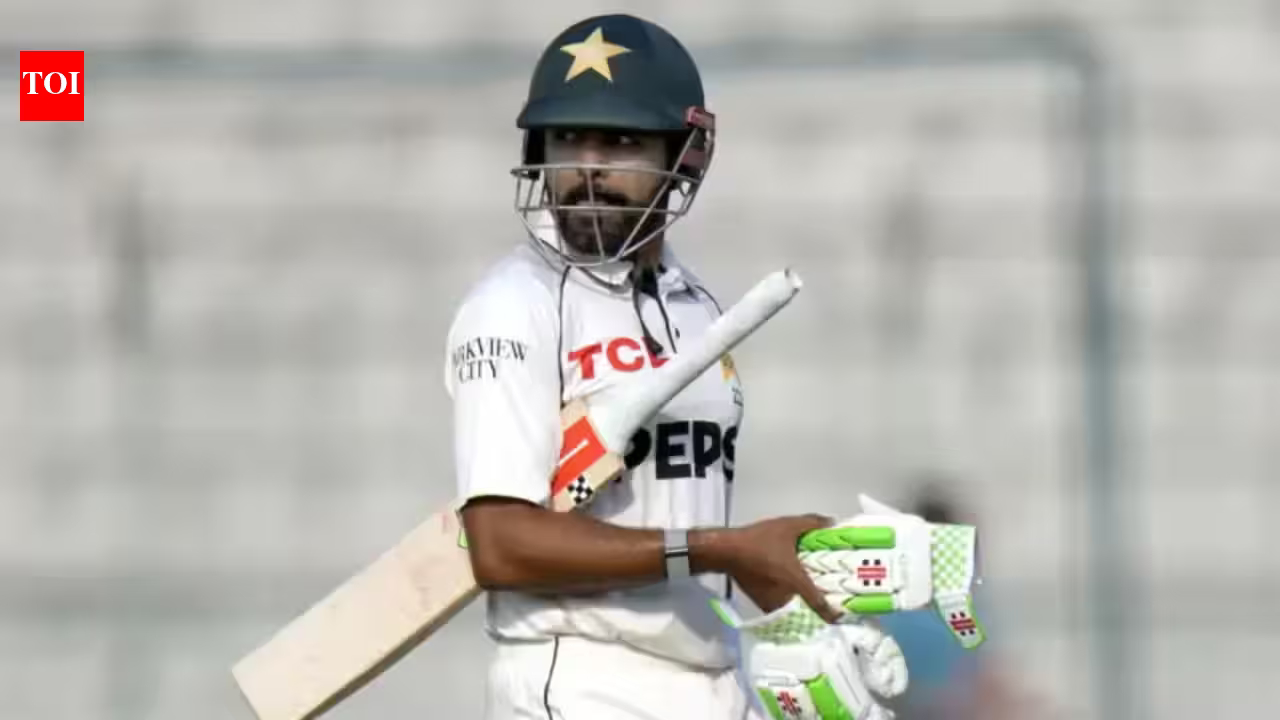
If the team needed a steady hand to navigate the treacherous opening hours, they looked to their leader. But Babar Azam, the man tasked with steadying the ship, was unable to withstand the storm. Walking to the crease with his side already reeling, Babar lasted only long enough to register seven runs before his innings was cut short. His departure triggered a wider collapse that saw wickets tumble at regular intervals, effectively ending any hopes of a competitive total before the lunch interval.
The statistics are damning: seven wickets down in a single session for a double-digit scoreline is the kind of performance that precipitates a crisis. While the media and fans were indeed making “noise” online, the reality on the pitch was far louder. The scoreboard at Edgbaston did not lie; it told a story of a team in disarray, incapable of bridging the gap between planning and performance.
Searching for Answers in the Rubble
The fallout from this opening session is likely to be seismic. While Babar attempted to frame the inclusion of debutants as an “opportunity,” the reality is that throwing inexperienced players into a high-pressure environment against an aggressive England side—while the senior guard fails—often proves to be a recipe for further regression.
The PCB’s decision to overhaul the team was sold as a “fresh start,” but it currently looks more like a desperate reaction to a terminal decline. Changing the names on the team sheet is cosmetic surgery on a deeper, structural injury. For Babar, the “outside noise” will inevitably grow to a roar in the coming days. Having failed to back up his pre-match platitudes with a meaningful contribution on the field, the Pakistan captain finds himself under more pressure than ever before.
As the players trudged back to the pavilion with their heads bowed, the message from Edgbaston was clear: Pakistan can ignore the media, they can ignore the pundits, and they can ignore the trends on social media—but they cannot ignore the scoreboard. And right now, the scoreboard is saying exactly what the critics have been saying all along.
Disclaimer: This content is auto-generated for informational purposes only.
Source: Read Original News