




In the mountain village of Villa de la Quebrada, San Luis, a unique social and environmental experiment is unfolding. Home to approximately 2,000 residents, the area serves as the backdrop for “Rukalaf Natura”—a project that proves human habitation and forest conservation can coexist without disrupting natural cycles.
The initiative began with Alejandro Torres, who settled on a 20-hectare plot in the region. Captivated by the sensory landscape—the distinct aroma of the jarilla shrub and the constant chorus of local birdlife—Torres sought to establish a life deeply integrated into the mountain environment. Alongside his then-partner, Lis Newton, he transformed a traditional adobe structure into what they named “Rukalaf Natura,” a Mapuche term meaning “House of Healing.”
Initially focused on well-being workshops and environmental awareness, the project shifted toward a productive model in 2019 when Lucas Muñoz and Vilma Filippa joined the team. Their arrival introduced agricultural techniques specifically adapted to the challenging arid conditions of the local terrain. The project gained further momentum in 2023 after being selected by the San Luis Emprende program, which provided the support necessary to expand their focus on native forest regeneration, organic gardening, and specialized training.
The physical footprint of the project is as intentional as its agricultural output. Utilizing his background in bioconstruction, Torres led the restoration and expansion of the facility’s structures using clay and other natural materials, ensuring the buildings harmonize with the landscape and adhere to a low-impact philosophy.
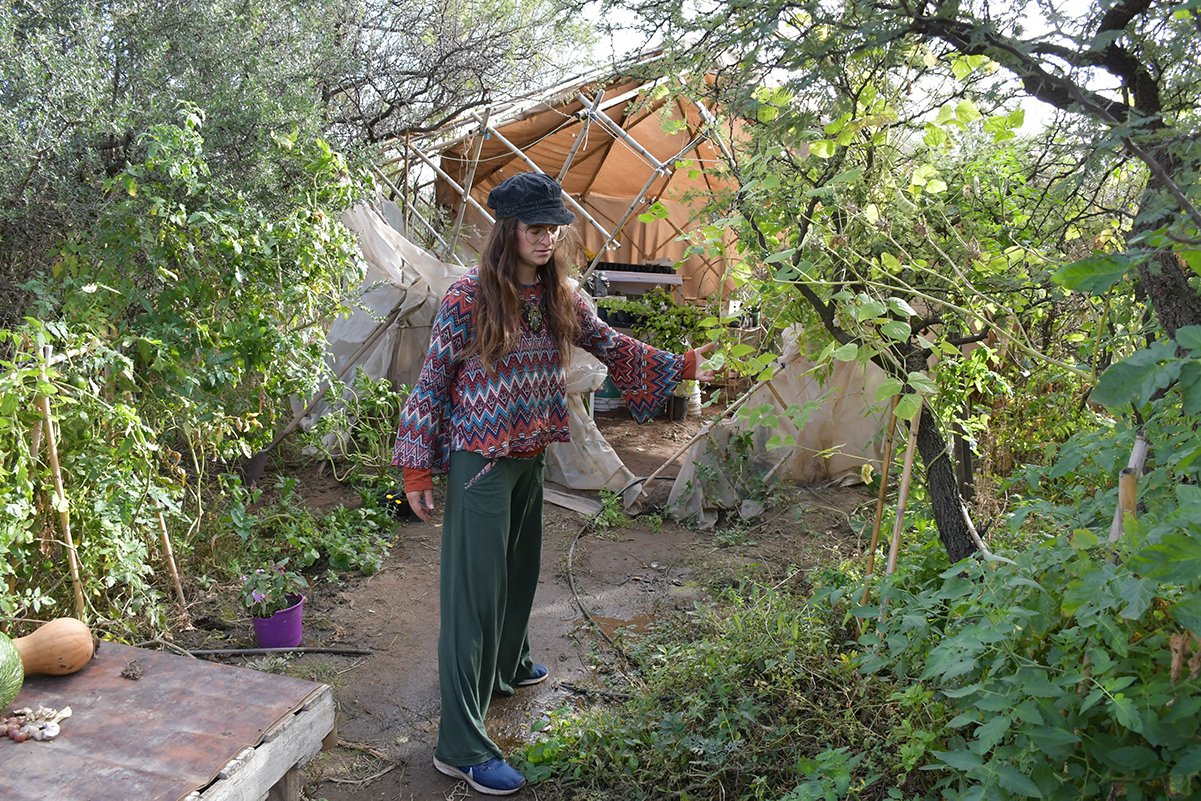
Agricultural success in such an arid climate required moving away from conventional farming methods. Instead, Muñoz and Filippa pioneered a strategy of placing garden beds beneath the canopy of the native forest. This “protected” approach utilizes the shade and humidity naturally provided by trees like the carob and espinillo. By opting for these existing conditions rather than clearing vegetation, the team effectively preserves the soil, provides a refuge for local wildlife, and drastically reduces the need for external agricultural inputs.
Today, the site boasts three thriving gardens, a plant nursery, fruit trees, and managed beehives. By avoiding synthetic agrochemicals and returning organic matter to the soil through forest-sourced mulch, the team has significantly enhanced the land’s moisture retention capacity and overall health.
Life at Rukalaf Natura, however, is not without its trials. The reality of working within a living ecosystem means navigating challenges such as complex water management and occasional encounters with local fauna—including interactions with wildcats that have targeted their poultry. Rather than viewing these as problems to be eliminated, the team perceives them as essential reminders that the project is a guest within a larger, autonomous system.
Looking ahead, Rukalaf Natura aims to further its mission by installing a fruit dryer and expanding its capacity to host others interested in sustainable living. Through the convergence of organic production, environmental education, and community building, the project offers a blueprint for regional sustainability. It demonstrates that the most effective way to protect the environment is not to retreat from it, but to participate in its regeneration through responsible, low-impact stewardship. As the initiative grows, it continues to prove that human prosperity and the health of the native forest are not competing interests, but two sides of the same coin.
Disclaimer: This content is auto-generated for informational purposes only.
Source: Read Original News