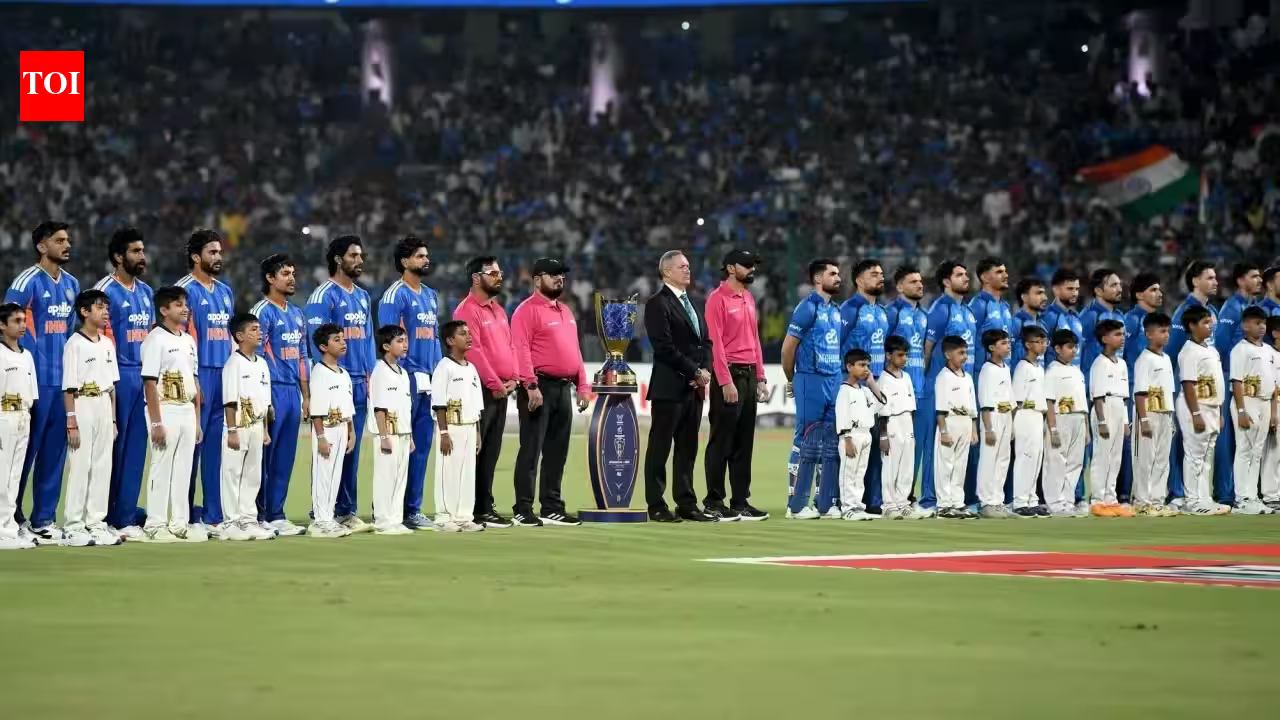








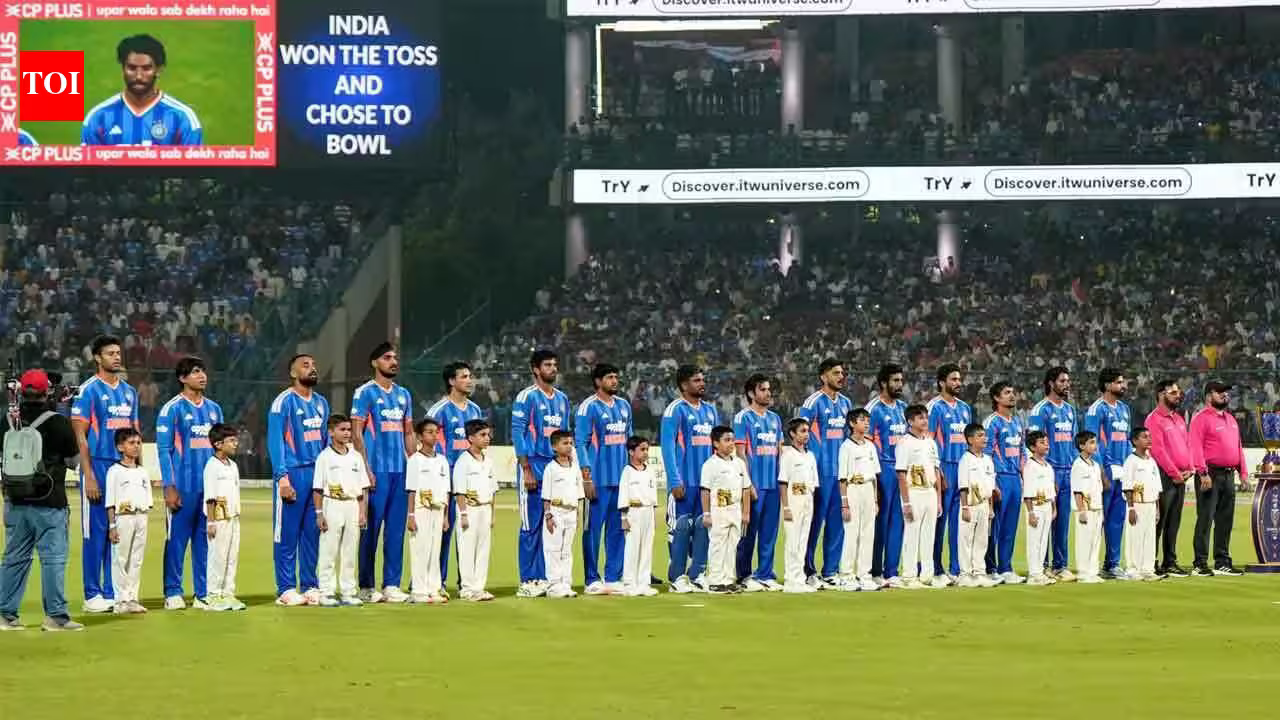
NEW DELHI — The Arun Jaitley Stadium played host to a historic and evocative start to the T20I series between India and Afghanistan on Sunday, as fans and players alike witnessed a ceremonial moment never before seen in the arena of international cricket.
In a departure from established pre-match protocols, the opening proceedings were marked by the singing of Vande Mataram, India’s National Song, immediately preceding the customary playing of the National Anthem, Jana Gana Mana. The resonance of the anthem echoed throughout the stands, setting a solemn and patriotic tone before the first ball was even delivered.
A Shift in Protocol: Understanding the Integration
This shift in ceremony stems from a significant directive issued earlier this year by the Ministry of Home Affairs (MHA). On January 28, the MHA laid out formalized protocols regarding the singing of Vande Mataram, stipulating that six stanzas of the song should be performed at official functions. A full rendition of these six stanzas occupies approximately three minutes and ten seconds, adding a substantial, reflective duration to any event’s opening.
While sporting events were not explicitly mentioned in the initial MHA list, the choice to incorporate the National Song into the India-Afghanistan series indicates an evolving approach to official sporting ceremonies. This follows a precedent set on August 15, 2026, when both Vande Mataram and Jana Gana Mana were sung in their entirety following Prime Minister Narendra Modi’s Independence Day address. By bringing this tradition to the cricket pitch, organizers have elevated the stature of the match, framing the contest not just as a sporting rivalry, but as a formal display of national pride.
Tactical Decisions and the Return of a Titan
Once the ceremonial proceedings concluded, the focus shifted sharply back to the green turf as India captain Shreyas Iyer won the toss and elected to field first. The decision was met with approval from the crowd, reflecting the general consensus that the pitch in Delhi—notoriously unpredictable in the early stages—is often best suited for a team looking to chase under the lights.
“Whenever you come to Delhi, you know what the pitch has got to offer; it usually is a bowl-first wicket,” Iyer remarked during the toss presentation. “We had a lot of positives in Zimbabwe; we will try and continue on that.”
The primary talking point of the team selection was the highly anticipated return of pace spearhead Jasprit Bumrah. Making his first T20I appearance since the conclusion of the 2026 IPL, Bumrah’s presence provides an immediate boost to the Indian bowling attack. His inclusion marks a strategic push for experience as India looks to solidify its squad depth.
Conversely, the absence of teenage sensation Vaibhav Sooryavanshi sent waves of surprise through the spectator base. Despite a stellar showing during the recent Zimbabwe series, Sooryavanshi was left out of the starting XI to accommodate tactical adjustments, with Sanju Samson stepping in behind the stumps.
The Playing Field: India vs. Afghanistan
Despite the match being played in the heart of the capital, India is technically designated as the away side for this series, with Afghanistan serving as the hosts. The lineup for the encounter showcases a mix of established veterans and explosive youth, promising a highly competitive three-match series.
For India, the playing XI features Sanju Samson, Abhishek Sharma, Ishan Kishan, Shreyas Iyer, Tilak Varma, Nitish Kumar Reddy, Shivam Dube, Axar Patel, Arshdeep Singh, Jasprit Bumrah, and Varun Chakaravarthy.
Afghanistan, known for their world-class spin battery, have countered with a formidable unit led by Ibrahim Zadran. The Afghan XI includes Rahmanullah Gurbaz, Sediqullah Atal, Darwish Rasooli, Azmatullah Omarzai, Gulbadin Naib, the legendary Mohammad Nabi, the influential Rashid Khan, Mujeeb Ur Rahman, Noor Ahmad, and Fazalhaq Farooqi.
As the series opener moves into its middle overs, the dual spectacle of the ceremonial opening and the high-stakes cricket continues to captivate the capacity crowd. With Bumrah leading the attack and the Delhi surface offering potential assistance to the bowlers, the remainder of the evening promises a fascinating test of skill and endurance between two of the most spirited teams in world cricket. Whether this new pre-match ritual becomes a permanent fixture in Indian cricket will likely depend on the reception of such protocols, but for now, the message from the Arun Jaitley Stadium is clear: the game is as much about the spirit of the nation as it is about the scoreboard.
Disclaimer: This content is auto-generated for informational purposes only.
Source: Read Original News