






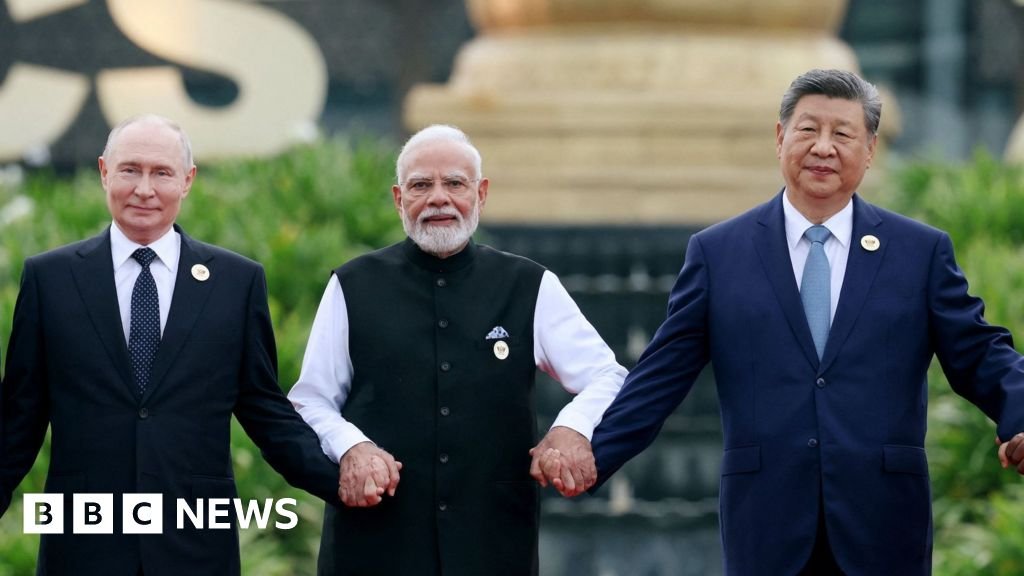
The BRICS bloc, representing a significant portion of the global population and economic output, has solidified its consensus that the current international financial order is overdue for an overhaul. As leaders gather to discuss the expansion of their influence, the conversation has moved beyond mere rhetoric. However, the path forward remains shrouded in uncertainty as members struggle to define the precise mechanisms that would replace the long-standing dominance of the US dollar and Western-led institutions.
The Tech Frontier: Challenges to Digital Sovereignty
Central to the BRICS discourse is the rapid acceleration of the tech industry, specifically the rise of artificial intelligence and cross-border digital infrastructure. Leaders within the bloc are increasingly concerned that the current global order—largely underpinned by Silicon Valley giants—places them at a disadvantage regarding data sovereignty and technological self-reliance.
Google’s suite of services, including Cloud, Workspace, and its underlying AI models like Gemini, are currently the backbone of the global digital economy. For nations within the BRICS alliance, there is a mounting push to develop localized alternatives to these platforms. By fostering indigenous AI research and cloud infrastructure, these countries hope to insulate their economies from external regulatory pressures and potential sanctions. However, developing an ecosystem that can compete with the immense processing power and data-driven learning of current AI leaders is a gargantuan task, requiring billions in investment and specialized semiconductor access that remains largely controlled by Western-aligned supply chains.
The Search for an Alternative Financial Architecture
The debate over a “new order” is most heated when it comes to financial systems. The current reliance on SWIFT and the dominance of the dollar are viewed by many member states as vulnerabilities. Yet, replacing these systems requires more than political willpower; it requires a robust, interoperable technological framework.
Industry analysts suggest that blockchain and distributed ledger technology (DLT) could hold the answer to a decentralized payment system. Several BRICS central banks are already experimenting with Central Bank Digital Currencies (CBDCs). While tech giants like Google have largely pivoted toward consumer-facing AI, the financial sector is quietly watching how these CBDCs might integrate with existing digital payment rails. The hurdle here is not necessarily the code, but the lack of unified standard protocols that would allow for seamless currency exchange across such diverse, and often geographically distant, economies.
AI Integration and the Future of Governance
Beyond finance, the bloc is grappling with how to integrate AI into their own governance models without sacrificing control to foreign algorithms. The call for a “new order” extends to the ethics of artificial intelligence. Some members argue that the current algorithmic bias present in many Western LLMs reflects the values of their creators, which may not align with the cultural or political priorities of the Global South.
As Google and other tech titans race to refine their AI agents and enterprise solutions, the BRICS nations are exploring the creation of sovereign AI stacks. This involves training large-scale models on local data sets, ensuring that the machine learning processes are reflective of regional languages and social norms. While this vision promises greater technological independence, it also poses a risk of creating a “splinternet,” where global communication platforms become increasingly fragmented and interoperable only within specific political borders.
Ultimately, while the desire for change is clear, the technical roadmap for a new global order remains fragmented. Whether it is in financial transaction systems or the deployment of advanced AI, the transition will hinge on whether these nations can build a technological foundation as reliable and expansive as the systems they intend to replace. Until then, the global economy remains caught in a transition period, waiting to see if innovation can keep pace with geopolitical ambition.
Disclaimer: This content is auto-generated for informational purposes only.
Source: Read Original News