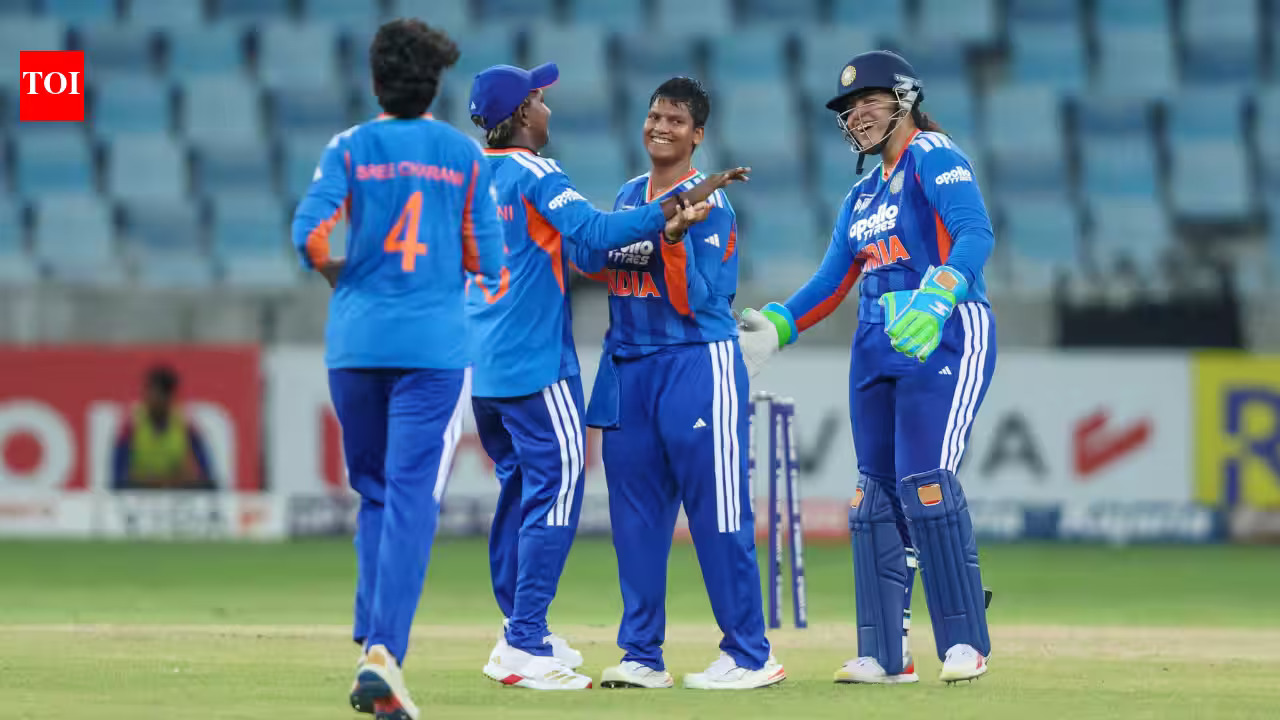










Tension eclipsed the customary jubilation of a championship victory in Dubai on Sunday as the Indian women’s cricket team delivered a resounding 72-run thrashing of Sri Lanka to claim their record-extending eighth Women’s Asia Cup title. However, the post-match headlines were not dominated solely by the clinical display of batting and bowling, but by a striking sequence of events during the trophy presentation ceremony that saw the Indian squad refrain from accepting the silverware from Asian Cricket Council (ACC) president and Pakistan Cricket Board (PCB) chief, Mohsin Naqvi.
The final, which had been anticipated as a clash of styles between a powerhouse Indian side and an emerging Sri Lankan contingent, ended in a dominant statement of intent from Harmanpreet Kaur’s team. Despite the resounding nature of the victory—a performance that underscored India’s hegemony in the continental game—the ceremonial conclusion of the tournament took a turn that left spectators and television audiences stunned.
A Ceremonial Standoff in Dubai
As the dust settled on the Dubai International Stadium, the official presentation ceremony commenced with the usual fanfare. Mohsin Naqvi, serving in his capacity as the ACC President, was positioned on the podium alongside high-ranking dignitaries, including BCCI vice-president Rajeev Shukla and secretary Devajit Saikia.
The atmosphere, which should have been one of celebratory unity, shifted as the medal and trophy distribution began. While Naqvi was active on stage, handing the runners-up cheque to Sri Lankan captain Chamari Athapaththu, a palpable shift in the proceedings occurred when the time came for the champions to be crowned. As the ceremony concluded following the runner-up formalities, it became clear that the Indian players were not moving forward to accept the trophy from the ACC president’s hands.
The Indian side, visibly buoyed by their dominant 72-run win, celebrated the achievement among themselves on the pitch, but the customary interaction with the presiding official failed to materialize. The incident marks a highly unusual breach of protocol, signaling an unspoken, yet potent, defiance that reverberated far beyond the boundary ropes of the Dubai venue.
Historical Precedents and Brewing Strains
While official statements regarding the reasoning behind the refusal have yet to be issued by the Board of Control for Cricket in India (BCCI) or the team management, the incident is being widely viewed through the lens of the increasingly strained diplomatic and sporting relationship between the neighboring cricketing boards.
This is not the first time that an Asia Cup final involving an Indian team has been marred by organizational friction. The current situation draws an immediate parallel to the chaos that ensued during the men’s Asia Cup final just last year. In that instance, the Indian men’s team was left waiting on the podium for over an hour following their victory, a delay that prompted significant backlash and questions regarding the logistical management and professionalism of the ACC’s leadership under Naqvi.
Observers of the game are already drawing lines between the frustration expressed by the men’s team in previous cycles and this latest display of silent protest by the women’s squad. For the Indian contingent, who have maintained a focused, professional demeanor throughout the tournament, the refusal to accept the trophy from Naqvi represents a symbolic distancing from the ACC hierarchy.
Dominance on the Pitch
Setting the off-field drama aside, it would be a disservice to overlook the sheer brilliance of the Indian women’s team during this campaign. Throughout the tournament, Kaur’s side showcased a level of tactical maturity and individual brilliance that cemented their status as the preeminent force in Asian cricket.
In the final, the Indian batters set a formidable target, putting pressure on the Sri Lankan bowlers from the opening over. When it was their turn to defend, the Indian bowling attack remained relentless, suffocating the Lankan chase and forcing errors that led to a comfortable and decisive 72-run victory.
“We came here with a mission,” said a team insider, speaking on condition of anonymity. “The focus has always been on executing our plans and bringing the trophy home. How that presentation is managed is a matter for the officials, but the players made their stance clear through their conduct.”
The Broader Implications
The incident in Dubai serves as a stark reminder that the sport of cricket, particularly in the Asian region, remains inextricably linked to the geopolitical realities of its member nations. The ACC, as the governing body, now faces a difficult task in reconciling the growing friction between its member boards.
With the spotlight now firmly fixed on the ACC’s ability to manage future continental events, questions are being raised about whether such incidents could jeopardize the spirit of the game or future tournament proceedings. As the dust settles in Dubai, the Indian team returns home with an eighth Asia Cup title in their trophy cabinet—a testament to their dominance—while the governing bodies are left to grapple with a ceremony that, for all the right sporting reasons, will be remembered for all the wrong political ones.
As of Monday morning, neither the BCCI nor the ACC has issued a formal clarification regarding the events on the dais. Fans and critics alike are left to wonder if this signifies a permanent shift in how India will engage with ACC-led ceremonies moving forward, or if it was a singular reaction to a backdrop of unresolved professional grievances. Regardless, the Women’s Asia Cup of 2024 will be etched in history—not just for the eight-wicket dominance, but for the silent protest that spoke volumes on the global stage.
Disclaimer: This content is auto-generated for informational purposes only.
Source: Read Original News