





Strategic Balancing: Why Saudi Arabia Remains an Enigma at the BRICS Table
New Delhi | Sep 15, 2026
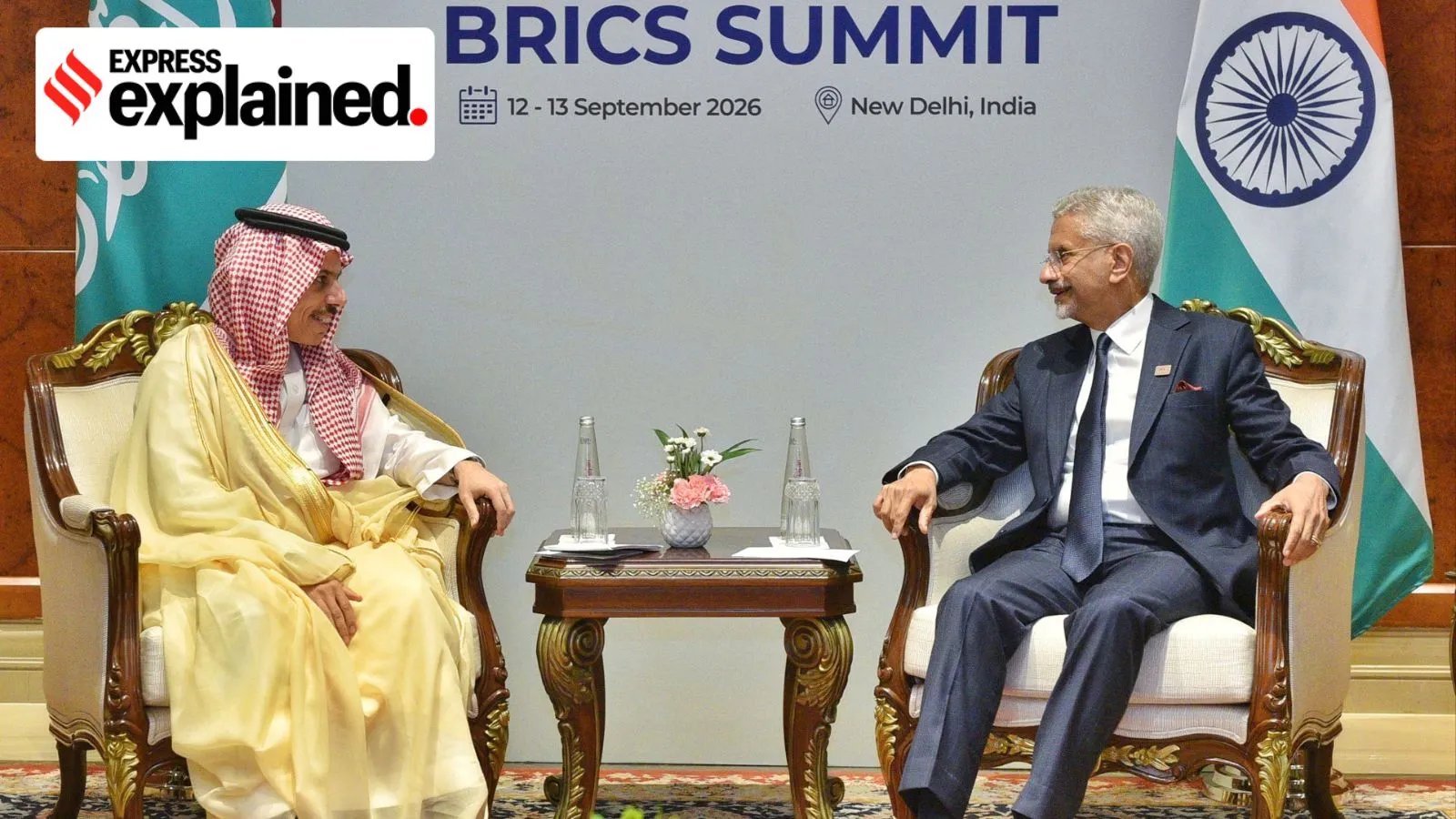
As the 2026 BRICS Summit concluded in New Delhi, the presence of Saudi Foreign Minister Prince Faisal bin Farhan underscored the kingdom’s complex dance on the global stage. Representing Crown Prince and Prime Minister Mohammed bin Salman, the minister’s attendance—coupled with a bilateral discussion with External Affairs Minister S. Jaishankar—highlighted Riyadh’s intent to remain deeply embedded in the emerging economies’ bloc. Yet, the diplomatic reality remains nuanced: despite being invited to join the grouping back in 2023, Saudi Arabia continues to participate as an “invited country,” opting against full, formal membership.
The BRICS Strategy: Economic Diversification
For Riyadh, the allure of the BRICS platform is primarily economic. By engaging with a group that represents nearly half of the world’s population and 40% of the global GDP, Saudi Arabia is effectively carving out a path to diversify its revenue streams away from crude oil. With non-oil exports rising steadily to 44% of the kingdom’s total export volume in 2025, the need to build robust trade infrastructure with giants like China and India has never been more urgent.
Participation in these summits allows Riyadh to test the waters for alternative financial mechanisms, including the potential for trade settlements in local currencies. By sitting at the table, Saudi Arabia ensures its voice is heard in the development of a multipolar economic order, all while securing its position as a primary trade partner for the world’s fastest-growing markets.
The Geopolitical Tightrope
The hesitation to formalize membership stems from a delicate balancing act involving the United States. Under the current American administration, BRICS is often viewed with skepticism, characterized by some leaders as a counterweight to Western hegemony. For Saudi Arabia, which relies heavily on U.S. defense systems and is currently navigating sensitive negotiations regarding civil nuclear technology and security pacts with Washington, a formal pivot into the BRICS fold could trigger unnecessary diplomatic friction.
By keeping its status as an “invited guest,” Riyadh retains the economic benefits of engagement without the political baggage of being classified as a formal adversary to Western interests. It is a calculated strategy of keeping its options open, allowing the kingdom to nurture its ties with Moscow and Beijing while simultaneously securing its strategic alliance with the United States.
Deepening the New Delhi Connection
The relationship between India and Saudi Arabia has transcended the traditional energy-centric model. Today, the partnership spans across technology, infrastructure, food security, and tourism. With bilateral trade reaching $41.88 billion in the last fiscal year, both nations have prioritized their Strategic Partnership Council as the primary engine for growth.
Furthermore, the significant Indian diaspora in Saudi Arabia—numbering roughly 2.4 to 2.7 million—acts as a human bridge, cementing ties that go beyond mere statecraft. Even as regional dynamics in the Middle East cause shifts in alliance preferences, both New Delhi and Riyadh have demonstrated a shared commitment to maintaining a stable and prosperous bilateral relationship.
For now, Saudi Arabia appears content with its unique, semi-detached status within BRICS. The grouping provides the kingdom with the necessary leverage to navigate a fragmented global economy, while the flexibility of non-membership shields it from the constraints of formal alignment. As the geopolitical winds continue to shift, Riyadh’s presence at the table, rather than its formal seat, remains a masterclass in modern diplomatic caution.
Disclaimer: This content is auto-generated for informational purposes only.
Source: Read Original News