









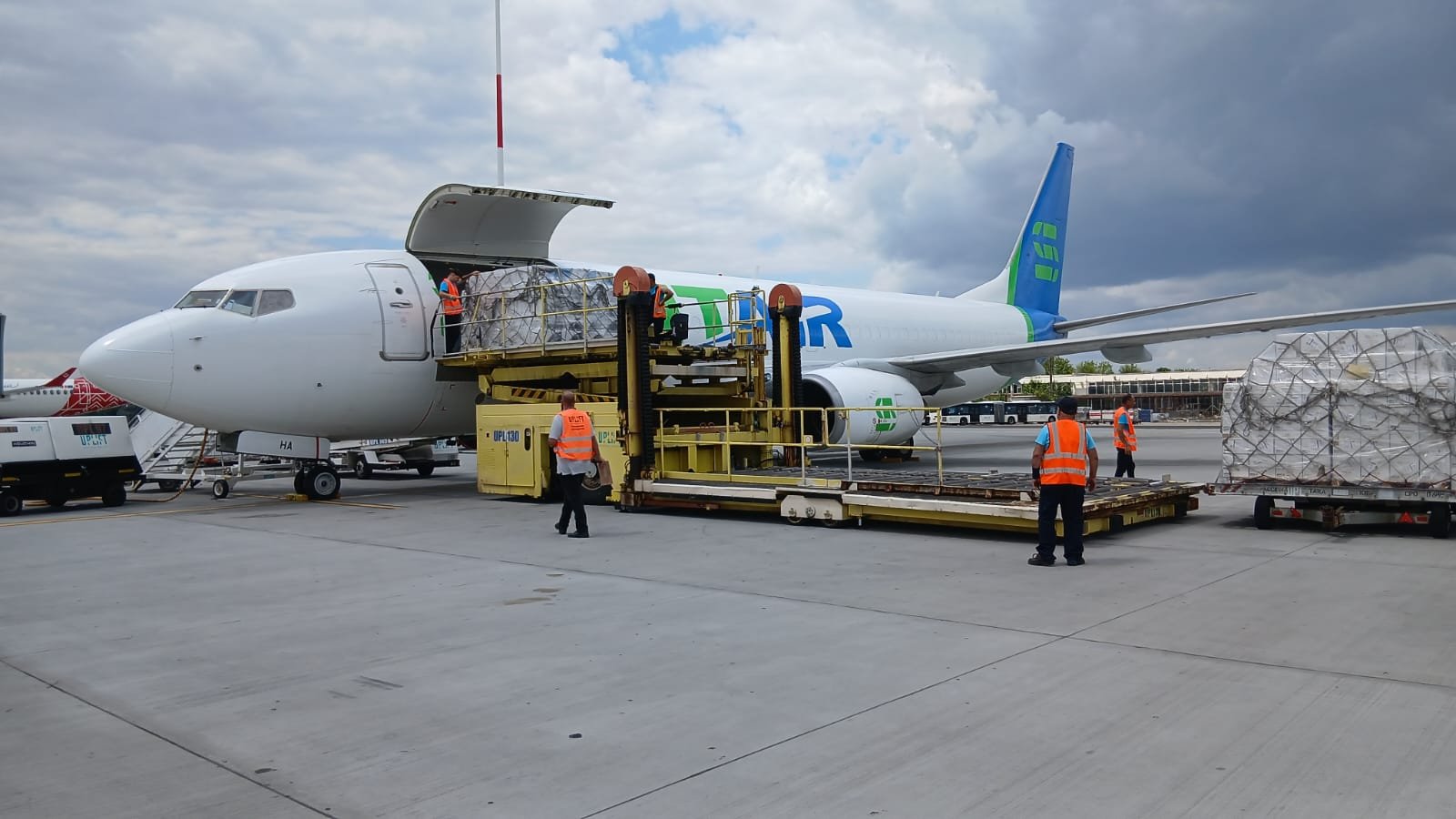
The air cargo industry is undergoing a seismic shift, moving away from the traditional, massive hub-and-spoke models that have dominated global trade for decades. Hamdi Osman, founder and CEO of SolitAir, is at the forefront of this transformation, arguing that the future of logistics lies not in chasing the world’s largest economies, but in unlocking the untapped potential of the Global South. By leveraging advanced data orchestration and predictive intelligence, Osman is challenging long-held industry dogmas about how freight should move across the globe.
Rethinking Air Cargo as an Economic Enabler
For years, the logistics sector has viewed air freight as a luxury service—a premium option reserved strictly for emergencies or high-value, time-sensitive goods. Osman challenges this “speed-only” narrative, positioning air cargo instead as a critical economic enabler. In his view, cargo networks should not merely respond to existing volume but should actively facilitate the growth of emerging markets.
“Businesses are no longer paying just for speed,” Osman notes. “They are paying for certainty.” As global supply chains face increasing volatility, the ability to anticipate disruption has become the true differentiator. By moving away from a focus on sheer fleet size and toward the creation of more resilient, smarter networks, logistics providers can offer businesses the control they need to thrive in an unpredictable global landscape.
The Global South: A Hub of Complexity and Growth
A common misunderstanding among business leaders in developed markets is the assumption that emerging regions require simpler, stripped-down logistics models. Osman insists the reality is quite the opposite. The Global South is already a powerful engine of manufacturing and consumption, characterized by fragmented supply bases and complex multi-modal dependencies.
SolitAir’s strategy is designed to address this by prioritizing specific, underserved corridors—such as those linking South Asia with Africa or the Middle East with secondary cities across the Indian subcontinent. Traditional, legacy-driven carriers often struggle in these zones because their networks are optimized for established lanes between North America, Europe, and China. By treating the Global South as a primary trade network rather than a secondary extension of existing infrastructure, SolitAir is proving that a corridor-led strategy can be more effective than broad-scale operations.
AI and the Future of Digital Orchestration
At the core of this transformation is a commitment to technology that functions more like a decision-making engine than a transport utility. SolitAir is integrating AI and predictive analytics into its operational backbone to move from reactive shipping to “anticipatory logistics.”
The role of artificial intelligence in this model is transformative. Beyond simple GPS tracking, the company employs AI-driven routing to optimize load factors and yield, alongside “Agentic AI” to monitor exceptions in real time. These digital tools allow for:
- Predictive Demand Shaping: Anticipating market needs to position capacity before requests arrive.
- Actionable Intelligence: Converting raw data into strategic decision-making insights.
- Enhanced Compliance: Combining the rapid processing power of machine learning with human oversight to ensure rigorous safety and regulatory standards.
As we look toward 2035, Osman predicts that the logistics industry will transition from physical movement to digital orchestration. Success will no longer be measured by the size of an airline’s fleet, but by how effectively an operator can synchronize cargo flows using data. By focusing on precision over scale and flexibility over rigid infrastructure, SolitAir is positioning itself not just to participate in global trade, but to define the supply chain architecture of the future. The message is clear: the next generation of logistics will be won by those who can successfully navigate the complexity of the world’s fastest-growing markets through the lens of advanced technology.
Disclaimer: This content is auto-generated for informational purposes only.
Source: Read Original News