







The industry adage goes that there are no small films, only small releases. But even by the most generous standards of underdog lore, the trajectory of Hanuman Ansh is nothing short of mythic. Produced on a shoe-string budget of just Rs 2 crore, a figure that wouldn’t cover the catering bill for a big-ticket Bollywood production, the film has defied every gravity-defying logic of the box office. With a quiet opening of Rs 10 lakh, it has blossomed into a cinematic phenomenon, shattering the Rs 200 crore barrier in India.
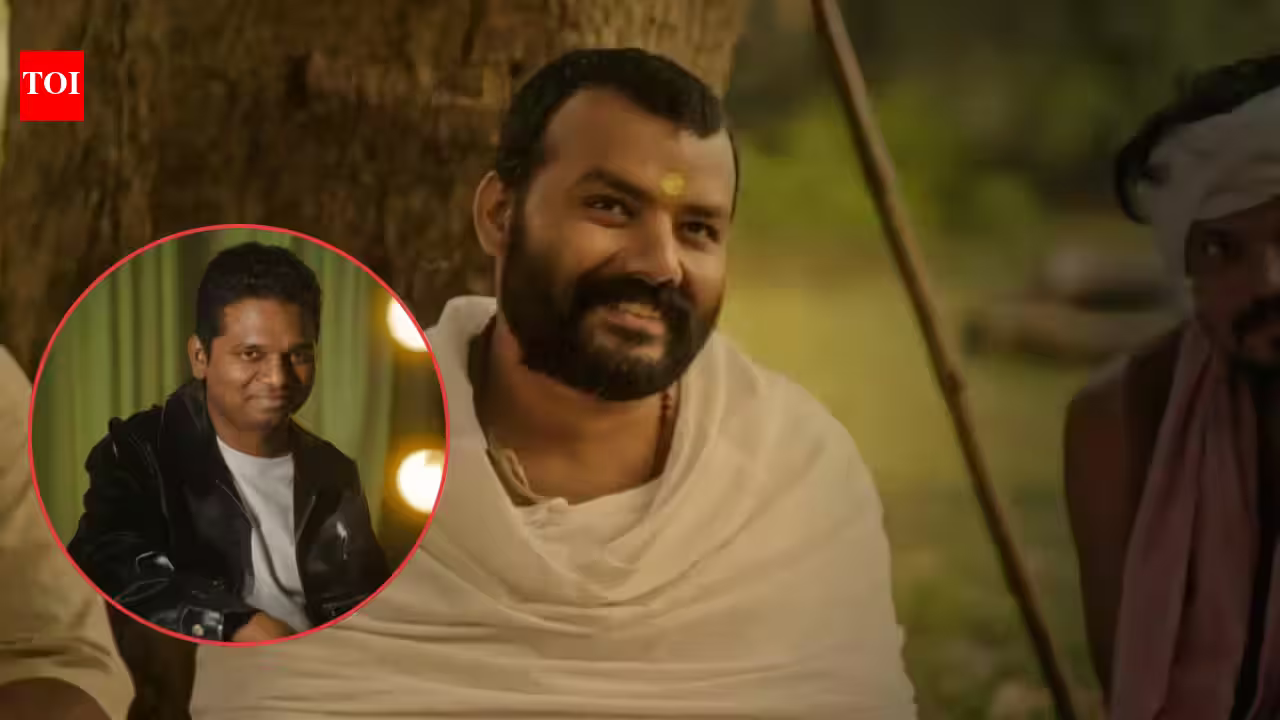
At the heart of this sonic revolution is music composer Dhirendra Mulkalwar, the man responsible for the melodies that have turned the film into a social media wildfire. In an exclusive conversation, Dhirendra peels back the curtain on a career defined by closed doors that have suddenly swung wide open.
The Anatomy of a Miracle
When asked about the film’s meteoric rise, Dhirendra doesn’t reach for marketing buzzwords or strategic projections. Instead, he speaks with the quiet awe of a man witnessing a spiritual event.
“This is like a miracle for us,” he confesses. “We still don’t know how to react to it. It’s not just a business metric or a box office report; we’ve surrendered ourselves to the journey. We see it as a blessing from Babji, actually.”
This sense of surrender is perhaps why the film resonated so deeply. In an era of high-octane VFX and star-studded ensembles, Hanuman Ansh arrived with a raw, earnest frequency. Its music—which has since become the backbone of countless viral reels—carried a devotional purity that transcended the typical commercial mandate, striking a chord with audiences who were clearly starved for something genuine.
From Rejection to Red Carpets
The most poignant aspect of Hanuman Ansh’s success is the shift in the industry’s perception of its creators. For years, Dhirendra Mulkalwar navigated the margins of the music industry, facing the quiet, soul-crushing sting of rejection. Now, those same power players are dialing his number.
“Phone calls are coming in,” Dhirendra shares, with a mix of satisfaction and grounded humbleness. “People are congratulating me, and there are offers on the table. I’m in talks for several projects. Before Hanuman Ansh, I was honestly unsure if I would be able to carve a career in films. I was at a crossroads. But Baba Ji has given me such a big success that I’ve left the anxiety behind. It is interesting—I am getting calls from the very people who had turned me away in the past. It makes me feel very positive about the future.”
It is a classic industry narrative, yet one that never loses its sting. The irony is not lost on Dhirendra; success, as they say, has many fathers, while failure is an orphan. But rather than harboring bitterness, he seems to view the validation as a necessary fuel for his next chapter.
The Grassroots Rebellion
How does a film with a limited initial reach overcome the hegemony of major studio releases? Hanuman Ansh didn’t rely on the traditional, big-budget advertising blitz. Instead, the team—led by director Vishal Chaturvedi—waged a grassroots war.
“In the second week, when our screen count dwindled to just 30, we didn’t sit in offices and despair,” Dhirendra explains. “Vishal and the entire team hit the road. They traveled from Mumbai to Surat, then to Delhi, just driving from city to city, meeting people, interacting with the audience, and pushing the film wherever they could.”
It was a primitive, high-effort approach in a digital age, but it proved to be the spark the film needed. The human connection formed during those road trips fed directly into the social media cycle. Audiences weren’t just sharing a trailer; they were sharing raw, tear-filled reactions from people walking out of the theater. “People could see the genuine emotion on the screens of their phones,” he adds. “All of this happened organically. Social media wasn’t a PR tool for us; it was a mirror of the public’s love.”
The Enduring Impact of ‘Hanuman Ansh’
Directed by Vishal Chaturvedi and featuring a standout performance by Shobhinaw Satyaa as the iconic Neem Karoli Baba, the film’s release on August 7, 2026, will likely be studied by film students for years to come. It serves as a reminder that the Indian audience is not monolithic. There is a vast, untapped market for content that speaks to the soul rather than just the wallet.
As for Dhirendra, the success of the film has given him the most precious commodity in show business: the agency to choose. He is no longer looking for a seat at the table; he is being invited to set it.
“I’m just taking it one step at a time,” he says, reflecting on the whirlwind weeks. “The calls, the meetings—it’s all a blessing. I feel like I finally have a voice that people want to hear.”
In an industry that often celebrates the loud and the manufactured, the success of Hanuman Ansh is a victory for the quiet, the authentic, and the dedicated. It is a story of a composer who kept his faith, even when his phone stayed silent, and who is now finally hearing the music of a well-deserved spotlight. If the recent box office numbers are any indication, this is just the overture.
Disclaimer: This content is auto-generated for informational purposes only.
Source: Read Original News