





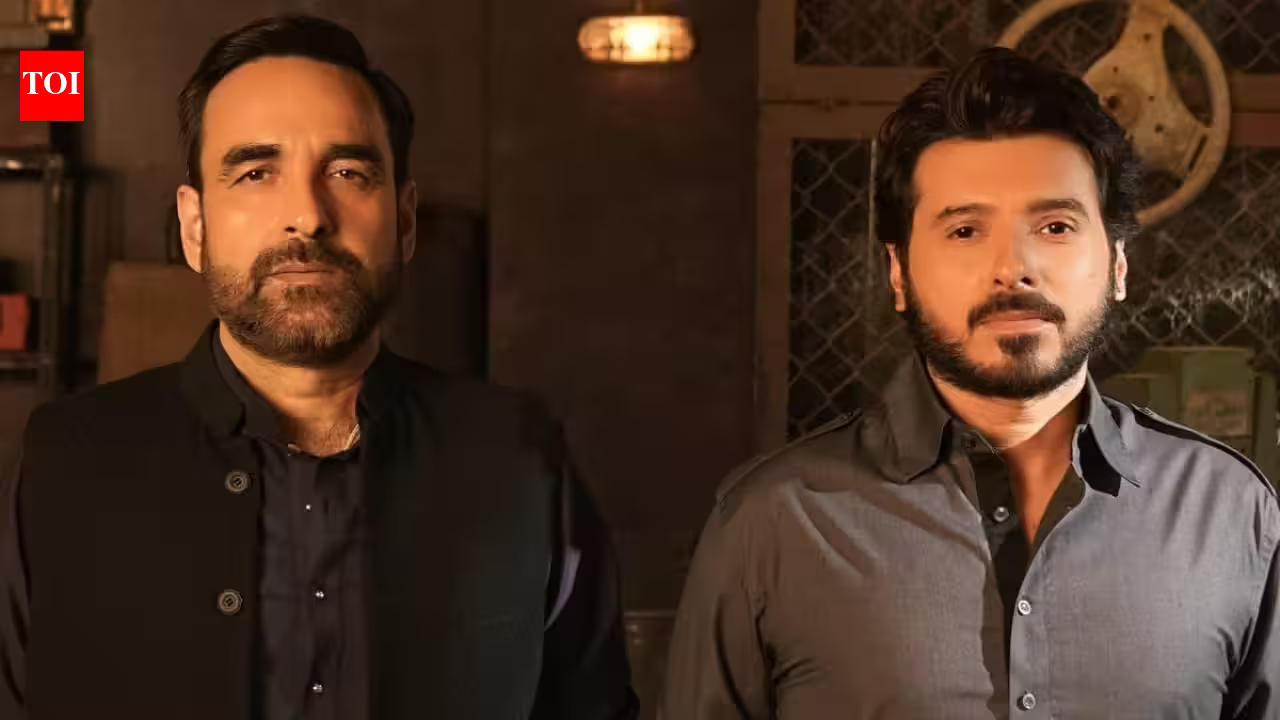
The raw, hyper-violent landscape of Mirzapur has never been a stranger to controversy. Since its inception, the franchise has thrived on the grimy aesthetics of the UP underworld—a world of illegal arms, narcotics, and brutal territorial power struggles. However, the upcoming Mirzapur: The Movie has stumbled into a legal minefield that transcends mere creative choice, landing squarely in the crosshairs of the Delhi High Court over the sanctity of historical icons.
At the heart of the storm is the song ‘Shoorveer’. Originally released in 2020 by Rapperiya Baalam as a stirring tribute to the legendary Rajput king Maharana Pratap, the track is deeply woven into the cultural fabric of Rajasthan. Now, that same anthem finds itself playing over a scene in the Mirzapur cinematic universe, a juxtaposition that has prompted the judiciary to ask a searing question: Does the filmmaker’s conscience align with their creative output?
A Clash of Legacies and Underworld Realities
The controversy erupted following a Public Interest Litigation (PIL) filed by a concerned citizen—an alumnus of the Maharana Pratap University of Agriculture and Technology. The petition argues that using a track dedicated to the valor, sacrifice, and honor of Maharana Pratap within the context of a film saturated with criminality and moral degradation is inherently disrespectful.
For the petitioners, the lyrics—which invoke the history of Mewar and the king’s legendary horse, Chetak—are not mere entertainment filler; they represent a specific historical dignity. Hearing this anthem blare against a backdrop of gang warfare and sexual violence in Mirzapur felt, to many, like a desecration of the very legacy the song was written to uphold. As the petitioner’s counsel pointed out, the song explicitly opens with the declaration, “It is not a gangster song,” yet it has been repurposed into exactly that environment.
The Court’s Moral Interrogation
During Wednesday’s proceedings, the bench comprising Chief Justice Devendra Kumar Upadhyaya and Justice Tejas Karia did not mince words. In a moment that resonated far beyond the confines of the courtroom, the bench turned to advocate Jay K. Bhardwaj, representing the film’s production powerhouse, Excel Entertainment.
“You please see and come tomorrow. If your conscience is satisfied… you are playing such a scene in the background song displaying Maharana Pratap,” the court remarked. The query was not merely procedural; it was a moral challenge to the production house. By asking if the lawyer’s own conscience was satisfied, the court shifted the focus from legal technicalities to the underlying ethical responsibility of modern creators.
The exchange grew particularly tense when the court asked the lawyer, “Have you seen the film?” To the visible frustration of the bench, Bhardwaj admitted he hadn’t personally screened the scene in question, though he maintained that the production house’s internal assessment suggested the scene did not align with the inflammatory claims brought forward by the petitioners.
The Delicate Balance of Artistic Freedom
The Delhi High Court’s intervention has inadvertently ignited a broader debate regarding the boundaries of artistic license. While the judiciary is often hesitant to play the role of a moral arbiter, the bench acknowledged the complexity of the matter, noting, “We are only on protection of the fundamental right of an artist. It may be whether it is an artwork or not, that call has to be taken either by the Central Government.”
This is the classic tension that defines the current Indian entertainment landscape. Filmmakers argue that their creative vision is sacrosanct and protected by the right to expression, particularly in a gritty, fictionalized crime drama. However, there is a growing sentiment that “creative liberty” cannot be used as a blanket shield when it trivializes historical figures or co-opts cultural anthems for narratives that are antithetical to their original intent. The court’s admission that they are “perhaps not competent” to decide on the artistic merits of the film highlights a systemic gap in how regulatory bodies handle the intersection of pop culture and historical sentiment.
What Lies Ahead for the ‘Shoorveer’ Row?
The immediate consequence of this hearing is that the production house now finds itself under a microscope. By ordering the legal representative to watch the film and report back, the court has effectively forced a high-stakes review of the controversial sequence. The petitioner is seeking a definitive form of relief: either the removal of the song entirely from the climax or, at the very least, a creative re-editing that decouples the song from the film’s more problematic imagery.
For Excel Entertainment, the stakes are high. Mirzapur is a crown jewel in their library, and the film adaptation is one of the most anticipated releases in the streaming world. A forced edit or a legal mandate to alter the soundtrack could set a significant precedent for how filmmakers use copyrighted music and historical references in future projects.
The case has been adjourned until Thursday, by which time the legal team for Mirzapur is expected to present a clearer stance. Will they double down on their artistic freedom, or will they acknowledge the court’s prompt and opt for a compromise?
Whatever the outcome of this specific legal battle, the Mirzapur controversy serves as a stark reminder to creators: in an era of hyper-connectivity and heightened historical sensitivity, the act of “sampling” culture comes with a price. When you borrow the weight of a legend like Maharana Pratap, you are not just acquiring a melody—you are inheriting the expectations of a legacy. As the Delhi High Court waits for a response, the industry is watching closely, realizing that even in the world of make-believe, the court of public—and legal—opinion is very real.
Disclaimer: This content is auto-generated for informational purposes only.
Source: Read Original News