







The Fragility of Independent Game Development
The landscape of independent game development has long been defined by both artistic brilliance and extreme financial volatility. Recently, the industry witnessed a stark reminder of this precarious nature as Heart Machine, the acclaimed studio behind the landmark title Hyper Light Drifter, announced the termination of nearly its entire workforce. The announcement, delivered by studio founder Alx Preston, marks a significant inflection point for an organization that was once considered a poster child for successful indie game design and creative vision.
The collapse follows the abrupt cancellation of an unannounced project by a publishing partner. In the current economic climate, independent studios are often reliant on milestone-based funding from larger entities to sustain operations between releases. When a publisher unilaterally decides to cease funding, the immediate loss of liquidity frequently leaves studios with no operational runway. For Heart Machine, this loss proved terminal, forcing the company to dismantle its core team in an effort to provide as much transitional support as possible to the affected developers.
A Legacy Defined by Artistic Innovation
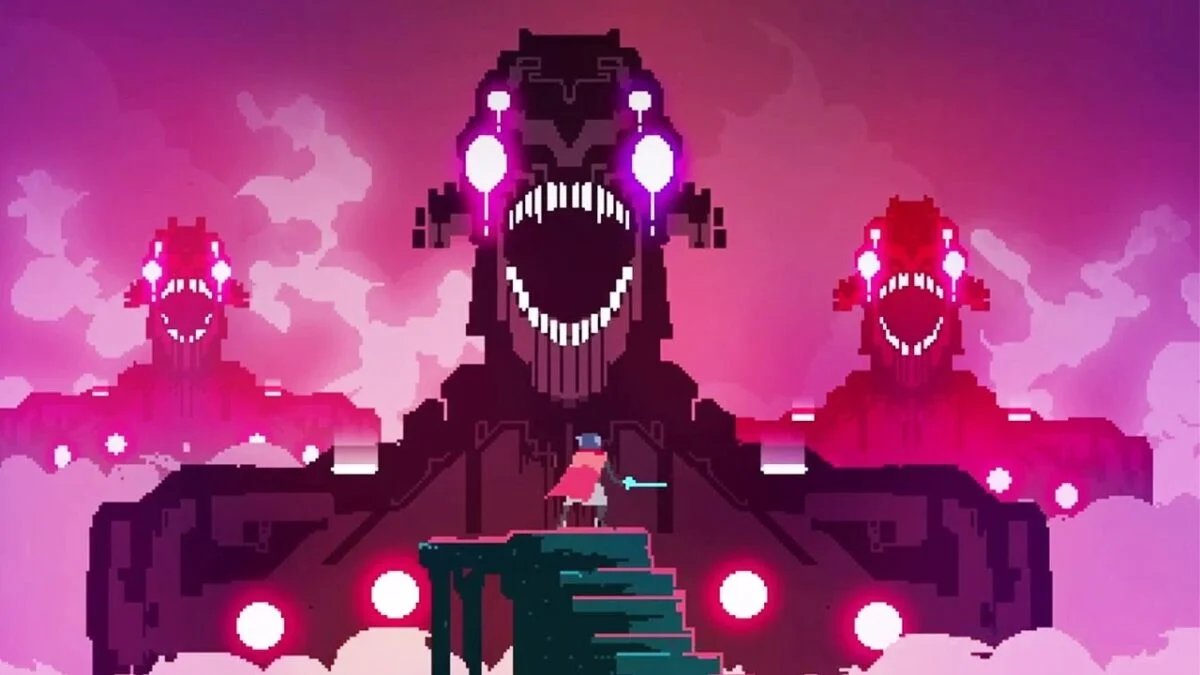
To understand the weight of this news, one must look at the technical and creative contributions Heart Machine provided to the medium. Founded by Alx Preston, the studio rose to prominence in 2016 with the release of Hyper Light Drifter. The game was lauded not only for its distinct, high-contrast pixel art style but also for its sophisticated approach to environmental storytelling. By eschewing traditional dialogue for a wordless, gesture-based narrative, the studio pushed the boundaries of how games communicate themes of isolation, illness, and decay.
Following this success, the studio transitioned from 2D pixel-based worlds to three-dimensional movement with Solar Ash. This title served as a technical demonstration of the team’s versatility, implementing high-speed traversal mechanics and large-scale 3D boss encounters that required a complete shift in their development pipeline. While these titles garnered significant critical acclaim, they also highlighted the immense resources required to maintain a consistent output of high-quality software, setting a precedent that became increasingly difficult to replicate in subsequent years.
The Pivot to New Genres and Technical Hurdles
The recent downturn for Heart Machine reflects a broader struggle within the independent sector to navigate changing market demands and internal creative shifts. The studio attempted to expand its footprint with Hyper Light Breaker, a roguelite action-RPG that represented a significant departure from the linear, focused design of their earlier work. This shift toward procedural generation and persistent, loot-based gameplay structures introduced a new set of technical challenges. Balancing the procedural elements of a roguelite requires iterative testing and player feedback that often spans years of Early Access development.
Furthermore, the studio’s release of Possessor(s) in 2023 faced challenges regarding game mechanics and responsiveness. Critics and players noted that the transition to a side-scrolling Metroidvania format suffered from control issues that diverged from the polished, fluid gameplay loops found in the studio’s earlier successes. These releases were intended to diversify the studio’s portfolio and establish a recurring revenue stream, but they failed to gain the commercial momentum necessary to insulate the company from the volatility of publishing agreements.
The Mechanics of Studio Sustainability
The collapse of Heart Machine serves as a case study in the limitations of the current independent publishing model. Many studios operate on a “project-to-project” basis, where the success of a single title is expected to fund the development of the next. However, rising production costs, coupled with a hyper-competitive market where player attention is fragmented across thousands of new releases, have made this model increasingly unsustainable. When a project underperforms or a publisher loses faith in a title’s financial viability, the resulting collapse is often rapid and total.
The studio had previously attempted to mitigate these risks by exploring alternative funding models, including a short-lived Patreon initiative. Such efforts represent the industry-wide search for financial independence from traditional publishers. However, the inability to sustain those efforts highlights a recurring issue: community-funded models are rarely sufficient to support the multi-million dollar budgets required to produce modern, high-fidelity action games. The failure of these supplemental models forced Heart Machine to rely heavily on the publisher-funded pipeline, ultimately leading to the current crisis.
The Uncertain Future of Industry Stability
The future for Heart Machine remains ambiguous as Alx Preston navigates the aftermath of these layoffs. While there is no immediate roadmap for the company’s survival, the event underscores the broader, systemic challenges facing mid-sized independent studios. These entities often exist in a space that is too large to operate on a shoestring budget but too small to absorb the shocks of a canceled contract or a commercial disappointment.
As the industry reflects on this development, the focus shifts toward how studios might better protect themselves from such binary outcomes. The loss of a team of this caliber is a reminder that the creative health of the industry is tied directly to its financial infrastructure. For now, the focus is on the transition of the talented individuals who built these worlds, while the community waits to see if a path forward exists for the Heart Machine brand in an increasingly difficult commercial environment. The studio’s trajectory remains a poignant example of how quickly the momentum generated by a masterpiece can be stalled by the unforgiving realities of modern software development and global distribution.
Disclaimer: This content is auto-generated for informational purposes only.
Source: Read Original News