








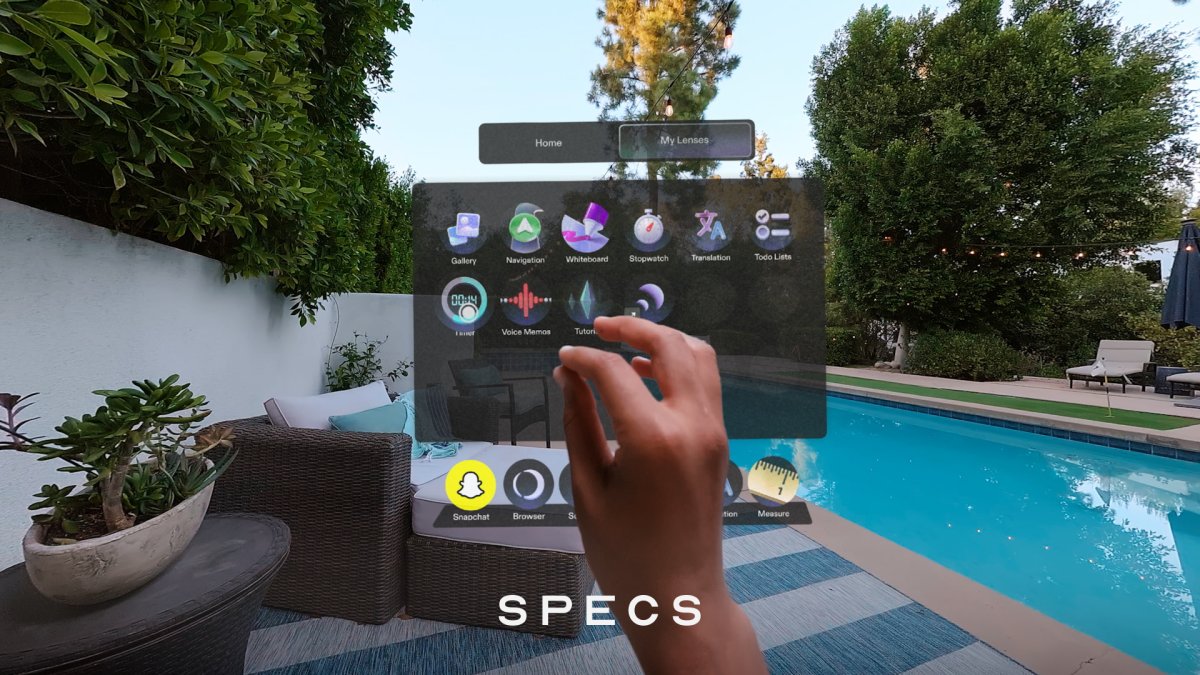
Redefining the Purpose of Wearable Hardware
When Snap originally introduced its augmented reality glasses, the product launch was met with skepticism and public criticism. Priced at $2,200 and featuring a design that many found bulky and impractical, the device struggled to find an audience beyond early adopters. Following a significant decline in company stock and widespread negative sentiment, Snap executives have moved to justify the hardware’s existence by shifting the focus toward software integration and productivity-driven utility. During a recent event in Los Angeles, the company unveiled a suite of new features intended to transform the glasses from a niche gadget into a functional, day-to-day computing tool.
The Introduction of Specs Intelligence
The most significant technical development is the introduction of Specs Intelligence. Snap describes this as an anticipatory AI system capable of operating across multiple platforms, including desktops and mobile devices. Unlike traditional digital assistants, this system is designed to build a profile of a user’s goals, project requirements, and daily routines by interfacing with connected applications.
By functioning as an AI-native operating system, the intelligence layer aims to consolidate information across various AR Lenses. The goal is to provide a unified environment where users can manage long-term objectives while receiving real-time assistance. Importantly, Snap clarified that while this intelligence is optimized for the glasses, it is designed to function as an independent productivity platform, allowing users to leverage the technology without necessarily being tethered to the wearable device at all times.
Corporate Integration and Enterprise Utility
Recognizing the difficulty of marketing a high-cost device to casual consumers, Snap has launched a program titled Specs for Enterprise. This initiative seeks to embed the technology into professional workflows through partnerships with industry leaders such as Salesforce, Nvidia, and Amazon.
The primary utility proposed for these enterprise environments involves remote maintenance and technical support. During a demonstration, the company showcased a use-case where an IT technician utilized the augmented reality overlay to perform complex hardware repairs. By providing mobile device management and security protocols, Snap aims to convince corporate IT departments that the glasses represent a legitimate tool for operational efficiency rather than merely a consumer plaything. This pivot towards business-to-business applications suggests a strategy of prioritizing corporate budgets where the $2,200 price point is more palatable than it would be for the average individual consumer.
Entertainment and Lifestyle Applications
Snap has also introduced expanded media capabilities to bridge the gap between utility and leisure. The glasses now support direct integration with Spotify and HBO Max, allowing users to consume content while utilizing the augmented reality interface. Additionally, the company announced a partnership with the NBA and WNBA to introduce AR-based athletic training modules. These tools are designed to overlay digital guides onto the physical world to help users refine basketball skills. While these features broaden the appeal of the device, they remain contentious, as questions persist regarding the comfort and safety of engaging in active sports while wearing substantial face-mounted hardware.
Connectivity and Hardware Expansion
To support the usage of these glasses outside of office or home Wi-Fi environments, Snap has introduced a supplementary hardware package. The new charging case now includes built-in cellular connectivity through a partnership with Verizon. This cellular capability carries a monthly subscription fee—$10 for existing Verizon customers and $20 for others. This addition underscores Snap’s attempt to position the glasses as an “always-on” computer. By decoupling the hardware from fixed network access, the company hopes to encourage more frequent use in public settings.
The Vision for Human-Centric Computing
CEO Evan Spiegel has characterized the ongoing development of Specs as a defense against the current trend of automation-heavy technology. He argues that the focus of computing should remain on empowering the user rather than replacing human effort. By positioning the glasses as a wearable computer rather than a traditional mobile device, Snap is betting that the shift toward spatial, AI-integrated workflows will eventually outweigh the initial sticker shock.
As the fall release approaches, Snap intends to host pop-up demonstrations in Los Angeles to allow the public to test these new features firsthand. The success of this transition depends on whether the integration of anticipatory AI and enterprise-grade support can provide enough genuine utility to turn a controversial hardware launch into a sustainable professional ecosystem. For now, the product remains a bold, high-stakes experiment in the future of human-computer interaction.
Disclaimer: This content is auto-generated for informational purposes only.
Source: Read Original News