









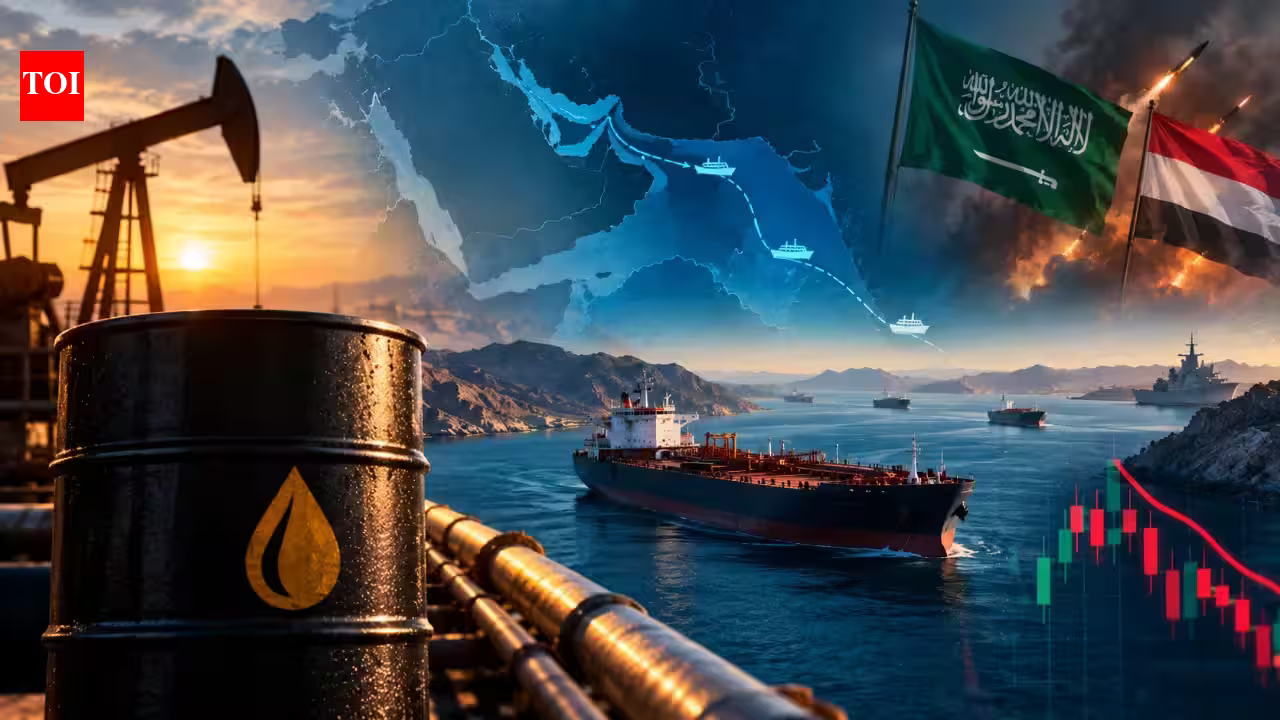
Geopolitical Volatility and the Global Energy Benchmark
The global energy market is currently navigating a period of intense volatility, characterized by the intersection of regional conflict and critical supply chain logistics. With Brent crude and West Texas Intermediate (WTI) benchmarks hovering above the psychological threshold of $100 per barrel, the market is signaling a state of persistent tension. While recent reports indicate a marginal price correction—a dip of approximately one percent over three consecutive sessions—this decrease does not signify a return to stability. Instead, it reflects a temporary recalibration of expectations as market participants weigh geopolitical risks against the tactical maneuvers of major oil producers.
The recent downward pressure on prices stems primarily from strategic efforts by Saudi Arabia to mitigate supply disruptions following attacks on its East-West pipeline infrastructure. When key export hubs, such as the Yanbu facility on the Red Sea, face suspension, the immediate reaction is a spike in futures prices. However, the market has demonstrated resilience as alternative logistics, such as ship-to-ship transfers off the coast of Oman, are activated. This dynamic illustrates the highly sensitive nature of contemporary energy markets, where the integrity of midstream assets like pipelines carries as much weight as upstream production quotas.
Supply Chain Fragility and Infrastructure Resilience
The vulnerability of critical energy infrastructure in the Middle East has been laid bare by recent events. The damage to three pumping stations along the Saudi East-West pipeline acts as a stark reminder of the fragile nature of global oil distribution. With the potential for such disruptions to cut off as much as four percent of global supply, the stakes for energy security are exceptionally high. For global commodity traders and institutional investors, the primary metric of concern is the speed of repair and the capacity for system restoration.
Saudi Arabia’s proactive stance in restoring pipeline functionality within days, coupled with its redirected logistical efforts to supply Asian refiners, has successfully prevented a prolonged price surge. Yet, the necessity of these emergency measures underscores a recurring problem: the reliance on concentrated transit corridors. While ship-to-ship transfers provide a necessary stopgap, they are fundamentally less efficient and more costly than fixed pipeline infrastructure. The market’s current caution is a direct reflection of this inefficiency. Traders are maintaining high price levels because they recognize that while the current disruption is being managed, the infrastructure remains exposed to recurring threats.
The Indian Economic Context: Navigating Import Costs
For a nation like India, which imports over 80 percent of its crude oil requirements, the fluctuations in global prices are not merely theoretical figures; they represent significant macroeconomic challenges. The persistence of oil prices above $100 a barrel places immense pressure on India’s current account deficit and domestic inflation. As a major consumer, the Indian government and its public sector oil marketing companies are forced to navigate a narrow path between passing on rising costs to consumers and absorbing losses to maintain political and economic stability.
The volatility in the Middle East is particularly concerning for New Delhi, as the region remains the primary source of India’s energy imports. Any instability that threatens the Strait of Hormuz—the world’s most critical oil chokepoint—poses an existential risk to India’s energy security. The recent incident involving a tanker in this waterway serves as a reminder that geopolitical risks are not confined to pipelines; they extend to maritime lanes. For Indian policymakers, this reality strengthens the argument for diversifying energy sources and accelerating the transition toward renewable energy and biofuels. However, in the medium term, the reliance on imported fossil fuels remains absolute, making India highly susceptible to the risk premiums currently being priced into the market by global energy participants.
Market Uncertainty and the Collapse of Diplomatic Channels
The complexity of the current market is compounded by the lack of clear diplomatic progress. The collapse of interim agreements and the suspension of meaningful peace talks between the United States and Iran have created a vacuum where speculation thrives. Financial institutions, including major global banks, have noted an unprecedented difficulty in establishing a clear baseline for market forecasts. When institutional analysts acknowledge the absence of a reliable predictive model, it signals that the market has entered an era of “geopolitical primacy,” where political events dictate price outcomes more than supply and demand fundamentals.
The upcoming United Nations General Assembly is viewed by market participants as a crucial touchpoint. While there is little expectation of an immediate breakthrough, the presence of diplomatic delegations offers a platform for de-escalation. Until a definitive shift in the political landscape occurs, the market is likely to remain in a holding pattern. Investors are bracing for prolonged periods of uncertainty, where any escalation in rhetoric or physical activity in the region could trigger rapid price appreciation, regardless of the current efforts to maintain supply continuity.
Strategic Outlook: What to Expect in the Coming Quarters
As the market looks ahead, the consensus remains cautious. The “new normal” of energy pricing appears to be firmly anchored in the triple-digit range for Brent and WTI. Several factors will define the path forward. First, the success of Saudi efforts to normalize export volumes will determine whether prices retreat below the $100 mark or stabilize at higher levels. Second, the response from other OPEC+ members will be critical; if they perceive the current geopolitical risk as a long-term fixture, they may choose to maintain production constraints, thereby providing a floor for oil prices.
For businesses and industries in India, the current environment necessitates a proactive approach to risk management. Hedging strategies, diversifying supply contracts, and investing in inventory management have become essential components of operational strategy. The ability to forecast and navigate these price swings is no longer just a function of the finance department; it is a central pillar of corporate survival. As global events continue to manifest in price tickers on trading screens, the link between international diplomacy and the domestic price of fuel has never been more transparent. India, as a rapidly growing economy with an insatiable appetite for energy, must prepare for an environment where stability is the exception and volatility is the defining characteristic of the energy commodity market.
Disclaimer: This content is auto-generated for informational purposes only.
Source: Read Original News