








Yabba Dabba Doo in Malibu: Inside Dick Clark’s Real-Life ‘Flintstones’ Fantasy
In the world of celebrity real estate, we are accustomed to seeing sprawling glass mansions in the Hollywood Hills, minimalist penthouses in Manhattan, or rustic ranches in Aspen. Yet, tucked away in the rugged terrain of Malibu, California, sits a property that defies every architectural norm—a residence that looks less like a luxury home and more like a prehistoric hideaway pulled straight from the whimsical imagination of Hanna-Barbera. This is the story of Dick Clark’s “Flintstones” house: a bold, eccentric, and entirely singular piece of television history.
The Man Behind the Bedrock Dream
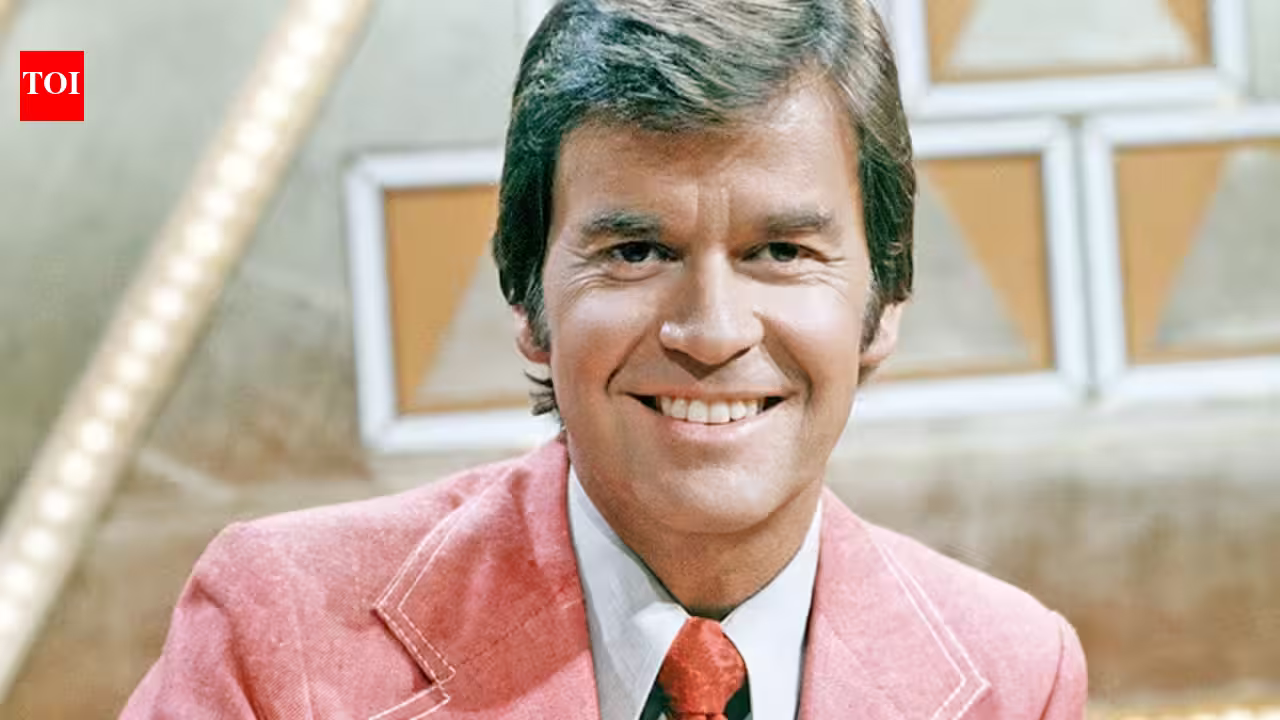
Dick Clark, the legendary broadcast pioneer and the face of American Bandstand, was a man who understood the pulse of American pop culture better than almost anyone. However, his private life was defined by a different kind of creative vision. In the 1980s, Clark and his wife, Kari Wigton, set their sights on a breathtaking, elevated parcel of land at 10124 Pacific View Drive.
For many, the plot of land was simply a picturesque location. For Clark, it was a blank canvas upon which he wanted to paint a Stone Age masterpiece. Inspired by the charm of Fred and Wilma’s iconic Bedrock home, Clark didn’t just want a house; he wanted an immersive experience. He enlisted the services of architect Philip Jon Brown to turn this fantasy into a physical reality, effectively deciding to build a residence that looked as though it had been carved directly out of the Earth’s crust millions of years ago.
A Battle with the Elements and Bureaucracy
Building a home that resembles a jagged, prehistoric rock formation in the middle of a protected California landscape was never going to be a walk in the park. In fact, it was a regulatory nightmare. When the plans were first submitted, the National Park Service, concerned about the property’s proximity to the Santa Monica Mountains National Recreation Area, was staunchly opposed to the idea of a traditional modern structure on the hilltop.
Clark, known for his relentless work ethic and tenacity, wasn’t about to back down. As Philip Jon Brown recalled in an interview with CNN Money, Clark “dug in his heels.” The standoff created a unique creative challenge: how do you build a home that respects the natural topography while satisfying a client who refuses to compromise on his vision?
The solution was a stroke of architectural genius. Brown proposed that if the house didn’t look like a building, but rather an extension of the mountains themselves, the authorities might relent. By designing the structure to mimic a natural rock formation, the home became a chameleon of the landscape. The park conservancy was sold on the camouflage, and the “Flintstones” house was finally cleared for development.
Inside the Prehistoric Paradise
Stepping inside the residence is a surreal experience that balances primitive aesthetics with surprising comfort. Spanning approximately 22 acres, the home offers a modest one-bedroom, two-bathroom layout, but its physical presence is anything but small. With its vaulted ceilings, organic curves, and walls finished in specialized stucco and loose rock, the home feels perpetually cool, secluded, and otherworldly.
The interior design is a lesson in intentional minimalism. The large, rounded windows are the undisputed stars of the show, acting as natural frames for 360-degree views of the Pacific Ocean, the Channel Islands, and the rugged Boney Mountain. It is a space where the boundaries between the indoors and the outdoors are effectively erased. While the aesthetic leans into the “cave-dwelling” theme—complete with a stunning, rustic wood-burning fireplace that looks like it belongs in a cavern—the amenities are strictly modern. The kitchen, while styled to fit the motif, features high-end appliances that ensure the home remains functional for a 21st-century inhabitant.
A Legacy Sold at a Discount
Following Dick Clark’s passing in 2012, the property became a quiet piece of legacy real estate. His estate held onto the Malibu landmark for some time, eventually testing the market with a hefty price tag of $3.5 million. However, unique properties often face a unique set of challenges; finding a buyer who appreciates the extreme architectural niche of a “Flintstones” home is a specific endeavor.
After languishing on the market for roughly two years, the property finally changed hands in December 2014. The final sale price of $1.7 million was significantly lower than the initial asking price, a reality often seen with “one-of-a-kind” properties where the market value is dictated entirely by personal taste. The identity of the current owner remains a mystery, shielded from the public eye.
More Than Just a Quirk
Today, the house remains one of the most recognizable, albeit private, fixtures of the Malibu skyline. Critics and fans alike look at the property as a testament to Clark’s playful spirit. In an industry where entertainers often take themselves very seriously, Dick Clark built a home that served as a permanent reminder to keep things fun.
While the “Flintstones” house is no longer owned by the Clark family, it remains a monument to a man who spent his life curating the nation’s entertainment. It stands as a reminder that with enough determination—and a clever enough architect—even the most far-fetched, cartoonish dreams can be brought to life, one rock at a time. Whether you see it as a structural oddity or a masterpiece of camouflaged design, the house serves as a whimsical footnote to the life of a television giant, proving that in Malibu, sometimes the most grounded homes are the ones that look like they’ve been there since the dawn of time.
Disclaimer: This content is auto-generated for informational purposes only.
Source: Read Original News