





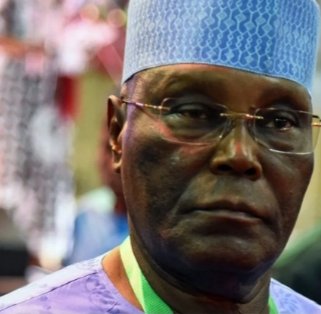
Pressure is mounting on former Vice President Atiku Abubakar to abandon his 2027 presidential ambitions in favor of a unified opposition front. Political observers, led by commentator Peter Omonua, are calling on the 79-year-old statesman to prioritize national stability over his personal electoral aspirations, warning that a divided opposition is the only thing standing between President Bola Ahmed Tinubu and a second term.
The call for a coalition has gained significant momentum following recent interviews with prominent political figures, including Peter Obi, Donald Duke, and Adewole Adebayo. These leaders share a unanimous conviction: only a consolidated opposition force can dismantle the APC’s grip on power. Analysts argue that a fragmented field in 2027 would allow the ruling party to exploit electoral vulnerabilities, effectively handing President Tinubu a victory by default.
Calculations suggest that a unified ticket—bringing together the vote blocks of the PDP, Labour Party, and other key stakeholders—could amass over 14 million votes, dwarfing the 8.7 million secured by President Tinubu in 2023. Such a mandate would be so decisive that it would leave no room for the judicial intervention or electoral manipulation that many critics fear has become a staple of the nation’s political process.
Central to the argument against an Atiku candidacy is the issue of age and national sentiment. At 79, Atiku faces concerns regarding his physical and mental capacity to address the urgent needs of a nation with a median age of 18. Critics point to the global phenomenon of cognitive decline in aging leaders and insist that Nigeria requires a younger, more energetic leader to tackle the country’s deepening moral and social crises, ranging from youth unemployment to widespread cultism.
Perhaps more damaging to his campaign is the growing perception—and open suspicion—that Atiku’s persistence may be part of a strategic alliance with the incumbent. Observers have questioned whether the former Vice President’s repeated bids are intended to destabilize the ranks of the opposition, specifically by splitting the southern vote, thereby ensuring that power remains within a preferred circle of political elites. There is a prevailing sentiment in the South and the Middle Belt that the presidency should remain in the South for an eight-year tenure, rendering any attempt by a Northerner to seize the seat after only four years highly inflammatory.
“It is more honorable to be a Kingmaker than aiming for the crown itself,” Omonua noted in his appeal to the former Vice President. He urged Atiku to reflect on his illustrious career and legacy, warning that continued obstinacy risks cementing an image of “egocentric entitlement” that could alienate the very constituents who once supported him.
As the 2027 election cycle approaches, the political landscape remains tense. With leaders like Hakeem Baba-Ahmed warning that the nation’s future is at stake, the burden of history sits heavily on Atiku Abubakar. The question now is whether the “Waziri Adamawa” will choose the path of statesmanship, or if his decision to run will become the primary instrument for the continuation of the current administration.
Disclaimer: This content is auto-generated for informational purposes only.
Source: Read Original News