


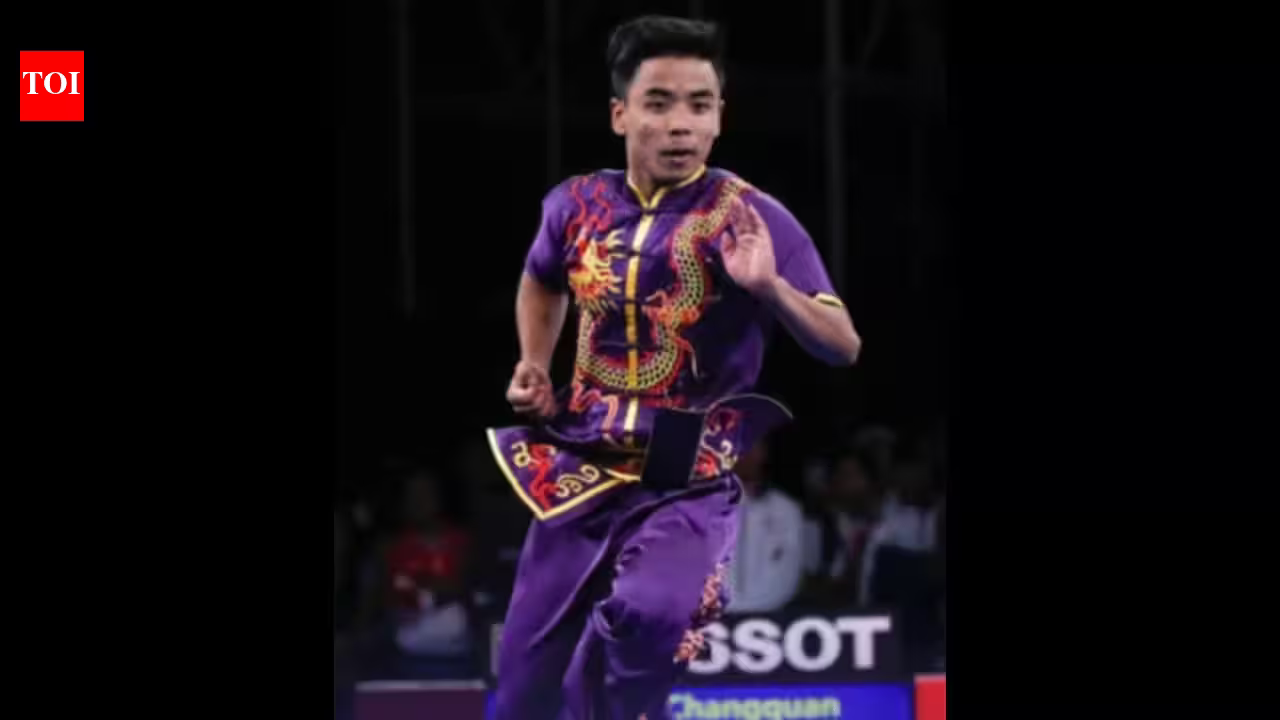

Heartbreak often hides in the smallest of margins, and for India’s wushu exponent Suraj Singh Mayanglambam, that margin was a razor-thin 0.040 points at the Aichi-Nagoya Asian Games on Sunday. Competing in the high-stakes men’s Changquan final, Mayanglambam delivered a performance that was both technically sound and visually arresting, yet he ultimately fell short of the podium, securing an 11th-place finish in a deeply competitive field of 21 international athletes.
The stage for the drama was set at the Aichi Prefectural Martial Arts Hall, where the air was thick with the intensity of elite-level combat sports. Changquan—a discipline synonymous with the grace and explosive power of traditional northern Chinese kung fu—requires a unique blend of athleticism, where participants must marry the fluidity of dance with the lethal precision of a martial artist. In a routine lasting roughly 90 seconds, the margin for error is non-existent, and the judges’ scrutiny is relentless.
A Flawless Execution Undercut by Numerical Margins
Mayanglambam’s performance was, by all accounts, a masterclass in poise. Under the intense glare of the arena lights, the Indian athlete executed a clean, disciplined routine that avoided any deductions, demonstrating the high level of training and focus he brought to the Aichi-Nagoya stage.
When the scoreboards finally illuminated, the breakdown of his 9.683-point total provided a clear picture of his standing among the world’s elite. He secured a perfect 5.00 in Quality of Movement—a testament to his technical mastery and physical conditioning. His Degree of Difficulty (C-Score) was marked at 2.00, while his Overall Performance (B-Score) tallied 2.683.
While these numbers represent a significant achievement on the continental stage, they placed him just outside the upper echelon of the rankings. In a sport where the podium is often decided by fractions of a point, Mayanglambam’s performance serves as a reminder of how quickly the tide can turn. A minor adjustment in his B-Score or a slightly more daring interpretation of the C-Score could have easily pushed him into the conversation for a medal, highlighting just how thin the line is between a top-10 finish and a podium appearance.
The Macau Dominance
The battle for the top of the podium was a fierce, intra-regional duel that underscored the depth of wushu talent in the region. Athletes from Macau set the pace for the day, with Kuong Chi Hin capturing the gold medal with a stellar score of 9.723. Not far behind, his compatriot Chi Kuan Song secured the silver medal with a 9.720.
The three-thousandths-of-a-point gap between the gold and silver medalists epitomizes the level of competition at these Games. It was a day where execution was everything, and the Macau team’s ability to maximize their point potential under extreme pressure ultimately locked them into the top two positions. For the rest of the field, including Mayanglambam, the challenge remains clear: to bridge that tiny gap through further refinement of their explosive techniques and acrobatic consistency.
The Luck of the Draw and the Discipline of Changquan
The format of the final added an extra layer of tension to the proceedings. Unlike some sports where seeding or past rankings grant an athlete a favorable position in the performance order, the Asian Games organizers utilized a randomized draw. Each of the 21 finalists was assigned a position from 1 to 21, determined either by computer algorithm or manual draw.
This meant that there were no psychological advantages to be gained from watching rivals perform beforehand; athletes were forced to rely entirely on their own preparation, rhythm, and mental fortitude.
Changquan itself remains one of the most demanding disciplines in the Wushu federation. Characterized by lightning-fast punches, deep, punishing lunging stances, and gravity-defying aerial spins, the sport pushes the human body to its absolute mechanical limits. To compete at this level, athletes must spend years conditioning their bodies to perform these high-flying jumps and spins with absolute, unwavering precision. Mayanglambam’s ability to remain calm and error-free amidst this high-octane environment is a victory in itself, even if the final result didn’t yield the medal he sought.
Looking Toward the Future
As the dust settles at the Aichi Prefectural Martial Arts Hall, the takeaway for the Indian contingent is one of promising potential. Mayanglambam’s 11th-place finish in a massive 21-athlete field confirms his status as a legitimate competitor on the international stage.
While the medal eluded him this time, the “clean routine” and full A-Score highlight a strong foundation. In the world of wushu, consistency is the key that unlocks the door to the podium. With further experience at this level and a continued focus on refining his overall performance score, Mayanglambam remains a talent to watch for future major championships. For now, he leaves Aichi-Nagoya with his head held high, having pushed himself against the very best the continent has to offer.
Disclaimer: This content is auto-generated for informational purposes only.
Source: Read Original News