






CRICKET’S LATEST phenom, Vaibhav Sooryavanshi, has ignited a fierce debate within the sport’s inner circles, forcing a cold, hard look at the intersection of modern T20 explosiveness and the nuanced demands of Test cricket. At just 15 years old, the Samastipur-born left-hander has already captured the collective imagination of fans and scouts alike. However, as his star rises, the conversation has shifted from “How high can he fly?” to “How well can he anchor?”
The discussion hit a boiling point this week, drawing in cricketing legends who hold starkly opposing views on whether the teenager’s current trajectory can—or should—eventually pivot toward the whites of the Test arena.
The “Technique” Tussle: Panesar’s Skepticism
The catalyst for this debate was former England spinner Monty Panesar. Appearing on the Beyond23 Cricket Podcast alongside former Australian skipper Michael Clarke, Panesar did not mince words regarding the teenager’s long-term prospects in the game’s traditional format.
“I can’t see Sooryavanshi transitioning to Test cricket,” Panesar stated bluntly. “Harry Brook is currently one of the few who legitimately holds a spot in the top 10 for both Tests and T20Is. But when I look at Sooryavanshi, I just don’t think he has the technique for the longest format.”
Panesar’s skepticism reflects a common concern among purists: the belief that the blistering hand-eye coordination required for T20 success—where hitters often rely on instinct and raw power—can sometimes mask deficiencies in defensive technique, footwork, and the patience required to survive a probing spell with a swinging red ball. For the veteran spinner, the gap between the chaotic acceleration of a 20-over game and the tactical attrition of five-day cricket is a chasm that few modern players can successfully bridge.
Clarke’s Counter: Skill Transcends Formats
While Panesar signaled a warning, Michael Clarke offered a spirited defense of the youngster’s versatility. The World Cup-winning captain dismissed the notion that T20 mastery necessitates a lack of Test viability, citing the titans of the modern era as his prime evidence.
“I think you can still play all three formats,” Clarke argued. “Look at Virat Kohli and AB de Villiers. These guys were brilliant Test cricketers and absolutely unbelievable T20 cricketers as well. If a player from this generation, like Sooryavanshi, can successfully make that transition into Test cricket, it is going to be an unreal spectacle to watch.”
Clarke’s perspective is grounded in the belief that “class is permanent.” He pointed to the youngster’s most dangerous weapons: an extraordinary ability to pick the length early and an elite level of hand-eye coordination that allows him to strike the ball with rare, raw power. According to Clarke, the perceived technical shortcomings are not flaws, but rather raw edges waiting to be smoothed over by experience.
“Right now, power is his main thing, and he has an amazing eye,” Clarke noted. “The technique will get better the more he tours with India, learns under expert guidance, and trains in different conditions. He is talented enough that, if he wants to do it, I can’t see any reason why he can’t be a superstar in all three formats.”
The Path Forward: From Duleep Trophy to Global Stage
While the pundits debate, the reality for Sooryavanshi is a measured path. Despite his explosive IPL showing, he has yet to be integrated into India’s T20I XI, with selectors opting for the established firepower of Sanju Samson and Abhishek Sharma. This decision underscores a commitment to continuity, even as the “Sooryavanshi era” waits in the wings.
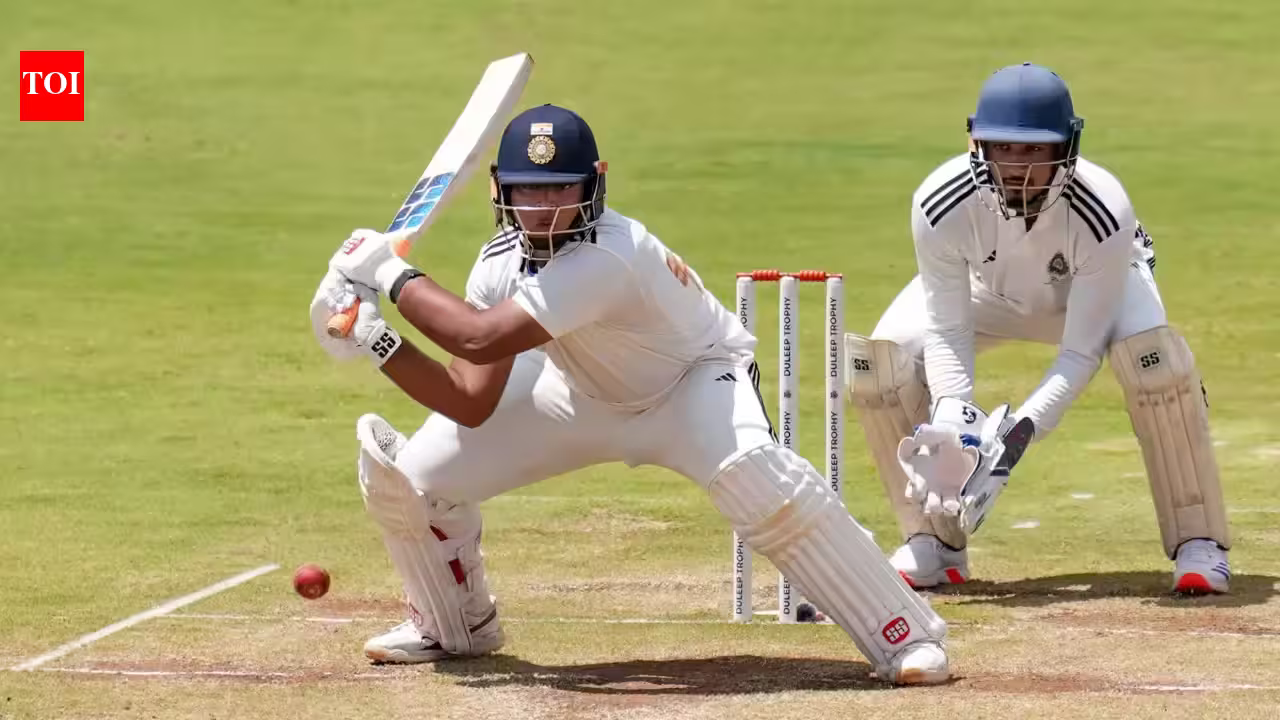
However, the teenager is not entirely a stranger to the challenges of red-ball cricket. His pedigree includes a stint with the East Zone side that secured the Duleep Trophy—a high-stakes domestic tournament that serves as a traditional proving ground for India’s Test hopefuls. Notably, he nearly recorded a century in the semi-final against Central Zone, falling just short in the 90s. While that performance suggests he has the mental fortitude to occupy the crease for long periods, it also highlights the steep learning curve he faces as he navigates the professional circuit.
A Generation at the Crossroads
The debate surrounding Sooryavanshi is emblematic of a broader crisis of identity in world cricket. As leagues proliferate and T20 earnings skyrocket, the “transition to Test cricket” is becoming an increasingly rare phenomenon. Players are frequently forced to choose: be the high-octane mercenary of the franchise circuit or the disciplined guardian of the traditional format.
For Sooryavanshi, the decision—and the eventual reality—will likely be dictated by his own appetite for the long game. At 15, he possesses the rarest of commodities: time. Whether he eventually proves Panesar right by remaining a limited-overs specialist, or validates Clarke’s optimism by becoming a rare three-format powerhouse, one thing is certain: the cricketing world will be watching his every move. The teenager is no longer just a prospect; he is the subject of one of the sport’s most fascinating debates.
Disclaimer: This content is auto-generated for informational purposes only.
Source: Read Original News