








Beyond the Narrative of Weakness: Why India Must Rethink Its Leverage
For decades, the prevailing narrative in Indian strategic circles has been one of deficiency. Whether analyzing its standing against the United States or its friction with China, the consensus often centers on a lack of “leverage.” Critics frequently point to disparities in economic output, military hardware, and global institutional weight to argue that India’s hands are tied.
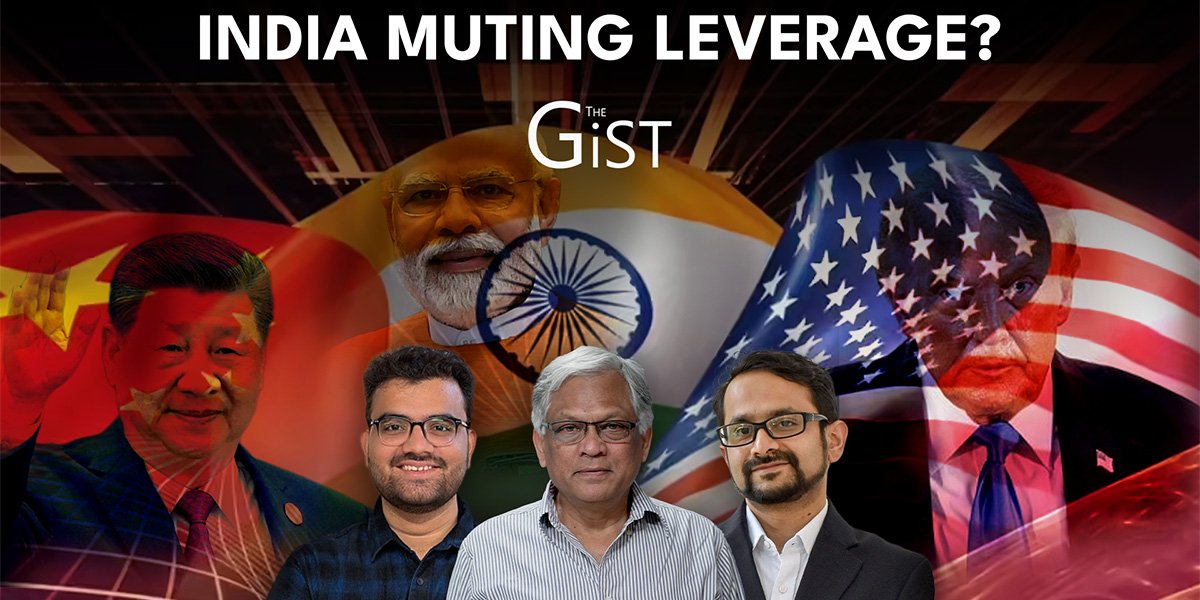
However, a new study conducted by the Takshashila Institution challenges this long-held perception. Pranay Kotasthane, the institute’s deputy director, and his colleague Lokendra Sharma argue that India possesses significant, untapped leverage that it consistently fails to utilize—often choosing to “mute” its own influence.
The Problem of Strategic Hesitation
The study questions whether India’s perceived lack of power stems from a lack of self-belief or an over-cautious diplomatic posture. When faced with external pressure, India’s responses are frequently criticized for being tepid. For instance, the mild retaliatory measures following the 2020 Galwan Valley clash, such as banning mobile applications, were viewed by many as a symbolic gesture rather than a substantive shift in the power dynamic.
Kotasthane suggests that this hesitation might stem from a desire to avoid escalation at all costs. Yet, he cautions that if India’s response to aggression remains static over the long term, it will fail to achieve the desired strategic objectives. The authors argue that India must stop waiting for a future moment of perfect strength and instead follow the lead of nations like Iran, which actively employ leverage as a tool of contemporary statecraft.
Buying Power as a Strategic Tool
One of the most potent, yet underutilized, tools in India’s arsenal is its position as a major global consumer. In the modern geopolitical landscape, being a massive market is just as significant as being a massive producer.
The study cites the example of China’s economic coercion against Australia. When tensions peaked, Beijing weaponized its role as a primary importer of Australian goods, specifically wine. While this move was controversial, it demonstrated the immense pressure a large buyer can exert on an exporter’s domestic economy.
Kotasthane posits that India can apply similar logic. India’s massive civil aviation sector provides a prime example. With domestic airlines placing colossal orders for Boeing aircraft, India possesses the potential to signal economic displeasure by threatening to suspend orders or pivot toward competitors like Airbus. By framing such decisions as matters of “national interest,” India could turn its purchasing power into a tangible diplomatic instrument.
Defining Red Lines
The core recommendation from the Takshashila researchers is for India to shift toward a strategy of clearly articulated boundaries. The authors emphasize that India must make its “red lines” transparent to adversaries.
This approach requires a level of consistency that India has historically struggled to maintain. If a country crosses these predefined limits, India must be prepared to exert economic or diplomatic costs. Conversely, the policy must be reciprocal: if the adversary respects these boundaries, India should be willing to de-escalate and resume normal relations.
Ultimately, the argument presented by Kotasthane and Sharma is not a call for unbridled aggression, but a call for strategic maturity. By acknowledging its inherent strengths and ending the self-imposed muting of its own influence, India can transition from a passive observer of international pressure to an active participant in defining the rules of engagement. Moving forward, the goal for New Delhi is to initiate a broader debate on how to convert its market potential and geopolitical position into a more assertive, effective foreign policy.
Disclaimer: This content is auto-generated for informational purposes only.
Source: Read Original News