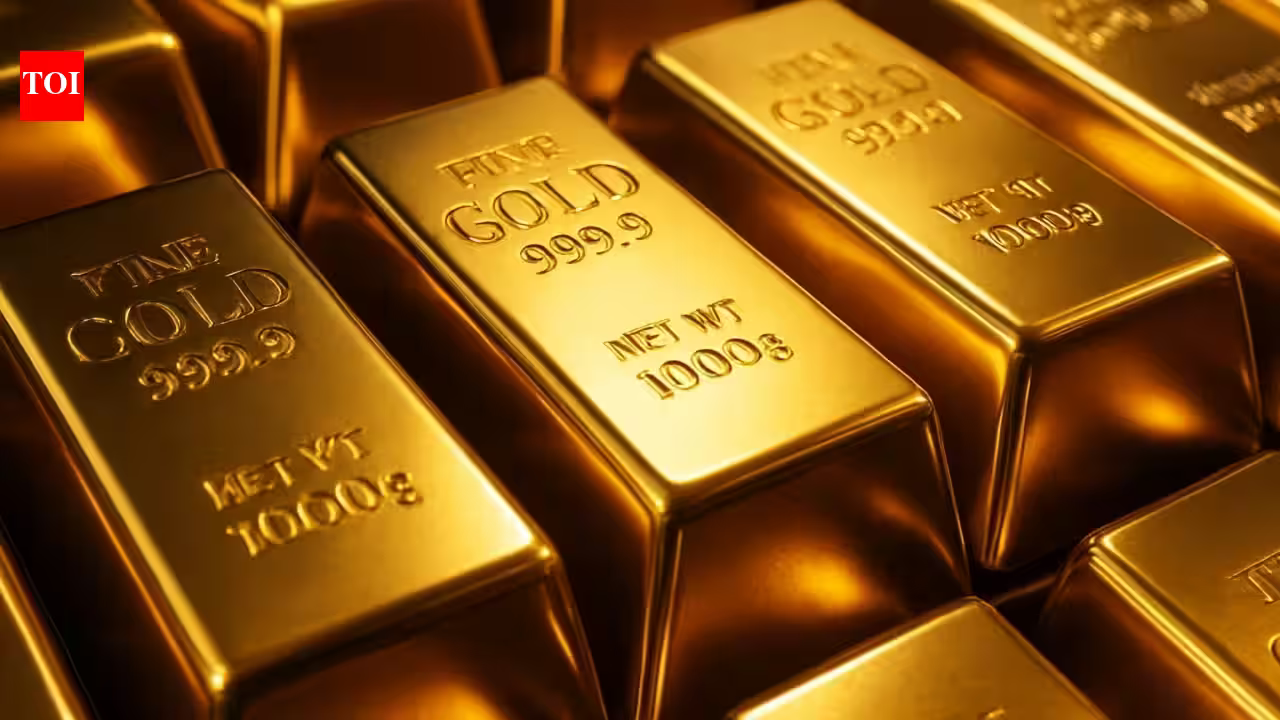







The Macroeconomic Drivers Shaping Gold Markets
The global gold market is currently navigating a complex environment defined by a tug-of-war between monetary policy adjustments and geopolitical instability. For investors and market participants, the recent price action indicates that bullion is evolving into a more reactive asset, highly sensitive to external macroeconomic catalysts. As the United States Federal Reserve and other major central banks refine their monetary paths, gold’s role as both a hedge and a speculative asset has come into sharp focus.
Current market trends suggest that gold is likely to remain in a range-bound state in the near term. This consolidation phase is largely attributed to traders closely monitoring the US dollar’s performance and the movement of bond yields. When the US dollar strengthens, gold—which is denominated in the greenback—often faces headwinds. Conversely, as yields on US Treasuries fluctuate, investors recalibrate their allocations between risk-on assets and safe-haven commodities.
Beyond monetary metrics, the geopolitical risk premium associated with ongoing tensions in the Middle East continues to provide a floor for gold prices. Crude oil prices also play a pivotal role in this dynamic. Energy costs are a significant component of global inflation indices; when oil prices rise, gold is frequently sought after as a traditional inflation hedge. As investors await more clarity on the global economic trajectory, the precious metal is positioned at the intersection of these conflicting technical and fundamental pressures.
Analysis of Indian Commodity Market Performance
In the domestic context, the Multi Commodity Exchange (MCX) has reflected these global shifts with notable precision. Recent data indicates a recovery in gold futures, particularly for the October delivery cycle. After a period of initial weakness, the commodity demonstrated resilience, staging a robust rebound toward the Rs 1.54 lakh per 10 grams mark. This recovery demonstrates that domestic demand remains intact, with significant buying interest emerging whenever prices undergo a correction.
Silver, meanwhile, has outperformed gold in terms of percentage gains, highlighting its unique position as both a precious and an industrial metal. While gold is predominantly viewed through the lens of a store of value, silver’s price trajectory often correlates with the health of the industrial sector. The recent surge in silver futures, approaching Rs 2.41 lakh per kg, suggests that investors are banking on continued demand from manufacturing and technology sectors, which are heavily reliant on silver for various applications.
For the Indian investor, this price volatility serves as a reminder of the importance of diversifying portfolios. The MCX activity underscores that domestic prices are not insulated from global cues; rather, they are highly sensitive to the US dollar index and Federal Reserve interest rate announcements. As institutional and retail participants in India navigate this environment, the strategy of “buying the dip” has proven effective, as evidenced by the sustained demand seen during the recent price fluctuations.
The Role of Central Banks and Economic Data
The upcoming week is expected to be defined by high-impact economic data releases that will likely dictate the direction of bullion prices. Analysts are shifting their focus toward mid-month manufacturing and services Purchasing Managers’ Index (PMI) readings from major economies. These indices offer a real-time snapshot of economic health and are critical for forecasting future central bank interventions.
In the United States, attention is directed toward housing data, durable goods orders, and consumer sentiment readings. These metrics provide essential insights into the consumer’s financial health and the overall robustness of the domestic economy. If these indicators suggest a cooling economy, it may reinforce expectations for further rate cuts or a pause in the tightening cycle, both of which are generally supportive of gold prices.
Furthermore, the People’s Bank of China remains a key player to watch. As one of the world’s largest consumers of physical gold, China’s monetary policy decisions exert significant influence on global price trends. Any signal regarding stimulus measures or changes in domestic interest rates will ripple through the precious metals markets. Indian market participants are advised to watch these international policy shifts, as they dictate the global price floor upon which domestic import costs and local market premiums are built.
Investor Sentiment and the ETF Landscape
A critical pillar supporting the current gold price structure is the consistent inflow into gold exchange-traded funds (ETFs). Over the past several weeks, institutional and individual investors have increasingly utilized these financial instruments to maintain exposure to gold without the complexities of physical storage. This trend signals a maturing investor base that views gold as a permanent fixture of a balanced portfolio rather than a transitory asset.
The strength of ETF inflows suggests that despite the volatility in futures markets, the long-term conviction in gold remains strong. Analysts note that bargain buying at lower corrective levels has been a recurring theme in the last few trading sessions. This type of accumulation phase typically prevents prices from experiencing a sharp, sustained decline, even when macroeconomic news is less favorable.
For the Indian investor, this shift toward gold ETFs and digital gold reflects a modernization of investment habits. While physical jewelry remains a cultural cornerstone in India, the growth of paper gold indicates that the market is becoming more aligned with global financial practices. This transition provides higher liquidity and more transparent pricing mechanisms, allowing investors to react more efficiently to the rapid changes in global gold valuations.
Market Outlook and Strategic Considerations
As we look toward the immediate future, market analysts emphasize that gold is in a period of consolidation. The “wait-and-see” approach currently adopted by major market players is a rational response to the culmination of several key monetary events. With the primary wave of central bank meetings behind us, the market is now parsing the implications of these decisions through the lens of incoming economic data.
Traders should prepare for continued price oscillation. The volatility observed in recent weeks is a characteristic of a market attempting to find equilibrium between high interest rates and the necessity for safe-haven protection. While the upside is capped by the strength of the dollar and bond yields, the downside is protected by geopolitical premiums and sustained demand from physical gold buyers in regions like India and China.
In summary, the outlook for gold remains cautiously optimistic. Investors are advised to maintain a disciplined approach, focusing on the broader macroeconomic narrative rather than short-term price fluctuations. By closely monitoring the interplay between US economic indicators, energy prices, and central bank directives, market participants can better position themselves to navigate the challenges and opportunities that lie ahead. The ability to distinguish between transitory market noise and significant long-term trends will be the deciding factor for success in the precious metals space in the coming months.
Disclaimer: This content is auto-generated for informational purposes only.
Source: Read Original News