







The Strategic Significance of Regional Banking Calendars in India
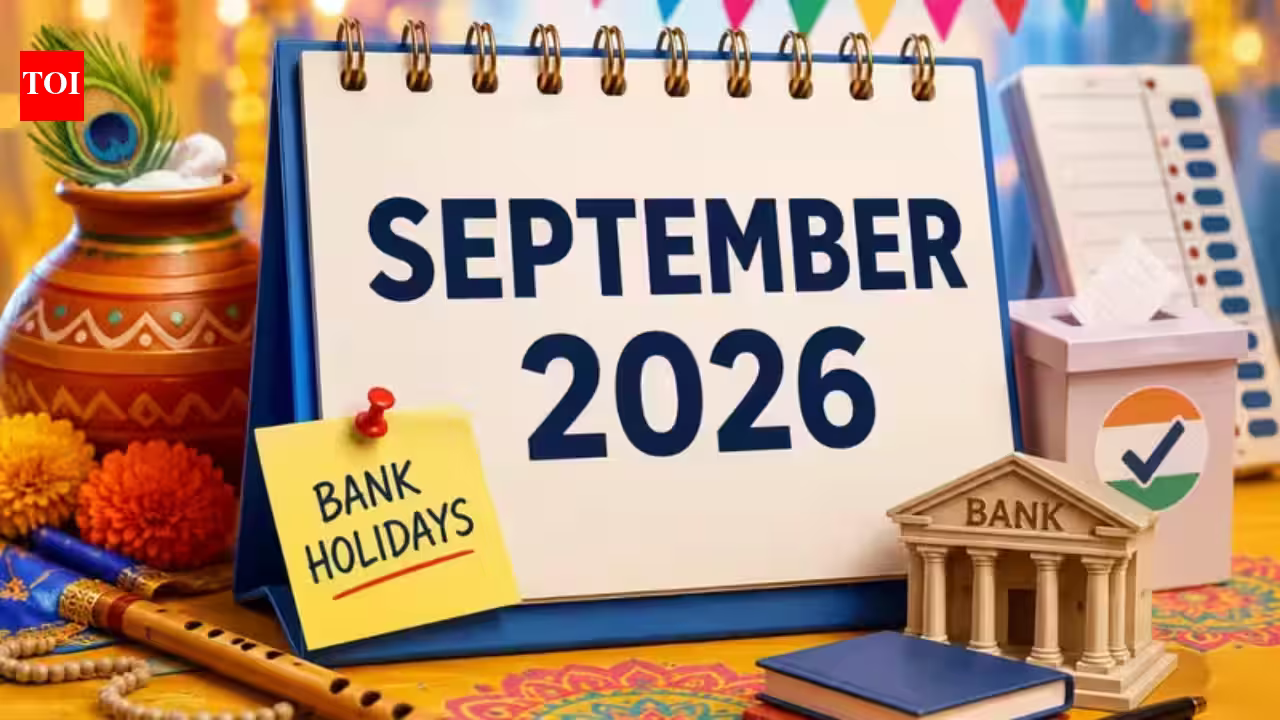
The Indian banking sector operates within a complex framework of federal and state-level governance. While the Reserve Bank of India (RBI) serves as the primary regulator, dictating national policies and monetary frameworks, the operational reality for bank branches is deeply tied to regional cultural, religious, and state-specific observances. The closure of bank branches in specific states, such as the observed holiday on September 21 in Assam and Kerala, underscores the necessity for both businesses and individuals to maintain a sophisticated awareness of regional calendars.
In India, regional bank holidays are far more than mere operational interruptions; they reflect the socio-cultural diversity of the nation. When branches in Assam observe the Janmotsav of Srimanta Sankardeva, or institutions in Kerala mark Sree Narayana Guru Samadhi Day, these closures are mandated by the respective state governments and acknowledged by the RBI. For the modern professional, understanding these nuances is essential for managing supply chain payments, payroll processing, and time-sensitive financial documentation. The decentralization of the holiday schedule is a testament to the diverse operational landscape of the Indian economy, where a uniform national calendar would be incompatible with the rich heritage of the various states.
Operational Resilience Through Digital Banking Infrastructure
The primary impact of regional banking holidays is restricted to over-the-counter services, such as physical document verification, cash deposits exceeding ATM limits, and specialized commercial lending consultations. However, the paradigm shift toward digital-first banking has significantly mitigated the potential for economic stagnation during these periods. The rise of the Unified Payments Interface (UPI), real-time gross settlement (RTGS) systems, and robust mobile banking applications allows for continuous financial activity, even when the physical branch shutters are drawn.
From a business perspective, the resilience of the Indian banking infrastructure lies in its hybrid model. While human-led services require the physical presence of bank staff, the back-end processing of digital transactions remains functional around the clock. For corporate entities and MSMEs (Micro, Small, and Medium Enterprises), the distinction between physical branch operations and digital clearing systems is vital. Businesses that rely on the physical processing of bank instruments—such as post-dated checks or formal trade documents—must incorporate regional holiday calendars into their workflow projections to avoid liquidity bottlenecks. Failing to account for these specific, state-by-state closures can result in delayed settlements, which, while manageable, require forward-thinking financial planning.
Navigating Regulatory Discrepancies in Corporate Finance
For large-scale corporate treasuries and institutional investors, the variance in regional bank holidays necessitates a high degree of precision in liquidity management. When a company operates across multiple states, treasury managers must navigate a fragmented holiday schedule where a specific region may be offline while the rest of the country remains operational. This creates a staggered financial landscape where corporate cash flows must be optimized to ensure that liquidity is available where and when it is needed, irrespective of localized shutdowns.
The RBI categorizes bank holidays into three buckets: public holidays, state-specific holidays, and specific events unique to particular cities or states. The administrative burden of tracking these variables falls on internal accounting departments. In an era of automated treasury management systems, businesses are increasingly integrating RBI holiday feeds directly into their enterprise resource planning (ERP) software. This integration prevents the scheduling of automated payments or high-value transfers during days when banking operations are suspended in the destination state. By proactively aligning financial obligations with the local holiday status of the partner bank branch, firms minimize the risk of reconciliation errors and late payment penalties.
Customer Advisory and Strategic Planning for Branch Visits
A recurring challenge for the retail banking sector is the management of customer expectations during the transition between physical and digital engagement. Despite the ubiquity of mobile applications, there remains a persistent demand for in-person banking services, particularly for complex loan inquiries, KYC (Know Your Customer) re-verifications, and the management of sensitive documents. When regional holidays, such as the upcoming events in Jharkhand, Jammu & Kashmir, or Sikkim, result in localized closures, customer footfall at adjacent branches or digital support centers often spikes.
Banks utilize predictive analytics to manage these transitions, often deploying additional server capacity for digital platforms during periods of high branch inactivity. For the average customer, the advisory remains consistent: verify the operational status of the specific branch before embarking on a journey. In the Indian context, where bank branches serve as essential community hubs, the physical closure is not merely an inconvenience but a significant shift in the local service landscape. Educating users to utilize ATMs, net banking, and customer support helplines is a continuous process that the banking sector undertakes to ensure that financial inclusion and accessibility are not compromised by the calendar.
Future Outlook: Towards a Unified Digital Financial Ecosystem
The long-term objective of the Indian financial sector is to reduce the dependency on physical branch visits. As the country moves toward a more digitized economy, the impact of regional banking holidays is expected to diminish in terms of total economic friction. The advancement of electronic document submission and remote verification processes, supported by the ongoing digitization of property and commerce-related filings, suggests that the necessity for physical branch attendance is declining.
However, until such time as the economy reaches full digital parity, regional holidays will remain a relevant variable in the national business strategy. The periodic updates issued by the RBI serve as the cornerstone for corporate planning. As we move through the latter half of September—with holidays scheduled for Karma Puja in Jharkhand, the birth anniversary of Maharaja Hari Singh Ji in Jammu & Kashmir, and Indrajatra in Sikkim—the stability of the financial system remains dependent on this predictable, albeit fragmented, schedule. By maintaining a disciplined approach to these regional nuances, both banks and their customers can ensure that operational continuity is maintained even in the presence of traditional and cultural observances. The future of Indian banking is undoubtedly digital, but it remains grounded in the cultural fabric that necessitates this complex and varied holiday framework.
Disclaimer: This content is auto-generated for informational purposes only.
Source: Read Original News