





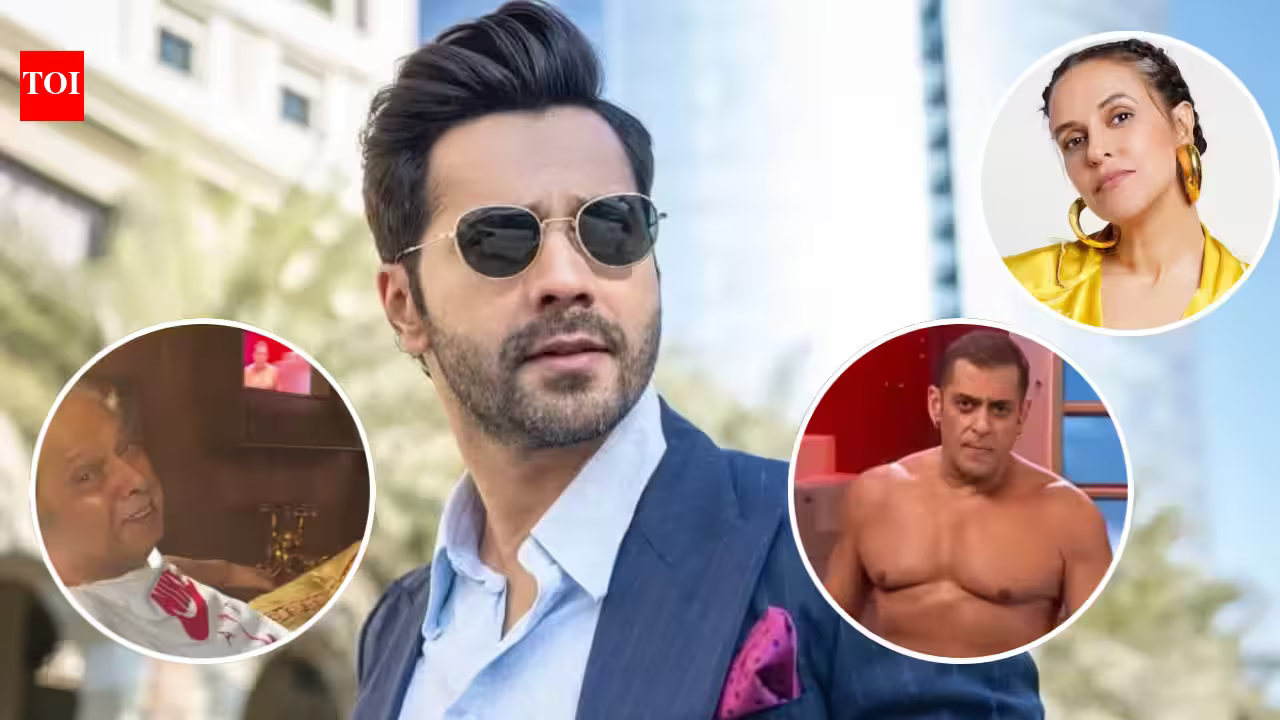
In the glitzy, high-pressure world of Bollywood, the line between public interest and public harassment has grown increasingly thin. This past weekend, the Bigg Boss 20 stage transformed from a reality show set into a battlefield for digital morality, as host Salman Khan launched a fiery, unfiltered tirade against the toxic culture of online trolling and invasive paparazzi ethics. By throwing his weight behind fellow industry stars, particularly Varun Dhawan and his own brother Sohail Khan, Salman has ignited a conversation that the Indian film industry has been desperate to have for years.
Salman Khan Breaks the Silence on Body-Shaming
The episode was far from business as usual. Salman, usually the unflappable host, reached a boiling point when discussing the relentless vitriol directed at stars over their physical appearance. Addressing the camera with an intensity that silenced the audience, he drew a sharp distinction between genuine concern and mean-spirited mockery.
“Showing concern that ‘Bhai, you look unwell, you’ve lost weight,’ is one thing,” Salman asserted. “But mocking Sohail and Varun over their looks? That is wrong.”
For years, stars have been expected to maintain a stoic silence in the face of keyboard warriors who dissect their every wrinkle, pound, and outfit. By naming specific individuals, Salman wasn’t just venting; he was establishing a boundary. He took a bold, performative stance against the scrutiny, removing his shirt and hat to challenge his own detractors. “Bhai mota hogaya hai, bhai ko troll karo… Karlo troll, yeh lo,” he declared, daring the internet to continue its obsession with his physique. It was a raw, provocative moment that highlighted the dehumanization of actors in the digital age.
The Dhawan Duo’s Resonant Response
The impact of Salman’s defense was immediate. Varun Dhawan, who has often been a target for trolls critiquing his transition from a youthful chocolate-boy image to more rugged, mature roles, felt the weight of the support. Sharing a clip of his father, the legendary filmmaker David Dhawan, reacting to Salman’s monologue, Varun punctuated his post with a simple yet powerful “clap” emoji.
For the Dhawans, this wasn’t just about a TV personality defending a colleague; it was a validation of the pressure stars face to remain “perfect” for the consumption of an increasingly judgmental audience. David Dhawan, a veteran who has seen the industry evolve over decades, clearly found common ground with Salman’s critique of a culture that prioritizes image over humanity.
A Scorching Critique of Paparazzi Ethics
Perhaps the most blistering segment of Salman’s address was his direct confrontation with the paparazzi culture. He turned his focus to the photographers who lurk at events, armed with telephoto lenses, waiting for the one exploitative, unflattering angle—usually from behind—that can go viral.
“I recently saw Saiee Manjrekar was so awkward with that. Neha Dhupia fought against it. My own niece, she was walking, and they kept clicking from behind,” Salman fumed. He didn’t just call them out; he suggested a radical change in how stars should react to such indignity. His call for action—”Ghoom ke chamaat maaro”—was a visceral, if metaphorically aggressive, demand for the return of privacy and basic decency.
He challenged the justification that “this is just their job,” pointing out that the invasive nature of these photographs, often accompanied by derogatory or objectifying captions, serves no purpose other than to undermine the dignity of the celebrities involved. By highlighting how uncomfortable actresses feel in these moments, he brought the issue of consent to the forefront of the entertainment discourse.
Neha Dhupia and the Industry’s Support
The reverberations of the episode were swift. Neha Dhupia, one of the few stars who has historically been vocal about her run-ins with aggressive photographers, was specifically praised by Salman for her refusal to bow down to such tactics. Her reaction on social media was brief but heavy with meaning: “Tiger… zinda hai…”
Her comment acted as a rallying cry, suggesting that while the industry may seem passive, there is a pulse—a desire to “fight back” against the encroachment of invasive media. It also served as a subtle nod to Salman’s star power; when the “Tiger” speaks, the industry listens.
Moving Beyond the Noise
As the dust settles on the Bigg Boss episode, the broader question remains: will anything actually change? The paparazzi-star dynamic is a symbiotic, albeit toxic, relationship. Stars need the press for visibility, and the press needs the stars for content. However, Salman’s intervention suggests a tipping point. When the biggest star in the country publicly shames the “disgusting” behavior of the lensmen, it emboldens others to set firm boundaries.
For Varun Dhawan, the focus now pivots back to his professional trajectory. With Bhediya 2 and an upcoming horror project under the Aditya Chopra banner, he is focused on his craft rather than the commentary on his silhouette. Meanwhile, Salman Khan continues his prolific run, preparing for his upcoming film Monster alongside Nayanthara.
Ultimately, this weekend served as a reminder that underneath the glamour, movie stars are navigating a digital landscape that is often more hostile than welcoming. By refusing to let the trolls and the invasive cameras have the last word, Salman Khan hasn’t just defended his friends—he has challenged the audience to reconsider how they consume celebrity. Whether this leads to a new era of respect or just another week of social media squabbles, the message from the Bigg Boss stage was clear: the time for silence is over.
Disclaimer: This content is auto-generated for informational purposes only.
Source: Read Original News