








The Intersection of Technical Glitches and AI Skepticism
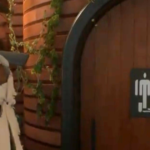
The modern video game development landscape is currently navigating a period of intense scrutiny regarding the role of generative artificial intelligence. As studios integrate sophisticated tools to accelerate production timelines, public perception has become increasingly sensitive to the origins of in-game assets. This tension was recently highlighted when fans observed a distorted restroom sign in the newly released Marvel’s Wolverine, leading to immediate speculation that the studio, Insomniac Games, had utilized generative AI to create the texture.
The visual anomaly—a symbol that appeared logically fragmented or nonsensical—served as a catalyst for discourse on social media platforms. In an era where AI-generated images frequently exhibit characteristic artifacts, such as anatomical errors or incoherent iconography, observers quickly labeled the sign as “AI slop.” However, this assumption triggered a swift rebuttal from the development team. James Stevenson, the community director for Insomniac Games, clarified that the asset was not a byproduct of algorithmic generation, but rather a technical failure in the rendering pipeline.
Understanding UV Mapping Errors
To appreciate the distinction between a software bug and AI generation, it is necessary to understand the process of UV mapping. In 3D graphics, a UV map is a two-dimensional representation of a three-dimensional model’s surface. Think of it as a flat “unfolding” of a box or character model, which allows artists to project textures, colors, and symbols onto the object. When a texture—such as a restroom sign icon—is applied to a 3D surface, the coordinates on the 2D texture must align perfectly with the geometry of the 3D model.
A UV mapping bug occurs when the alignment between these coordinates is miscalculated or corrupted. This can happen due to improper unwrapping of the model, software glitches during the export process, or conflicts between different lighting and shading layers. In the case of the Wolverine asset, the distorted symbol was not a sign of a machine “hallucinating” a new design, but a sign of a coordinate system failing to map the source graphic correctly onto the game’s geometry. This distinction is critical: one is a procedural error resulting from a human-authored asset, and the other is a structural artifact produced by a generative model.
The Industry’s Push Toward AI Integration
While Insomniac has firmly denied the use of generative AI in its current project, the gaming industry at large is aggressively moving in the opposite direction. Major publishers, including EA, Square Enix, and Krafton, have publicly committed to integrating AI into various facets of game development. The motivations are largely rooted in efficiency. Generative models can assist in creating background environmental details, filling out non-player character dialogue, or even automating portions of quality assurance testing.
Square Enix, for example, has set ambitious targets for implementing AI within its QA departments, aiming to utilize machine learning to identify bugs and logic errors in complex codebases. Similarly, publishers like Krafton have repositioned themselves as AI-first entities, viewing these tools as essential to solving labor-intensive development problems. As these technologies mature, the line between human-made and AI-assisted content becomes increasingly blurred, making public perception and transparency more contentious than ever.
Systemic Challenges and Performance Hurdles
The discussion regarding the restroom sign is not the only technical challenge facing Marvel’s Wolverine. Players have reported instability in specific gameplay mechanics, particularly those related to the “Scent Trailer” and “Audio Sense” indicators. These systems are designed to provide the player with environmental clues and tracking capabilities, but they appear to be causing crashes under certain stress conditions. Stevenson noted that these features are deeply integrated into the game’s core engine systems, making them delicate to patch without creating secondary regressions.
In large-scale development environments, systems are rarely isolated. A change made to improve the performance of a visual indicator can inadvertently trigger memory leaks or frame rate drops elsewhere if the underlying code is interdependent. The studio’s approach to these updates involves a deliberate, cautious testing phase. This process reflects the realities of modern AAA development, where the scale and complexity of titles like Wolverine mean that fixing a bug often involves a careful balancing act to ensure overall stability.
The Future of Digital Content Integrity
The reaction to the Wolverine glitch underscores a shift in how players interact with and judge digital content. As generative AI becomes a standard tool in the developer’s toolkit, the burden of proof regarding asset creation will likely increase. Developers now find themselves in a position where they must not only manage complex code and rendering bugs but also defend the authenticity of their work against a backdrop of deep-seated distrust.
Ultimately, the restroom sign incident serves as a case study in technical transparency. When a studio can identify a specific, quantifiable technical error—such as a UV map bug—it can provide a roadmap for a fix. Conversely, if an asset is indeed the result of generative AI, the path to correction is less defined, as the original data may not exist in a traditional, editable format. As the industry moves forward, the ability for developers to clearly delineate between human effort and algorithmic generation will remain a key factor in maintaining the integrity of their creative vision. For now, the focus for the Wolverine team remains on patching the technical anomalies that have impacted the user experience, rather than navigating the broader, ongoing debate over the nature of game assets.
Disclaimer: This content is auto-generated for informational purposes only.
Source: Read Original News