








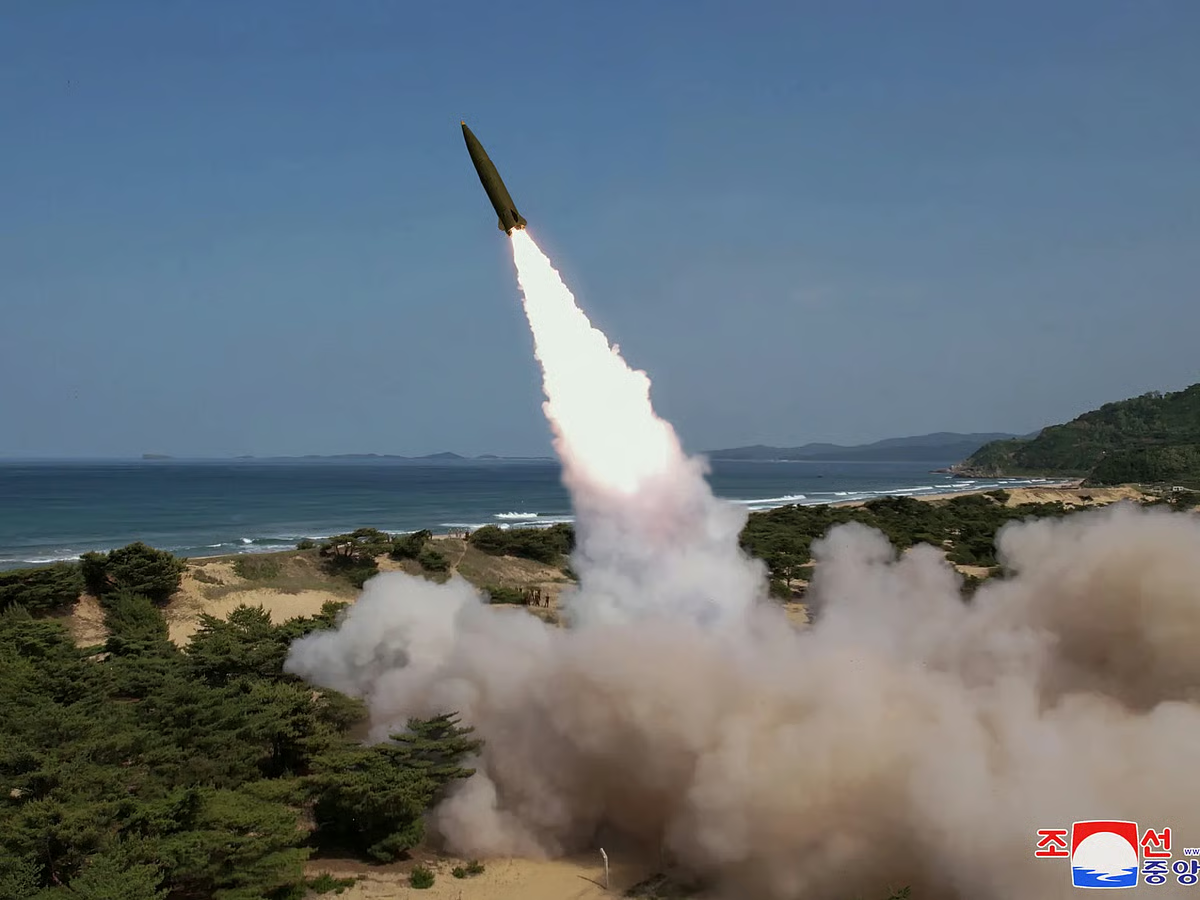
PYONGYANG — North Korea launched an unidentified projectile into the East Sea on Sunday, September 20, 2026, marking the latest escalation in a rapidly intensifying series of weapons tests that have heightened regional tensions. The launch, which originated from the country’s east coast, occurred just eight days after Pyongyang conducted a salvo of short-range ballistic missile tests in the same waters.
The Japanese government was the first to confirm the incident, with the office of the Prime Minister issuing an urgent alert on the social media platform X, identifying the object as a “suspected ballistic missile.” Japan’s Ministry of Defence subsequently confirmed that the projectile had already fallen into the sea, though officials declined to provide specific details regarding the flight path, altitude, or distance covered by the weapon.
South Korea’s Joint Chiefs of Staff (JCS) monitored the launch in real-time, confirming the projectile’s trajectory and issuing a stern condemnation of the activity. In a statement following the event, the JCS noted that the launch is part of a pattern of provocations that defy international norms. This latest display of military force comes on the heels of Pyongyang’s recent, formal reaffirmation of its status as a nuclear-armed state—a bold geopolitical stance that has further alienated the North from the global community.
The timing of the launch is viewed by analysts as a direct challenge to international oversight. Just days prior, the North Korean leadership officially rejected a resolution passed by the International Atomic Energy Agency (IAEA), which had demanded that the nation immediately halt all nuclear activities. Pyongyang’s continued ballistic testing is widely interpreted as a deliberate rebuke of the IAEA’s pressure and a signal that it has no intention of scaling back its nuclear and missile development programs.
Regional powers remain on high alert. The rapid succession of these launches has triggered urgent consultations between Tokyo, Seoul, and Washington, as military experts attempt to determine the specific technology being tested. While the Japanese Defence Ministry confirmed that the projectile does not pose an immediate threat to the mainland, the frequency of these incursions into the East Sea is testing the defensive posturing of Japan and South Korea.
International observers are now watching closely to see if the United Nations Security Council will convene in response to the breach of global non-proliferation standards. As of Sunday evening, the North Korean state media has remained silent regarding the purpose of the launch. For now, the region remains in a state of uneasy observation as the security architecture of the Korean Peninsula continues to fracture under the weight of Pyongyang’s sustained military campaign.
Disclaimer: This content is auto-generated for informational purposes only.
Source: Read Original News