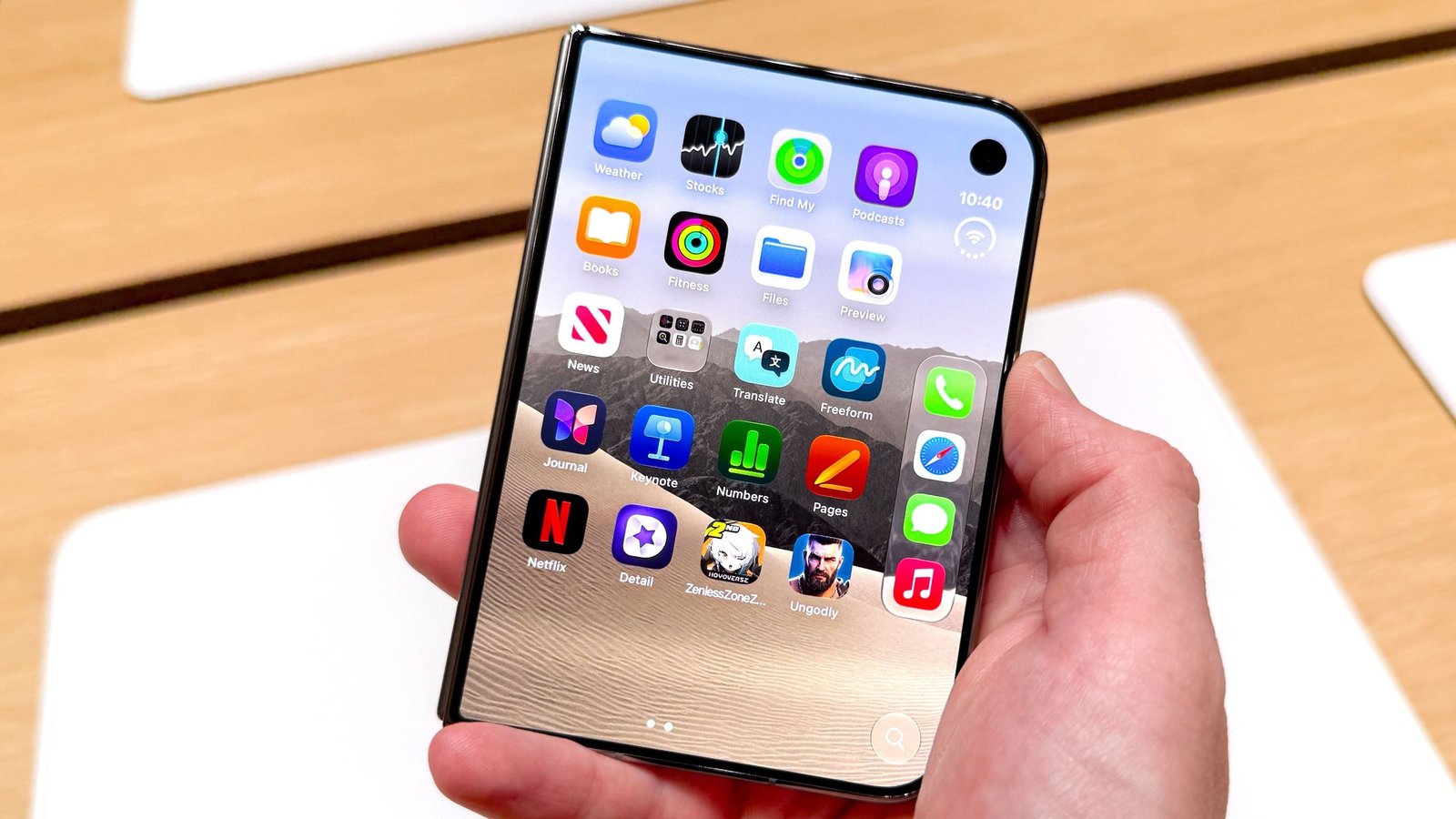









The Evolution of Apple Silicon: A New Architecture for AI
The release of the A20 Pro chip marks a pivotal turning point in the history of Apple Silicon. For years, the integration of Neural Engines within the iPhone SoC (System on Chip) has prioritized efficiency and specific machine learning tasks such as image processing and voice recognition. However, the A20 Pro introduces a significant structural change: a dual-16-core Neural Engine configuration. By doubling the core count dedicated to AI processing, Apple has effectively signaled that on-device large language models (LLMs) are the new benchmark for flagship mobile performance.
This design choice addresses the growing demand for local processing of complex AI workloads. Previously, performing intensive AI tasks required cloud-based infrastructure, which introduced latency and privacy concerns. With the A20 Pro, the chip acts as an autonomous computing hub capable of handling substantial parameter counts without relying on internet connectivity.
Performance Metrics and Token Generation
Recent demonstrations involving the iPhone 18 Pro have underscored the capability of this new hardware. When running a 27B parameter model, the device displays token generation speeds that are double those of the iPhone 17 Pro. This is not merely an incremental gain; it represents a fundamental shift in how smartphone hardware interacts with software models that were once considered too heavy for mobile architecture.
The technical secret behind this throughput lies in the interaction between the dual-16-core Neural Engine and the upgraded memory architecture. The iPhone 18 Pro utilizes 12GB of 96-bit LPDDR5X RAM, which offers significant improvements in speed over previous generations. When combined with a unified memory bandwidth of 115.2GB/s, the system can feed data to the NPU (Neural Processing Unit) at an unprecedented rate. During specialized AI tasks, the throughput of this dual-engine setup actually surpasses the compute power of the chip’s 7-core GPU, confirming that Apple has successfully optimized the silicon for modern, generative AI workflows.
The Bottleneck of Memory Configuration
Despite the impressive strides in processing speed, the industry faces a harsh physical limitation: memory capacity. While the A20 Pro is highly efficient at processing data, the total amount of available RAM remains the primary gatekeeper for model deployment. Recent tests reveal that while smaller, highly quantized models—such as the 1-bit Bonsai model—run effortlessly, more complex iterations like the Bonsai 2 (with 2-bit quantization) struggle to function on the current hardware.
The issue is one of scale. A 27B parameter model, even when compressed through quantization, occupies a substantial footprint in memory. When the model size exceeds the available physical RAM, the system must resort to swapping, which leads to immediate and significant performance degradation. This creates a ceiling for developers who wish to deploy sophisticated, highly accurate, and “dense” models locally. Users expecting to run professional-grade local AI models must understand that even the most powerful processor cannot overcome a lack of physical memory storage if the model architecture is simply too large to fit within the addressable buffer.
Impact on Future Mobile Development
The leap in on-device AI performance provided by the A20 Pro changes the trajectory for mobile application developers. Prior to this, developers had to limit their expectations regarding local model size, often resulting in models that were fast but lacked the reasoning depth of larger, cloud-hosted equivalents. With the current hardware, the focus shifts to optimizing models specifically for 12GB memory environments.
This shift suggests that future versions of the iPhone will likely prioritize higher RAM capacities as a standard requirement rather than a premium differentiator. As on-device models become the standard for consumer-facing features, the hardware supply chain will be under pressure to provide higher-density memory modules. For Apple, this necessitates a careful balancing act between power efficiency, heat management, and the increasing memory demands of generative models.
Technological Trade-offs and the Road Ahead
Running sophisticated AI models on a smartphone is a multifaceted challenge involving compute throughput, thermal headroom, and memory density. The A20 Pro has addressed the compute bottleneck by doubling the neural cores and widening the memory bus. However, the user experience is ultimately defined by the limitations of static memory.
As the industry moves forward, the primary goal for hardware designers will be to reconcile the massive computational requirements of advanced models with the portable, battery-constrained nature of smartphones. While the A20 Pro proves that mobile devices are capable of handling high-parameter models, the current software ecosystem must adapt to the physical realities of mobile hardware. The future of on-device AI will depend on more efficient quantization techniques and, likely, an increase in standard memory allocations to ensure that these sophisticated models can operate without compromising the responsiveness of the host device. For now, the A20 Pro stands as a formidable achievement, pushing the boundaries of what is possible in the palm of a hand.
Disclaimer: This content is auto-generated for informational purposes only.
Source: Read Original News