









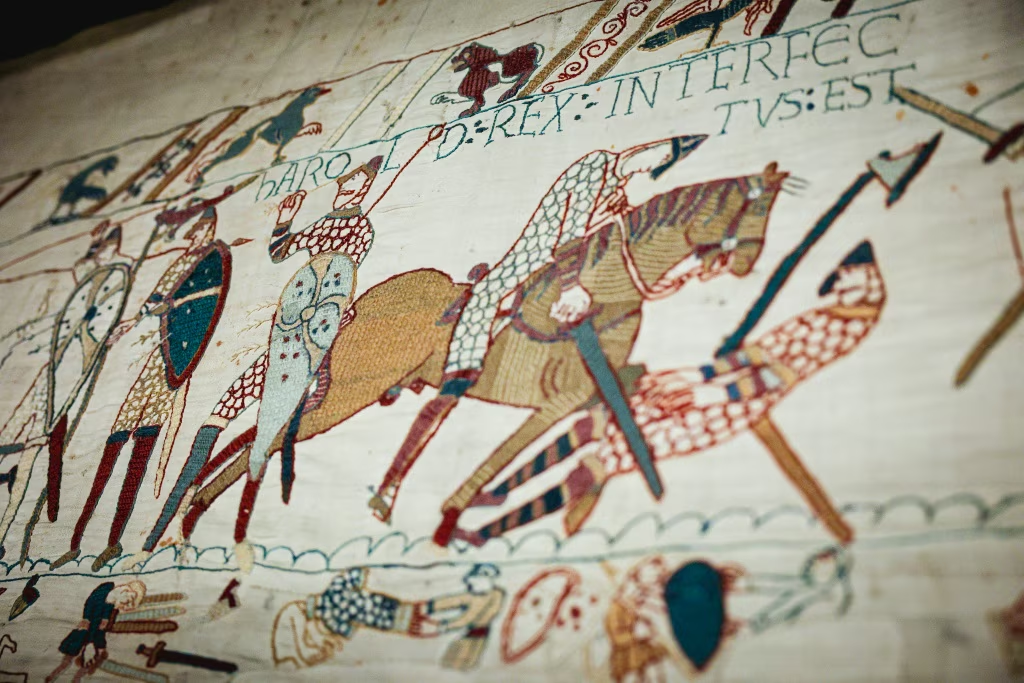
The British Museum has officially implemented a strict “no photography” policy for its blockbuster exhibition featuring the Bayeux Tapestry, in a move designed to alleviate severe congestion and ensure the smooth flow of record-breaking crowds.
The 11th-century masterpiece, which chronicles the Norman Conquest of 1066, arrived in London earlier this month as part of a historic loan from France. The exhibition has been a runaway success, with tickets sold out through the end of the year. However, the sheer volume of visitors eager to capture images of the 70-metre-long artifact led to significant bottlenecks, prompting museum officials to intervene.
“There has been enormous interest in viewing the tapestry, and our priority is to ensure that all visitors have the best experience possible,” a spokesperson for the British Museum said in a statement. “In order to do this, we have made the decision to restrict photography while people are moving along the length of the tapestry.”
While photography was initially permitted when the exhibition first opened its doors, museum staff observed that visitors were frequently stalling to frame shots, creating frustrating delays within the one-way viewing system. The updated guidance on the museum’s website is explicit: “Drawing or sketching are not permitted. Photography is not permitted.”
The exhibition, which offers a rare window into the medieval world, has been hailed as a significant diplomatic achievement, symbolizing strengthened ties between the UK and France. The tapestry itself, which features over 600 figures and 700 animals, is being displayed in a unique horizontal position within a raised glass cabinet—a departure from its usual vertical orientation in Bayeux. To enrich the experience, the museum has integrated wall-projected animations that zoom in on the graphic details and dramatic narrative beats of the artwork.
For many, the opportunity to see the ancient embroidery is a once-in-a-lifetime event. The current exhibition lasts approximately 40 minutes per visitor, a timeframe the museum is determined to protect against the creeping slowdowns caused by smartphone usage. By removing the distraction of cameras, the museum hopes to maintain a consistent pace that honors the tapestry’s delicate nature and historical gravity.
For those who have not yet secured their place, the museum is preparing to release a second tranche of tickets for viewings extending until July 11, 2025. These will be made available to the public on October 21. As the museum continues to balance the tapestry’s role as both a fragile artifact and a global cultural phenomenon, the ban remains a necessary measure to ensure that this 1,000-year-old wonder remains accessible to as many people as possible, without the disruption of modern distractions.
Disclaimer: This content is auto-generated for informational purposes only.
Source: Read Original News