









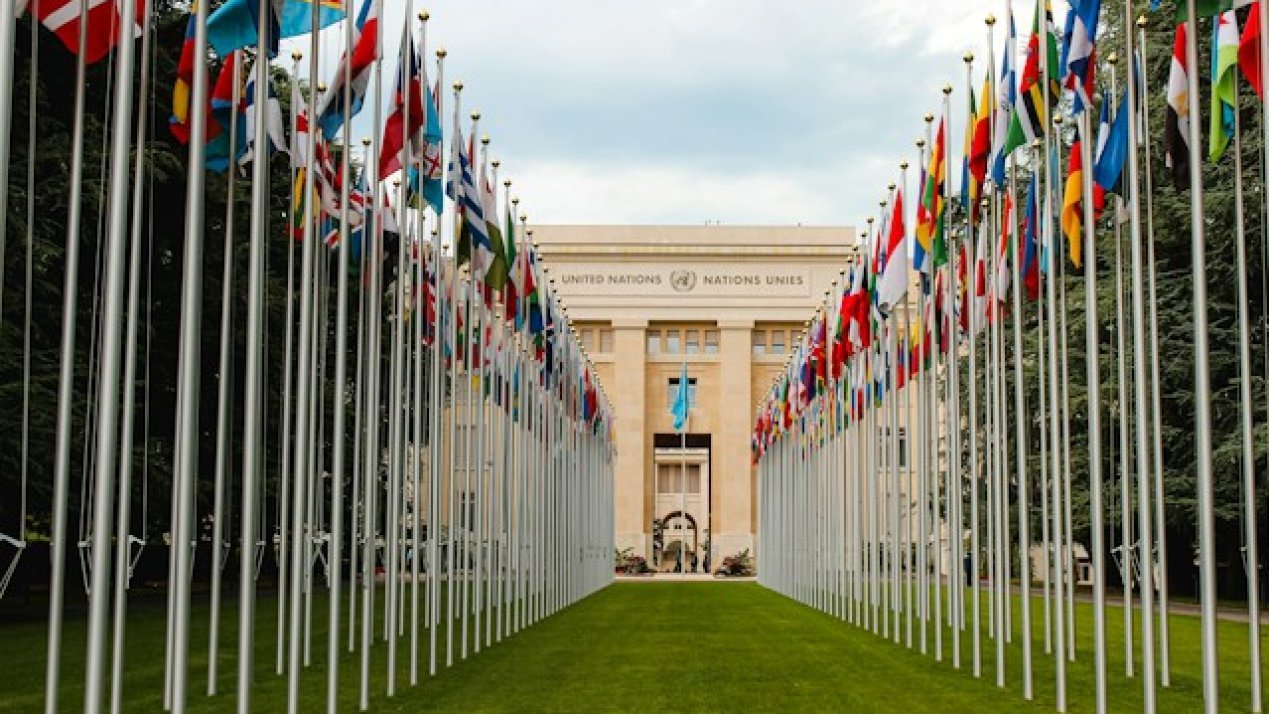
Global crude oil prices retreated this week as markets reacted to a delicate balancing act between potential diplomatic breakthroughs and persistent regional instability. As the 81st United Nations General Assembly convenes in New York, traders have begun to trim the geopolitical risk premiums that previously pushed energy benchmarks to elevated levels.
Brent crude dropped over 3%, falling below the psychological barrier of $100 per barrel, while U.S. West Texas Intermediate (WTI) saw a steeper decline of 4% to 5%, settling near the $95 mark. This cooling of energy costs provided a welcome boost to global equity markets, with the Nasdaq 100 climbing 1.9% and U.S. Treasury yields moderating as inflation anxieties temporarily subsided.
## Diplomatic Openings Amid Regional Volatility
The downward pressure on oil prices follows public overtures from U.S. President Donald Trump, who suggested a willingness to engage with Iranian President Masoud Pezeshkian during the UN summit. President Trump indicated he is weighing multiple paths for the conflict—ranging from economic isolation to a formal deal—a sentiment that has served as a temporary stabilizer for global commodities.
However, the path to de-escalation remains fraught. While diplomatic channels open, military tensions persist. Iranian state media has issued stern warnings, and security threats in the Strait of Hormuz continue to loom over the global supply chain. Recent reports of tanker incidents and strikes near Saudi energy facilities serve as a stark reminder that physical flows are vulnerable to sudden disruption, regardless of the rhetoric circulating in New York.
## Data-Driven Market Navigation
As market participants navigate this volatile environment, the integration of advanced data analytics and real-time intelligence is playing a critical role in decision-making. Investors are increasingly utilizing AI-powered market forecasting tools and platforms—such as those integrated into the Google Cloud ecosystem—to synthesize complex geopolitical news cycles with physical flow data.
Platforms that leverage BigQuery and machine learning models are helping commodity traders interpret massive datasets regarding shipping movements and storage levels. By tracking real-time satellite imagery and vessel traffic data, these tech-driven solutions allow analysts to move beyond surface-level diplomatic news, providing a clearer picture of whether crude exports are actually stabilizing or if supply chain risks remain elevated. Analysts from firms like JPMorgan highlight that while supply remains steady at approximately 17.1 million barrels per day, the ability to process this information at scale is now a prerequisite for managing the “tug of war” currently defining the market.
## The Outlook for Global Trade
The upcoming General Debate at the UN will serve as the primary barometer for the next phase of crude valuation. With over 130 heads of state in attendance, the event provides a critical stage for the U.S. to outline its operational strategy with regional partners.
While some market analysts foresee potential supply constraints pushing prices toward $120 or even $150 by 2027 should diplomatic efforts collapse, others remain tethered to the belief that the current climate of “wait-and-see” will dominate the final quarter of the year. For now, the global market remains trapped between two realities: the optimism of diplomatic dialogue and the persistent, hard-edged danger of conflict in the Middle East. Whether prices continue to ease or snap back to record highs will depend heavily on the concrete outcomes—rather than the promises—to emerge from the corridors of the UN in the coming days.
Disclaimer: This content is auto-generated for informational purposes only.
Source: Read Original News